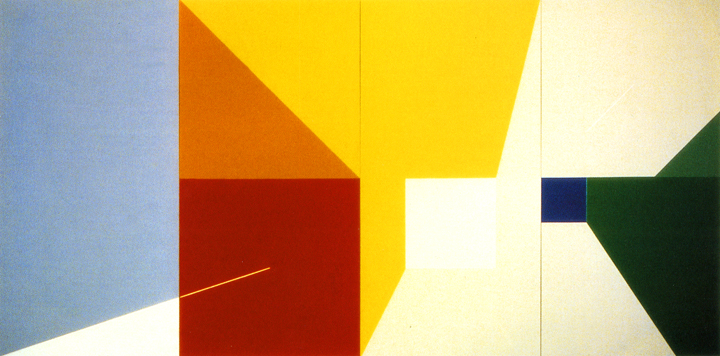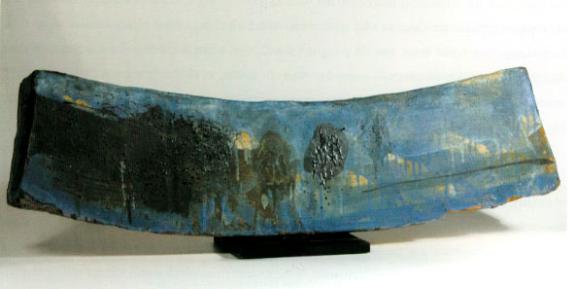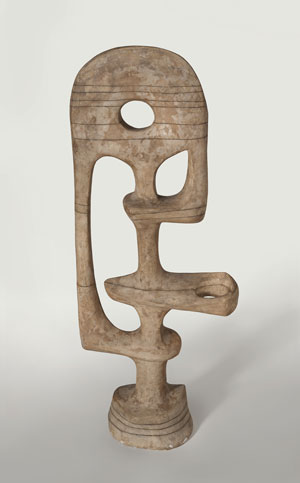
Gustavo Rivera

Gustavo Rivera 1 Gustavo Rivera

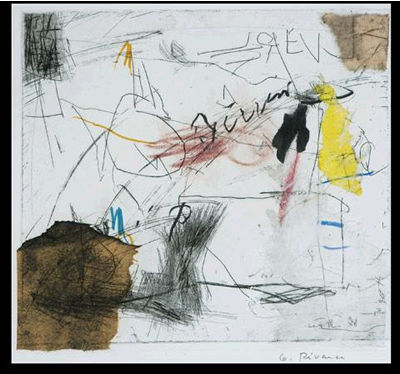
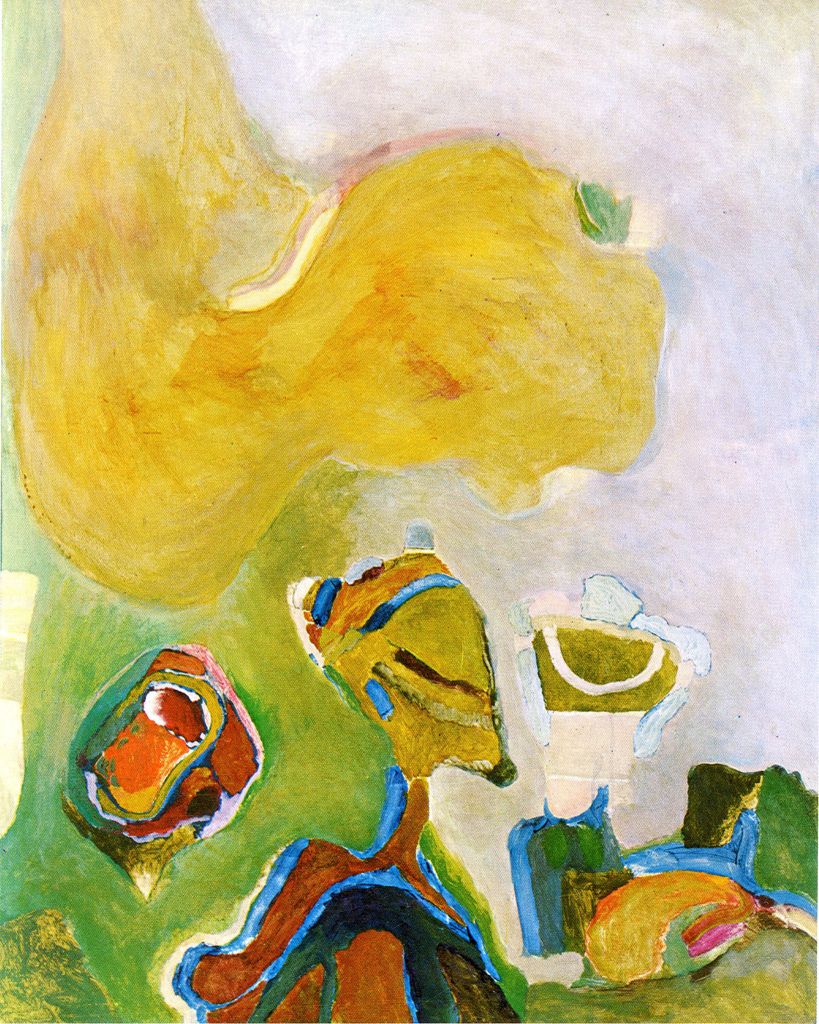
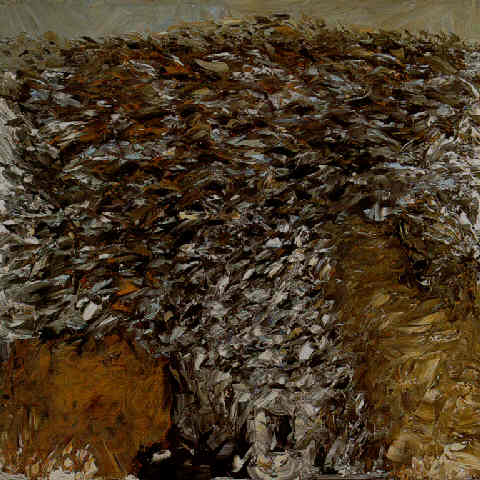
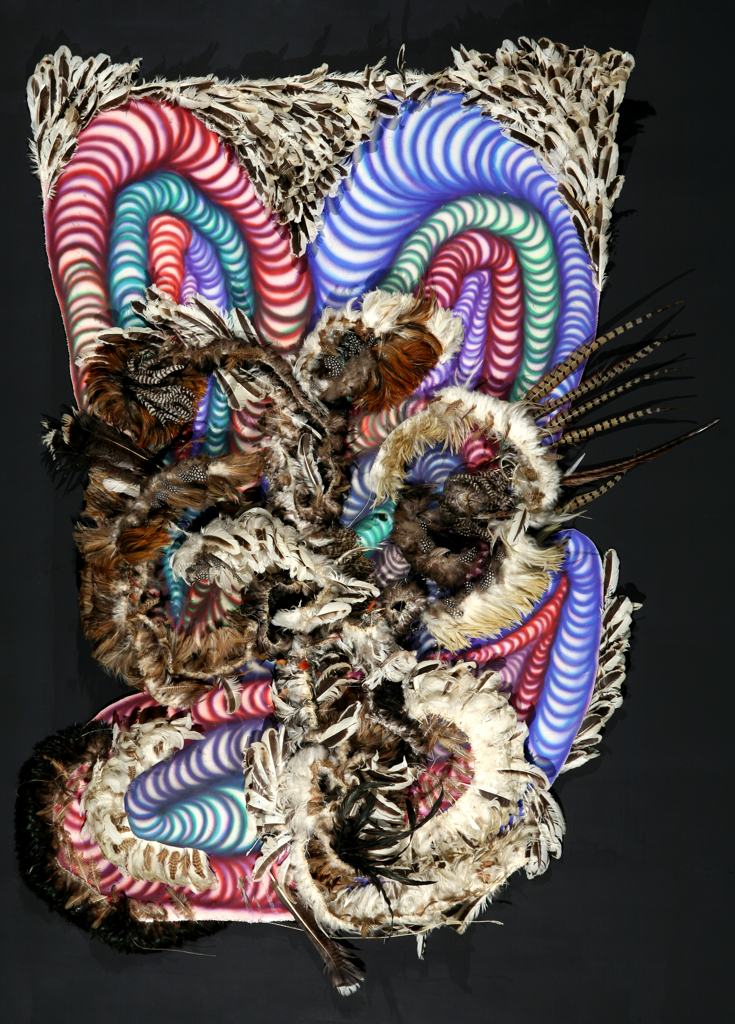
Gustavo Ramos Rivera is an abstract painter working in San Francisco whose work is celebrated nationally for its intense emotional content and its unique, personal symbology.

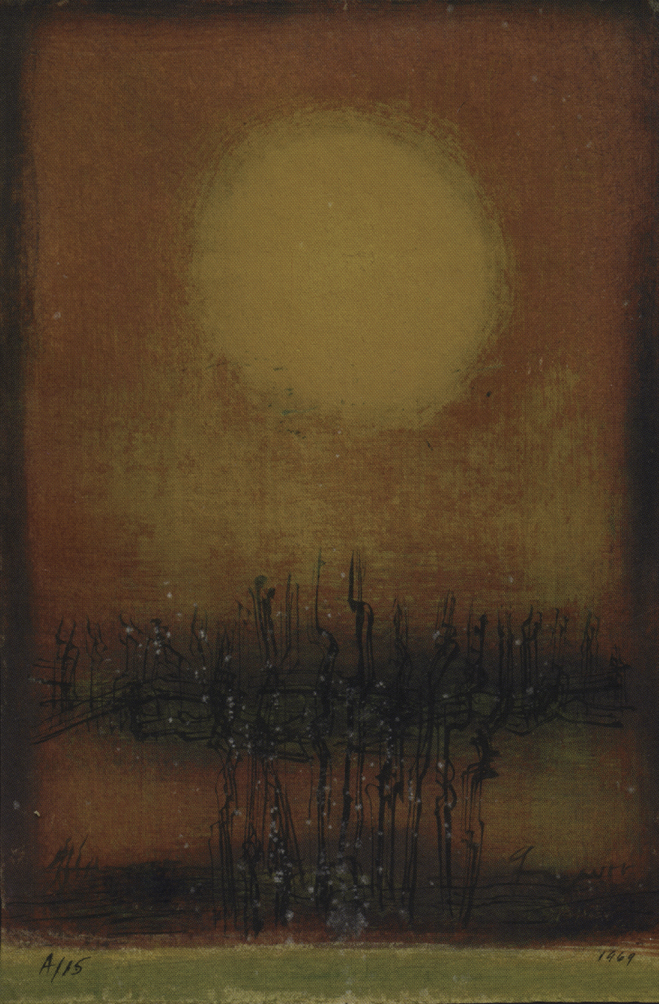
Rivera’s paintings combine the palette and iconography of the indigenous cultural heritage of his native Mexico with classic techniques of Post war American abstraction. In his paintings Rivera constructs layers of intense translucent color fields upon which he lays simple hieroglyphic markings of rich impasto which seem at once archaic and contemporary. They articulate a poetic narrative but also express the artist’s pure delight in working the medium of oil paint.

In addition to his painting Rivera is also a master printmaker who works in monotypes, intaglio and lithography. He has also produced unique and limited edition artist books illustrated with original art.

Born in Ciudad Acuna Mexico in 1940 Rivera has lived and worked in San Francisco since 1976.He is the recipient of numerous awards and fellowships and in 2006 the San Jose Museum of Art presented a retrospective exhibition of the artist’s work that traveled to additional venues in Mexico and California.

- Elins Eagles-Smith Gallery

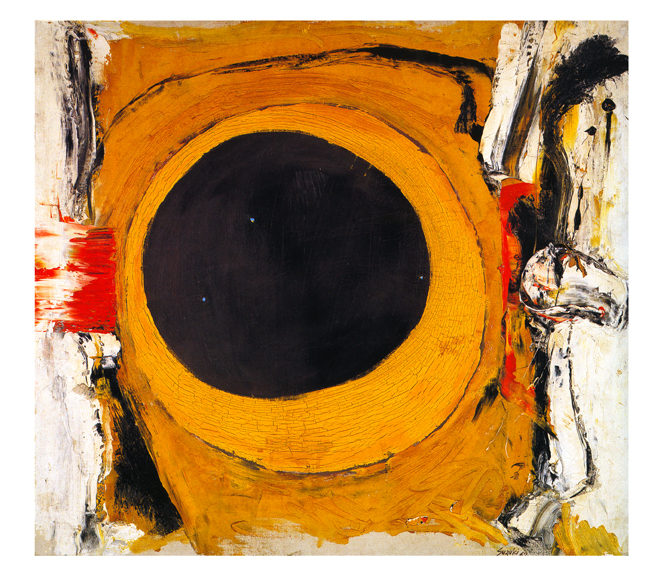
Gustavo Ramos Rivera Ocara 2009 1364 54 Gustavo Rivera

Ocara, 2009, Oil on canvas, 84 x 84 Inches


Sonia Gechtoff

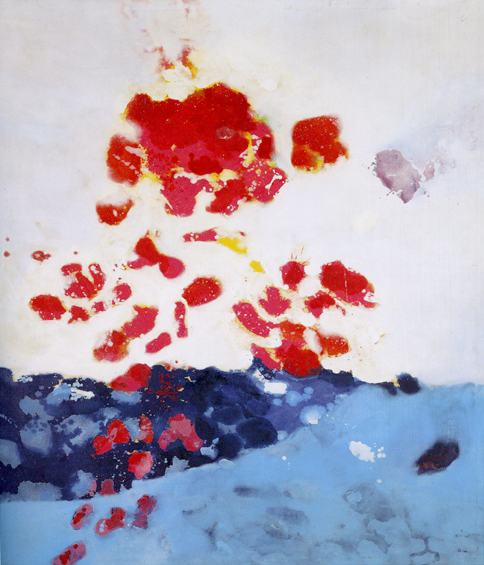
Gechtoff Landscape 1 Sonia Gechtoff

Landscape # 1, 1956, Oil on Canvas, 58 x 58 in.

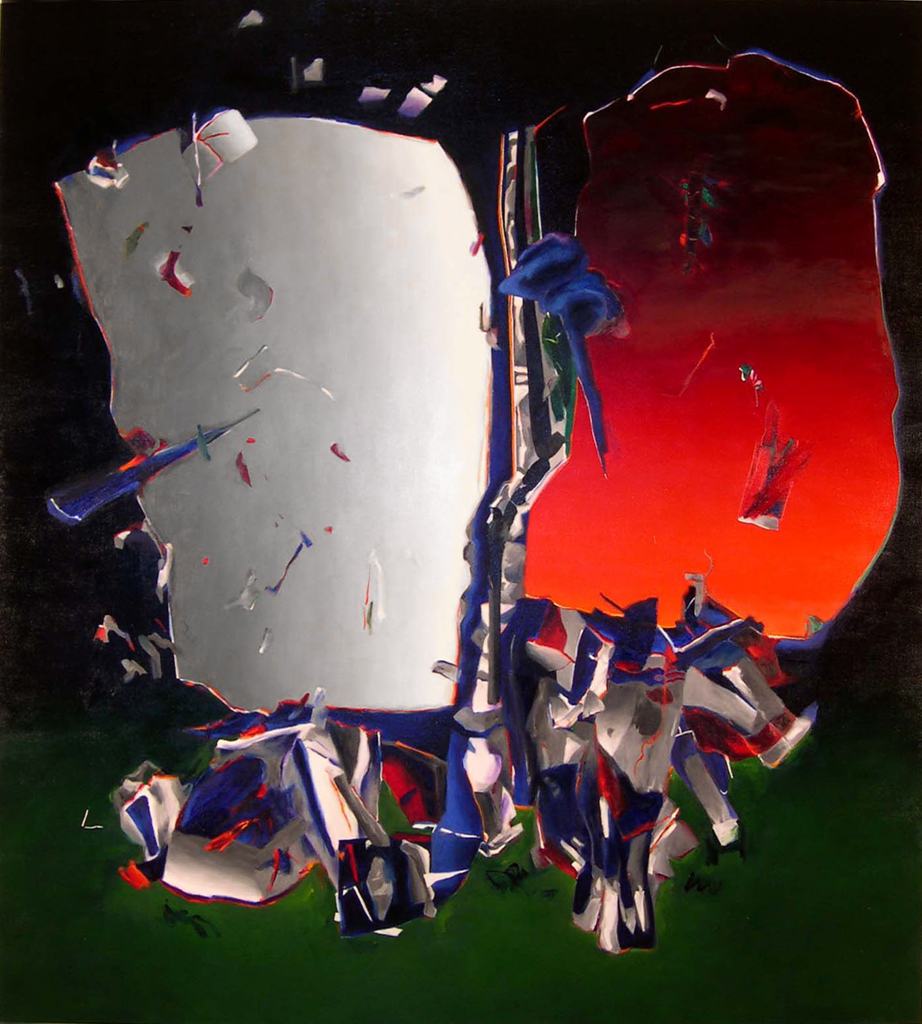
Although she lived and worked in San Francisco for less than a decade, Sonia Gechtoff took a highly active role in Bay Area art while she was there. Born and raised in Philadelphia, Gechtoff received a Bachelor of Fine Arts from the Philadelphia Museum of Art School in 1950, and then came to San Francisco to study at the California School of Fine Arts in 1951 and ‘52, eventually teaching there for several years before relocating to New York in 1958. In the Bay Area, Gechtoff was most frequently associated with the action painters, including her husband James Kelly, Madeleine Diamond, Julius Wasserstein, Deborah Remington and Jay DeFeo.

Gechtoff’s paintings of the ‘50s and early ‘60s were not only abstractions; they were also symbolic markings. Poetry was an important inspiration for Gechtoff. Her exhibition at the San Francisco De Young Museum in 1957 was accompanied by pages of Michael McClure’s poems which, like her painting, often focused on natural themes. Her painting, “Anna Karenina”, is a great example of her work. Through this work she delves into figurative abstractions and, in so doing, reveals her poetic inspiration.

- John Natsoulas Center For The Arts

Gechtoff Lucia and the wave Sonia Gechtoff


Joe Overstreet

Joe Overstreet High TImes Hard Times 1971 Joe Overstreet
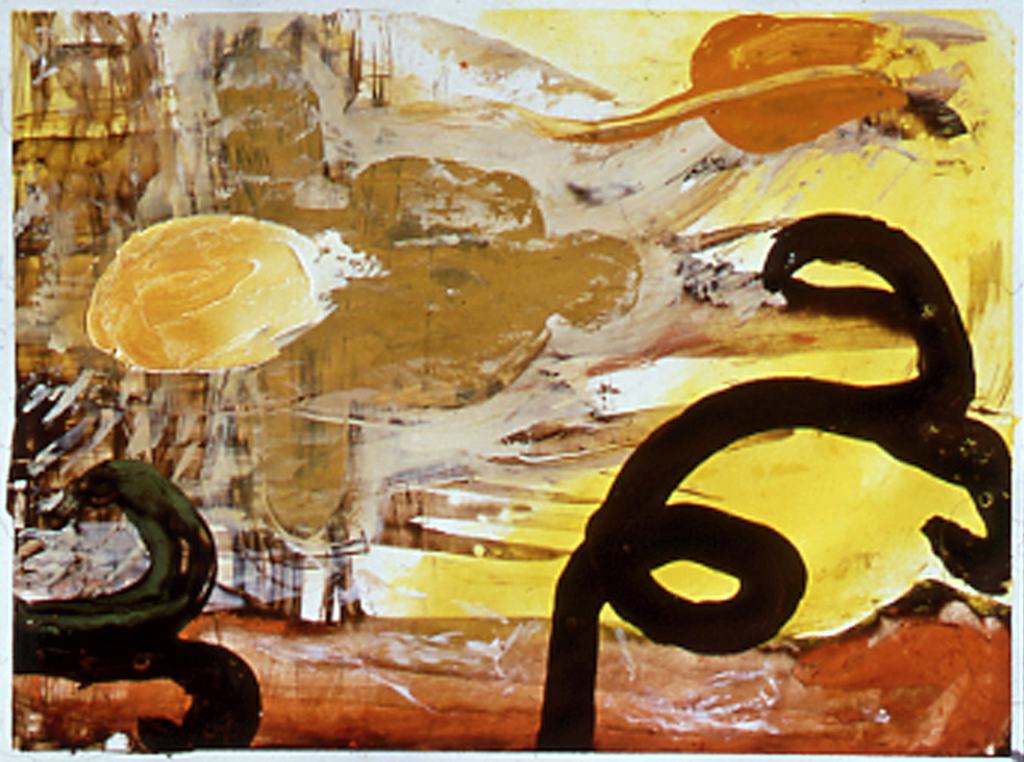
Purple Flight, 1971 acrylic on canvas. 82 X 102 inches.

Between his birth in Conehatta, Mississippi in 1933 and 1946, Joe Overstreet’s family moved five times before finally settling in Berkeley, California. In 1951 he graduated from Oakland Technical High School, joined the Merchant Marines, and working part time from 1951 through 1958, traveled to the Far East, Europe, and South America. He briefly worked as an animator at the Walt Disney Studios during the mid 1950’s.

Overstreet began his art studies in 1951 at Contra Costa College and in 1953 and 1954 studied at the California School of Fine Arts. During the early 1950’s he established a base on Grant Avenue in San Francisco, near the studio of Sargent Johnson who became very influential in his thinking. He participated in the North Beach Beat scene, and during this time Overstreet had solo exhibitions at Cousin Jimbo’s Bop City, the Bagel Shop, Vesuvio’s and Connie Smith’s Tea Room. But Overstreet was developing an interest in West Coast abstraction, and he also saw the excitement of New York painting.

So in 1958 along with his friend, poet Bob Kaufman, he moved to New York to set up his studio in the City. Overstreet credits his “real art education and development” from his talks with many artists in the Cedar Street Bar. He became friendly with DeKooning and established relationships with Romare Bearden, and Hale Woodruff. In 1962 Overstreet moved to a studio on Jefferson Street in a loft upstairs over the great jazz musician, Eric Dolphy. Then Overstreet moved to the artists’ community along the Bowery, where he spent the following fifteen years.

In his Bowery studio, he began to reconsider African art and its place in the history of art.  He was already grounded in the tradition. Sargent Johnson was an important mentor for Overstreet inspiring his work ethic, intellectual tenacity and Africanist centered position.  Hale Woodruff encouraged his use of African elements, and Woodruff was also able to move between figuration and abstraction. These alliances aided Overstreet in reconciling his own interests in cultural information as indicated in his early shaped canvases such as The Boat of Ra and North Star.

14 the basket weavers fixed 520x492 Joe Overstreet The Basket Makers, 2003, Oil, stainless steel wire cloth, 92″ x 97″

During the mid 1960’s, Overstreet became involved in Civil Rights activities. He organized exhibitions and projects that created opportunities for Black artists. Overstreet worked with Amiri Baraka, the founder of the Black Arts Repertory Theatre and School as Art Director. Larry Rivers saw Overstreet’s 1963 painting The New Jemima; a Menil Foundation commission enabled him to produce a large scale version that Rivers included in the exhibit Some American History. During this period of civil rights activism, Overstreet participated in many solo and group exhibitions in New York and California.  His work developed from the shaped canvases to canvas works without a stretcher that were suspended in space by ropes.  These works were influenced by the tents and portable housing methods used by nomadic people.

From 1970 through 1973 Overstreet returned to California and taught studio courses at University of California at Hayward. On his return to New York in 1974, Overstreet, Corrine Jennings and writer, Samuel C. Floyd established Kenkeleba House in the East Village. Overstreet’s art production continues unabated and his work travels to Boston, to Taiwan, to Amherst and Cleveland. He created the Storyville paintings that exemplify his use of narrative and his connection to music and Jazz in particular.  These paintings have been shown in New York, New Jersey; St. Louis and Atlanta. Between 1982 and 1987, he returned to the Bay Area when he received a commission to produce a seventy-five-panel work of neon and Cor-ten steel at San Francisco International Airport.

Overstreet’s studio work was often based on travels, to Martha’s Vineyard during 1984 to visit the Wampanoags, to the Alhambra, Spain to visit Moorish sites on the Iberian Peninsula., and on walks around his Lower Eastside neighborhood. Overstreet visited Tuskegee Institute, where he renewed his connection to George Washington Carver as scientist, teacher, and painter and maker of pigments. He commemorates Carver with new structures in his paintings. During a trip to Senegal for the Dakar Biennale of 1992, Overstreet visited the Slave Castle at Gorée Island. When he returned to New York he immediately embarked on a Door of No Return series of large stretched canvas paintings. These works produced over nearly two years allowed Overstreet to make full use of his interest in paint texture, and the tenets of sacred geometry.

Of his paintings he says, “My paintings don’t let the onlooker glance over them, but rather take them deeply into them and let them out – many times by different routes. These trips are taken sometimes subtly and sometimes suddenly. I want my paintings to have an eye-catching ‘melody’ to them – where the viewer can see patterns with changes in color, design and space. When the viewer is away from the paintings, they will get flashes of the paintings that linger in the mind like that of a tune or melody of a song that catches up on people’s ear and mind.”

Joe Overstreet EclipseYourFace Joe Overstreet
Eclipse, 2002, Oil on stainless steel cloth 48 x 42 inches


The 1999 solo exhibition at Dartmouth College revealed paintings rich with surface texture.  These works led to the Silver Screens exhibited in 2001 and Meridian Fields in 2003 that illustrate Overstreet’s interest in transparency has led him to paint on steel wire cloth. Since 2003 Overstreet’s work has been included in many important survey and traveling group exhibitions.  In his career he has exhibited in more than 25 solo shows.

For 35 years Overstreet has organized exhibitions for mid-career and emerging artists, and retrospectives for those left out of mainstream history. His dedication to art, artists and the community at large is manifest through his contributions of his own work, and the opportunities Kenkeleba House and the Wilmer Jennings Gallery provide artists.

In 2009, a two-part interview and several images were published in the Hearing Eye: Jazz and Blues Influences in African American Visual Art. Joe Overstreet was recently interviewed for the Archives of American Art, Smithsonian Institution.

Joe Overstreet Resume


Frank LaPena

FrankLaPena DreamSongs1 lowres 520x508 Frank LaPena

Dream Songs #1, 2007, 19″ x 20″, Mixed media

Born in San Francisco, California in 1937, Frank LaPena (Nomtipom Wintu) attended federal Indian boarding school in Stewart, Nevada. Interest in the arts began in high school and continued through college. His paintings and sculpture reflect a deep interest and appreciation of his native heritage, and he shares this with his students as professor of art and director of Native American studies at California State University, Sacramento.

LaPena, an internationally exhibited painter and published poet, was born in 1937 in San FrancProxy-Connection: keep-alive
Cache-Control: max-age=0

co. As a young man he became interested in the song, dance, and ceremonial traditions of his tribe. He has worked with the elders of the Nomtipom Wintu, the Nomlaki Wintun of northern California, and elders of neighboring tribes, and is a founding member of the Maidu Dancers and Traditionalists, dedicated to the revival and preservation of these Native arts.

LaPena lectured widely on Native American traditional and cultural issues, emphasizing California traditions, and he is a professor emeritus at California State University, Sacramento. His art has been exhibited since 1960 in twenty-two one-man exhibits and numerous group shows across the United States, Europe, Central and South America, Cuba, Australia, and New Zealand. He has been a consultant to museums across the country including the de Young, the Oakland Museum of California, and the Smithsonian Institution’s National Museum of the American Indian. He lives in Sacramento and is still active in ceremonial life as a singer and dance leader.

Since 1960 he has exhibited in twenty-two one-man shows and numerous group shows across the United States, Europe, Central and South America, Cuba, Australia and New Zealand. He is a consultant to museums including the De Young, the Oakland Museum, the California Indian Museum and the Smithsonian Institution’s National Museum of the American Indian. LaPena has also published several volumes of poetry and writes a report on contemporary California art activities for News from Native California.

FrankLaPena GiftofLife lowres 520x522 Frank LaPena

Gift of Life, 2007, 31″ x 31″, Acrylic on canvas

I Flew When I Was Young

Long ago

when I was

young and small


My mother

who believed

in holy things


took me

to visit a

blessed person


where I repeated

sacred words

of prayer


when we went

outside I rose

toward the sun


with lightness

and a feeling of joy

I left the ground


Now as I think back

I wonder about

that prayer

the sun and flying


And the truth

and power

of those words


Arthur Okamura

Okamura Studio Arthur Okamura

Arthur Okamura was born in Long Beach, California, February 24, 1932. He was interned at the Santa Anita Race Track “Assembly Center” soon after Pearl Harbor was bombed by Japan, on December 1, 1941. After 6 months, he and his family were transferred to Amache Relocation Center in Colorado, where they lived for three years.

After the war ended in 1945, Arthur and his family relocated to Chicago, Illinois. There he attended grammar school, high school and the School of the Art Institute of Chicago. It was in Chicago that he got married and started off in his formative years as an artist. Arthur had always planned to be an artist and began working after school at a silkscreen poster studio when he was fifteen years old. He worked there for twelve years and became the main layout artist and stencil cutter.

Upon graduating from the Art Insititute in 1945, he received the Edward L. Ryerson Foreign Travel Fellowship and went, with his wife, to Mallorca in the Balearic Islands to paint. It was in Mallorca that he first met Robert Creeley. Creeley became a close friend who offered him inspiration and influenced his work. Back again in Chicago in 1956, Arthur, his wife and his first child packed up their car and moved to San Francisco, at the suggestion of Arthur’s Chicago art dealer, Charles Feingarten, who was opening a gallery in San Francisco. Subsequently, Feingarten opened other galleries in Carmel, Los Angeles and New York.

In 1997 Arthur retired from teaching at the California College of Arts and Crafts in Oakland, California, where he taught for 31 years, and in 2009 passed away at the age of 77.

- http://www.bigbridge.org/Issue3/creeley/biooka.htm

Unlevied Rocks, 2008 Acrylic on canvas; 22 x 28 inches

Unlevied Rocks, 2008 Acrylic on canvas; 22 x 28 inches

Arthur Okamura CV


Allan Gordon

More Allan Gordon coming soon…

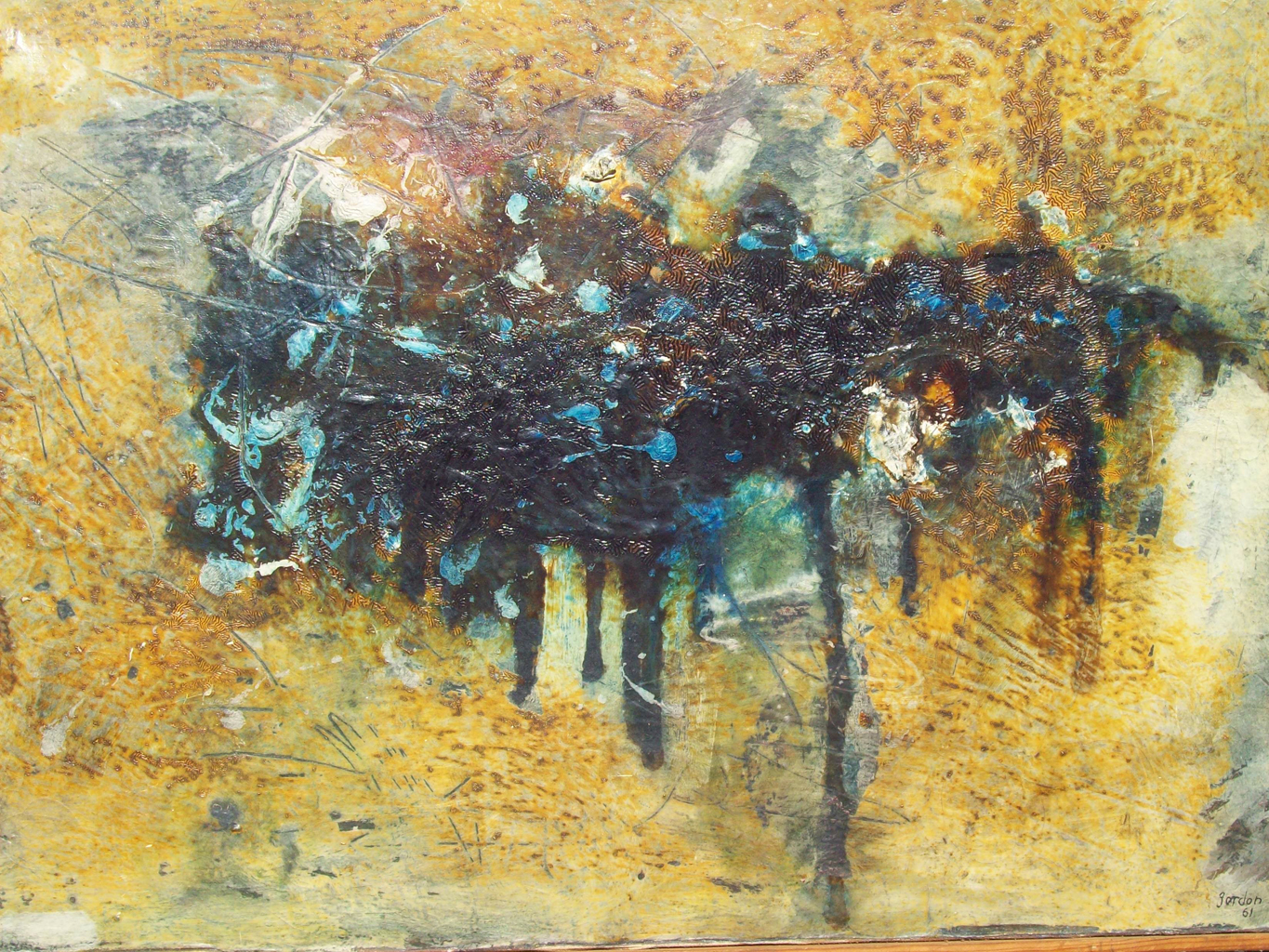
Allan Gordon Work I1 520x390 Allan Gordon

Untitled, 1961

000 00171 520x390 Allan Gordon

Vanitas Pastry Box, 2010

Allan Gordon CV


Cornelia Schulz

Cornelia Schulz 2 two carrots in search of the earth1 520x666 Cornelia Schulz

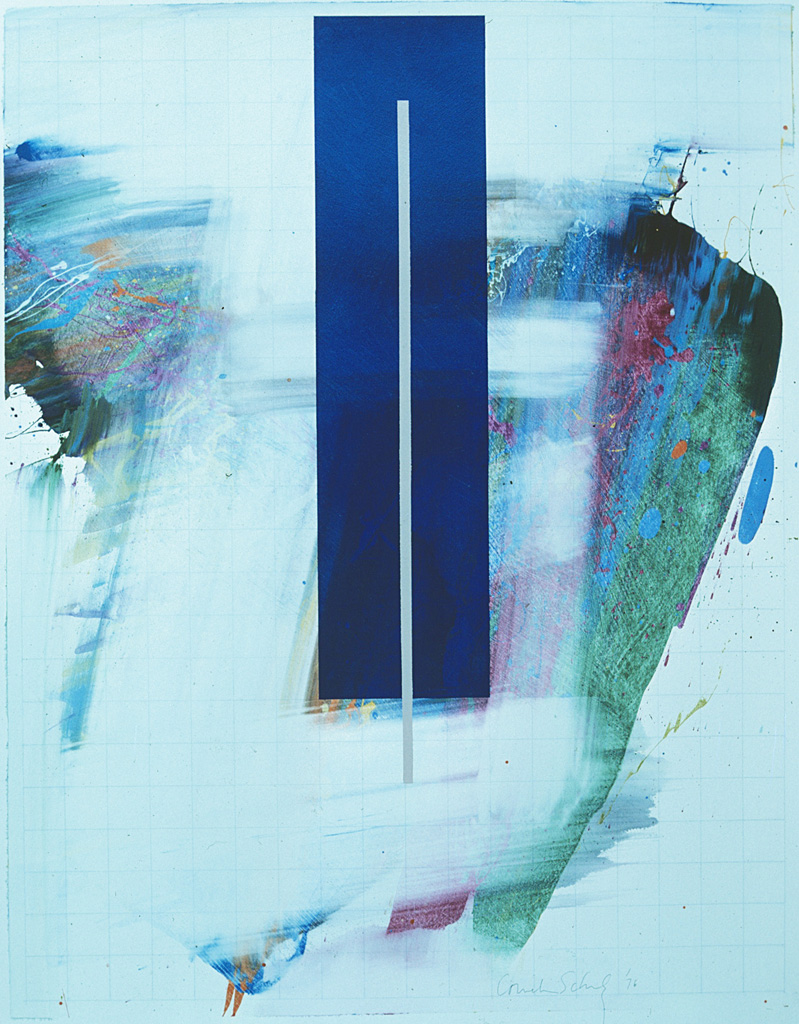
2 Carrots in Search of the Earth, 1976 29” x 23”, Enamel on graph paper

The bold perimeters of Schulz’s paintings matched with the intricate and refined surfaces, result in an engaging dialogue between grand modernist ideals and reflective, personal reverie. Schulz sophisticatedly manipulates the oil paint, alkyd resin and acrylics that spread throughout and emerge from her assembled shaped canvases. Having been educated in painting around the same time as iconic 1960’s painters such as Richard Tuttle and Elizabeth Murray, similarities in sensibilities and experimentation with shaped canvases are certainly evident in Schulz’s work. Continuing also in the footsteps of artists such as Barnett Newman and Frank Stella, she sought to redefine the rectilinear orientation of the art object. Cornelia Schulz exhibits with Patricia Sweetow Gallery in San Francisco. Since 1962, she has exhibited at such prestigious institutes as the San Francisco Museum of Modern Art, the University Art Museum, Berkeley, California and the Corcoran Gallery of Art, Washington DC, along with many other commercial galleries around the country. In 1973, Schulz began teaching at the University of California, Davis, where twice she chaired the Art Department. In 2002, Schulz retired with the title of Professor Emeritus.

corneliaschulz21 520x667 Cornelia Schulz

Untitled, 1975 29” x 23”, Enamel on graph paper

Cornelia Schulz CV


Nell Sinton

Nell Sinton Another Room 1970 520x650 Nell Sinton

Another Room, 1970, 59" x 47", Acrylic on canvas

Nell Sinton began painting in the 1920s. She studied at the San Francisco Art Institute (then called the California School of Fine Arts).

Sinton was acknowledged as one of the Ten Most Distinguished Bay Area Women and was an active member of the Bay Area art community and also served on the San Francisco City and County Art Commission, 1959-1963 and the Board of Trustees of the San Francisco Art Institute from 1966-1972.

Nell Sinton, died in San Francisco of natural causes in 1997 at the age of 87.

Nell Sinton Work II1 322x720 Nell Sinton

Nell Sinton has had ample success as recorded in exhibitions, awards, recognition by art critics and mention and illustration in recognized Proxy-Connection: keep-alive
Cache-CProxy-Connection: keep-alive
Cache-Control: max-age=0

trol: max-age=0

t periodicals, national and international. Among artists of her own locality she is well known and she has a sure place nationally. This is largely irrelevant in the presence of her work. Her works speak directly to the sensitive viewer on their own terms. They are in acrylic – a medium Nell Sinton adopted in 1964, in preference to the traditional pigments.

Nell Sinton has often incorporated collage of some type with acrylic painting She is deeply responsive to the possibilities of her medium, for her art, whatever its style, has been marked by a sensitivity in which external stimulus for the work and the means of its execution have both played their part, along with her intimate feelings.

She has been an innovator in her own development as an artist, very aware of thee evolution of today’s art as represented in the work of her contemporaries. She has valued her own development, and is sympathetic to the movements of her time. It is the breadth of her personal curiosity and excitement that one feels strongly in reviewing Nell Sinton’s work through the years.

-Grace Morley, April 1970 for the San Francisco Museum of Art

NellSinton Low Res Portrait 520x346 Nell Sinton

Nell Sinton in her home, 1970, San Francisco Museum of Art

Nell Sinton Jim Goldberg1 520x686 Nell Sinton

Nell Sinton CV


Jim Marshall

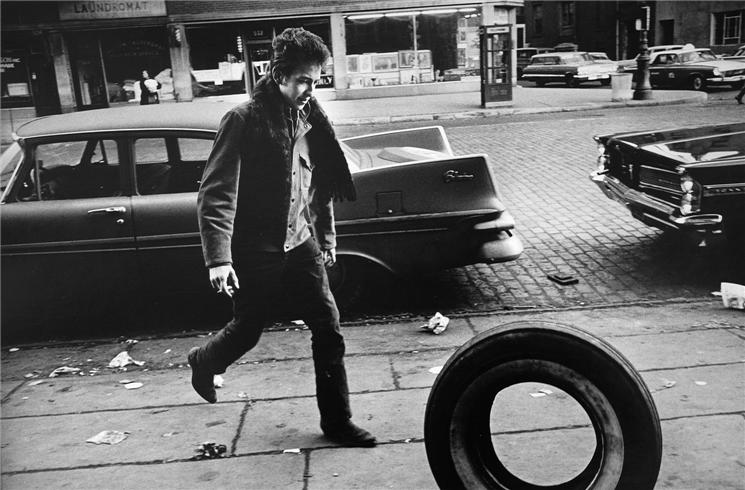
Jim Marshall   Bob Dylan Kicking Tire 1963 520x342 Jim Marshall

Bob Dylan Kicking Tire, 1963, source: www.marshallphoto.com

“THE GREAT FRENCH photographer Henri Cartier-Bresson famously used the phrase “the decisive moment” to describe the intuitive fraction of a second that separates a timeless photograph from the dozens of less inspired frames surrounding it. This instinct cannot be taught. It isn’t a skill photographer’s acquire as part of their craft. It’s a creative force that defines an individual style. And because Cartier-Bresson had the instinct to trigger his Leica’s rangefinder lens at so many memorable moments, he remains the 20th Century’s most remarkable photojournalist.
It takes no leap of the imagination to think of another Leica user, Jim Marshall, as the Cartier-Bresson of music photography—or more accurately, musician photography.
For nearly half-a-century Jim Marshall has captured his own rather remarkable share of “decisive moments.” Whether it was an informal portrait of John Coltrane, a boyish Bob Dylan kicking a tire down a New York street, Hendrix immolating his Strat at Monterey Pop, The Who greeting the sunrise at Woodstock, or Johnny Cash flipping a big F-you at San Quentin, Jim Marshall was there. And during the most extraordinary times yet for popular music, he somehow seemed to be everywhere—that mattered.
But no matter how iconic these and countless other of Jim’s images undoubtedly are, his photographs are always about his subjects, not about making a “Jim Marshall photograph.” Because Jim lived the life alongside his subjects, and never betrayed their trust, he was granted second-to-none access to scores of great musicians. Indeed, it is arguable that the only guy who could have possibly captured certain moments of unguarded intimacy, such as Brian Jones and Jimi Hendrix strolling the Monterey fairgrounds, or Janis Joplin lounging backstage with a bottle of Southern Comfort, is Jim Marshall.
As Jim has said, “…I do see the music. This ‘career’ has never been just a job—it’s been my life.”

Jim Marshall   by Tim Mantoani 501x720 Jim Marshall

Jim Marshall holding his famous portrait of Johnny Cash, by Tim Mantoani

Born in Chicago in 1936, Jim Marshall grew up in San Francisco’s Fillmore district. As a boy, he started taking pictures on a Baby Brownie. But after winning a school track meet, and seeing the razor-sharp image of himself crossing the finish line that a spectator had taken with a Leica camera, Marshall’s destiny seemed all but sealed. He acquired his first Leica, an M2, in 1959, for the then-princely sum of $50 down followed by twelve monthly payments of $24 each.
Naturally drawn to San Francisco’s North Beach coffeehouses, Marshall began shooting the beat-poets, artists, and jazz musicians he encountered every day. While in the Air Force, he shot photos of fellow servicemen. After his military stint, trying to launch a career, he photographed dragsters and sports cars. But it was a return to his North Beach roots that brought his first big break, one that would define his path.
It was 1960. While hanging backstage at San Francisco’s Jazz Workshop, Marshall encountered John Coltrane. Then on the verge of his astonishing late-period visionary quest, Coltrane wondered how he might get across the Bay Bridge to Berkeley, where he was to meet with Chronicle music critic Ralph J. Gleason. Seizing the moment, Marshall offered Coltrane a ride to Gleason’s house, where he would fire off nine rolls of film, capturing several classic shots of the soon-to-be tenor legend.
The early ’60s found Jim Marshall in New York, where assignments from record labels such as Atlantic, Columbia, and ABC Paramount, and the magazines Newsweek and The Saturday Evening Post added to his ever increasing reputation, and offered unusual access to folk and jazz musicians. Lesser-known aspects of Marshall’s early work include photojournalism assignments documenting life in Appalachia, and Civil Rights activities in Mississippi.
In 1964, Marshall drove back to San Francisco and moved into a small North Beach apartment. His timing could not have been more perfect.
Rock ’n’ roll was blossoming, and so were Marshall’s talents. As the beat-era’s coffee, booze, and cigarette culture kaleidoscoped into the pot-smoking, acid-dropping hippy movement, San Francisco was becoming the epicenter of America’s counterculture, with a music scene that would soon rival those of London and New York.
As a fixture on the scene, Jim Marshall was there to immortalize local bands like the Grateful Dead, Jefferson Airplane, Big Brother, and Santana long before they were household names. In 1966, Marshall was the only photographer allowed backstage access to what proved to be The Beatles’ final concert at Candlestick Park. A year later, Jim’s photos from the Monterey Pop Festival would become as woven into the lore of that gig as would the breakout performances of Hendrix, Janis Joplin, and Otis Redding. Marshall was the first photographer to shoot The Who and Cream in the U.S; he was selected as one of the official photographers of the Woodstock Festival, covered the Rolling Stones ’72 tour for Life magazine, and is the only photographer able to squeeze the friendly rivalry between Janis Joplin and Grace Slick into a single frame.

But as extraordinary as Jim’s lifetime body of work is, for him it all comes back to the music. As he wrote in the introduction to Not Fade Away: “Too much bullshit is written about photographs and music. Let the music move you, whether to a frenzy or a peaceful place. Let it be what you want to hear—not what others say is popular. Let the photograph be one you remember—not for its technique but for its soul. Let it become a part of your life—a part of your past to help shape your future. But most of all, let the music and the photograph be something you love and will always enjoy.””

Source: www.marshallphoto.com

Jim Marshall Johnny Cash Flipping Bird 1969 520x354 Jim Marshall

Johnny Cash Flipping Bird, 1969, source: www.marshallphoto.com

Jim Marshall Jimi Hendrix 1967 Jim Marshall

Jimi Hendrix, 1967, source: www.marshallphoto.com

Jim Marshall Timeline

Read Rolling Stone Tribute to Jim Marshall


Arthur Monroe

Arthur Monroe Jam Session Arthur Monroe
Jam Session
36″ x 36″, 1991

Brooklyn-born Arthur Monroe spent his formative years in New York City. It was during those years that he became a close friend of Charlie Parker, who advised him “to know his axe;” that is, to know his craft, advice that he has adhered to ever since.

Abstract Expressionism was the prevailing American art style in the 1950s and was generally recognized as being the most important modernist art to have occurred after World War II. As a young artist, Arthur Monroe immersed himself in the exciting milieu of the East Village. He had a studio facing that of Willem De Kooning’s, and he hung around the Cedar Street Bar, where he knew some of the most acclaimed Abstract Expressionists, including Franz Klein.

The young Arthur Monroe felt a need to examine non-European sources of visual art and left New York to travel in search of them in Mexico, particularly the sources inherent in the cultures of the Mayans, Zapotecans, Michteans, and Olmecans. He wished to become involved intimately with cultures that offered spiritual, philosophic and aesthetic viewpoints different from his background in the mainstream art world of New York.

Monroe returned to America, first to Big Sur and then to San Francisco during the legendary Beat Era of North Beach in the late 1950s, becoming Proxy-Connection: keep-alive
Cache-Control: max-age=0

important participant in an art scene that included a host of other artists.

However, Arthur Monroe remained committed to his Abstract Expressionist roots. They have continually provided him with an approach to express himself in his search for new visual truths. He may spend as much as three years on a painting, engaging with it in an interior dialogue and anguishing over each stage of its development. He is unable to paint anything that isn’t an expression of a laboriously-evolved visual turth. Unlike many artists since the 1960s, Monroe eschews drawings as an executional expedient, feeling that this will only reflect what comes off the top of the mind superficially. Initial ideas become extensively transformed as inner truths struggle to be realized.

Nothing is clear ahead of time; Arthur Monroe works more as a scientist asking a myriad of questions before he finds his hypothesis. Many painters bypass this process because they don’t even know that it exists. An artist learns from mistakes, as if the stone knows more about the sculpture than the sculptor himself. Arthur Monroe faces his materials as a challenge; the more he handles them, the more he appreciates what they might do.
Visual innovations are a by-product of the same laborious process of Monroe’s involvement with the medium. A finished painting is unique unto itself and never serves as a prototype for linearly-serialized visual statements. As in the purest era of Abstract Expressionism, extraneous concerns such as ideological stances never dictate the outcome of a painting.

Arthur Monroe remains enchanted by the Abstract Expressionist penchant for large-scale work. He observes that while European Modernist art before World War II was monumental in concept, it wasn’t always large in scale. He was initially attracted to American Abstact Exprssionistic paintings that had the potential to make their impact much greater on the viewer by altering the scale of the work. Monroe continues to find that the space between the painting and the viewer becomes more charged because of the enlarged forms, colors, and brushwork.

Since Arthur Monroe left New York, he has immersed himself in an investigation of non-European cultures extending from Nigeria to the Amazon. He has taken his cue as an artist from T.S. Eliot and Langston Hughes, who said you really can’t write poems until you learn to think in another language. Monroe remains the prototypical underground artist who believes, as Hughes did, that you really don’t understand yourself, your culture, or your art until you understand what is in the person who has the least. Monroe also believes that this applies to the art scene, with each art movement being an important link and none being more important than another.

Ultimately, all artists are part of the chain; these are some of the ideas that Monroe’s art is noursished by, as well as Charlie Parker’s teaching about living and life: “know your axe: know your instrument before you talk with it.”

- Terry St. John

Arthur Monroe Self Portrait Arthur Monroe
Self Portrait


Joan Brown

Joan Brown Flying Joan Brown
Flying
Oil on Canvas, 51″ x 57″, 1958

One of California’s pre-eminent figurative artists, Joan Brown was born in 1938 in San Francisco and died in October 1990, at the age of 52, in India. Brown has long been recognized as one of the important artists to emerge from the creative milieu of the San Francisco Bay Area in the late 1950s. She created a body of work distinguished by its breadth and personal vision, even though her creative output was cut short by her premature death.

As a young artist, Brown studied at the California School of Fine Arts (now the San Francisco Art Institute), the key institution in the western U.S. to advance the ideas of abstract expressionism. Brown embraced the gesture and force of abstract expressionist paint handling and its intuitive approach to the creative process. In 1960, at the age of 22, she had her first solo exhibition in New York, at the Staempfli Gallery. She was involved in San Francisco Beatnik culture, and part of a circle that included the poets Michael McClure and Alan Ginsberg, and artists Jay De Feo, Wally Hedrick and Bruce Conner. In 1959 she was a founding member, along with Conner, Manuel Neri, Jess, and Wallace Berman, of the Rat Bastard Protective Society, an informal coterie that objected to the term “Beat,” but which by its title symbolized the counter-culture ethos of the Beat generation.

Brown’s reputation, based on her intensely painted canvases that synthesized figurative imagery with the dynamic gestures of abstract expressionism, grew towards the mid-’60s. Her paintings of this period firmly allied her with the work of her teachers and their contemporaries, among them Elmer Bischoff, David Park and Richard Diebenkorn. Brown’s work, however, was set apart by its domestic subject matter: images of her young son, family pets, a Thanksgiving turkey and other kitchen still-lifes.

Then, in the mid-’60s, Brown retreated from the commercial art scene to refocus her art. Eventually, she made a decisive turn to more explicitly representational and symbolic imagery that was highly autobiographical and later, very spiritual. In 1990 she was installing one of her sculptures in India when the floor above her collapsed, crushing her and an American assistant.

- Oakland Museum 1999
Joan Brown CV


Carlos Loarca

Carlos Loarca  Cadejo1 520x386 Carlos Loarca

Lo Dinamico En Nosotros Los Animales, Acrylic on Canvas, 91" x 66", 1980

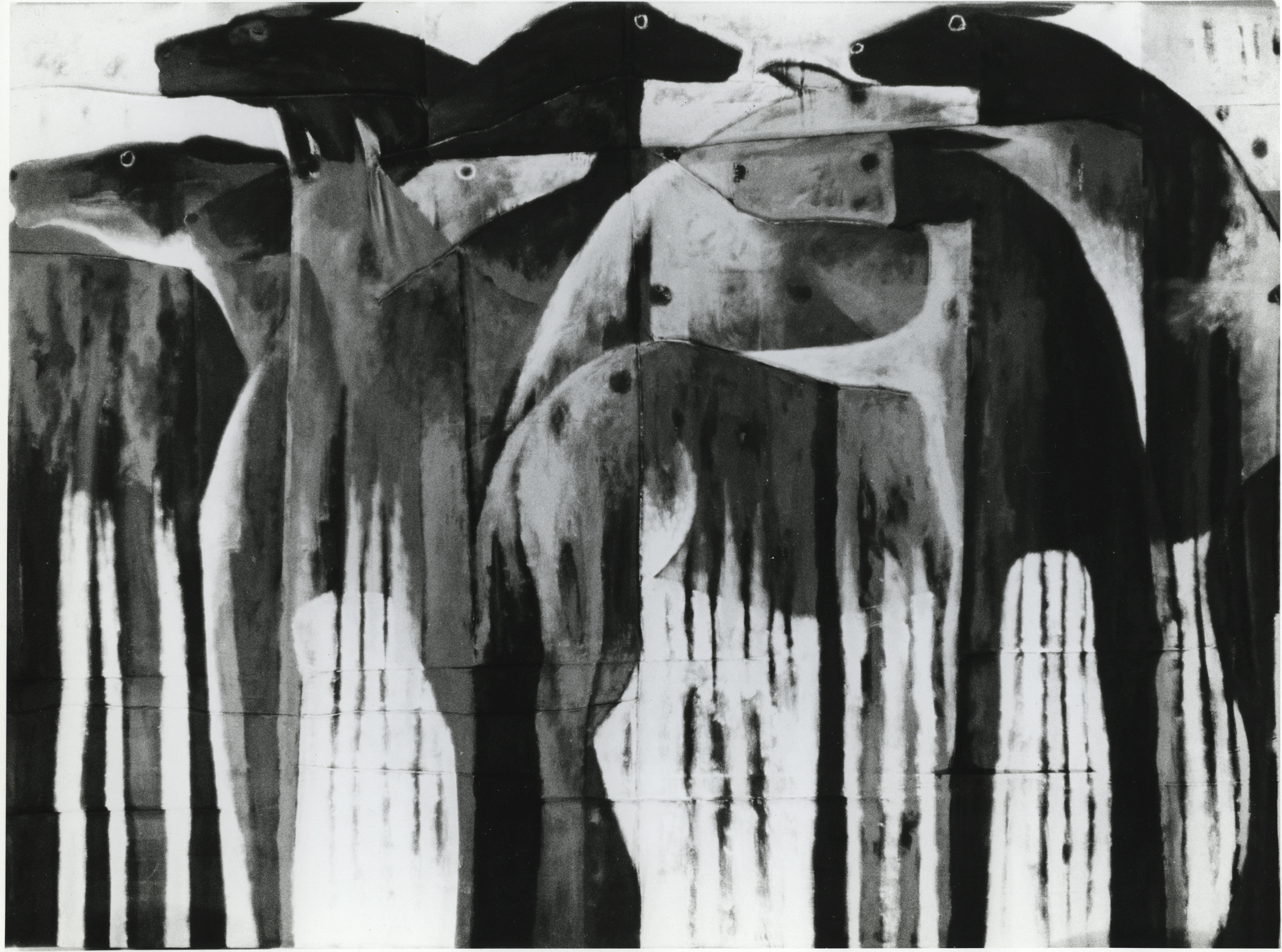
Carlos Loarca, a Guatemalteco-born artist now living in San Francisco,  is motivated by an instinctive drive to express powerful motives of pictorial nature, mainly of his native land. Since 1980, a reoccurent element of in Loarca’s work has been his depiction of “El Cadejo”, the mythical dog of his Gautelmateco past. The legend, in the form Loarca heard as a child, says that the Spirit Dog accompanies men home from the bars at night and safeguards them from harm. Loarca sees El Cadejo as a friendly soul, and perhaps a reflection of his past. The artist works in acrylic, mixed liberally with water, to render fluid images that capture (in the artist’s own words) “the sociological, psychological and philosophical aspects of the legend.” The subject matter revolves around variations of the legend with repeated Spirit Dog images in contemporary adaptations to the artist’s surrounding culture.

The vibrant cProxy-Connection: keep-alive
Cache-Control: max-age=0

ors in Loarca’s paintings are take directly from the colors of the clothing, marketplace and daily life of Guatemalans. The forms favored by the artist are simple geometric ones- the circle and rectangle-repeated in different configurations that tell the same story from various perspectives.

Carlos Loarca Artist Statement

“When I began to paint, my aim was never to master a craft. It was merely coincidences of opportunity, chance and discovery that brought my painting out to light. It was the mystery and the abstraction of the format of painting that intrigued me to find out what was going on in me. I wanted to find out what did happen to all my past (not what happened in my past), but rather where did it all go, and realizing the incredible amount of options that I could work with, I began to be involved with painting.

The most exciting part about painting is in the experience itself of doing it. When the actual painting is taking place the fantasy of the mind and the powers of creation help to bring our special surroundings about me in the studio. As the painting takes form, the head does not really understand what it is that it is doing. The inspiration seems to come from the void in the universe.

There are a lot of frustrations that occur when working on a painting, but that is because the painters is not allowing the art to take form, the head does not really understand what it is that it is doing. The inspiration seems to come from the void in the universe.

There are a lot of frustrations that occur when working on a painting, but that is because the painter is not allowing the art to take form. It is more like the painter imposing his/her own will of the art. Painting will always happen, and to this fact I will always be true.

I took one of the legends of the Indian nations from Guatemala and I focus on it to draw from the imagination. The legends tells of “El Cadejo”, one big black dog with shiny eyes who is the protector of drunks on their way back home from the “cantinas.” The dog meets the drunk man outside the door of the cantina and walks him home to the front steps. I felt this protection many times and even thought I was not living Quetzaltengango (where I was born), I always felt the protection of “El Cadejo.”

I do not drink any alcohol anymore, but the protection of the dog is still with me, and now I can feel his presence as I paint. What started as a simple legend in my childhood has flourished into a realistic fantasy and has become part of the world I live in.

The color in the paintings is a direct reflection of the colors of the Indian colors in their own costumes. I grew up seeing all these bright colors in the market, in the street and especially during all the festivities and celebrations in Quetzaltenango.

I often think that I am living in the past, but I also wonder if the public in general is not doing the same thing and just not being aware of it.”

-Carlos Loarca, February 1994

Carlos Loarca  Cadejo II2 520x574 Carlos Loarca

El Cadejo Elegante, Acrylic on Canvas, 59" x 53", 2004

Carlos Loarca pintor SF 1994 Carlos Loarca

Carlos Loarca, 1994

Carlos Loarca CV


Jay DeFeo

JoseRLerma RayAnder19600121 520x652 Jay DeFeo

When Jay DeFeo died in 1989, at age sixty, she was at the height of her creative powers. Alternately categorized as an abstract expressionist, a Beat painter, a Funk artist, an eccentric, and a romantic, DeFeo was a star of the small avant-garde art and poetry world of San Francisco during the fifties that included Allen Ginsberg, Bruce Conner, Michael McClure, and Wallace Berman.

DeFeo’s work from the fifties includes large- scale, semi-abstract oil paintings in muted, neutral tones inspired by religious and mythological themes. During the sixties, she worked exclusively on “The Rose,” a massive painting of radiant impasto, built up layer after layer until it measured eleven by eight feet and weighed a full ton. Partially due to health problems sustained while creating The Rose, DeFeo took a four-year hiatus from painting.

She resumed her work in the early seventies, producing hundreds of drawings, paintings, and photocollages that range from organic abstractions to still lifes based on prosaic objects. In the eighties, she combined gestural mark-making with non-organic structure, gradually returning from the use of black, white, and gray to a full-color palette. In all her work, DeFeo struggled with opposites- light and dark, geometry and gesture, representation and abstraction- formal concerns that persisted even in her final poetic evocations of landscape.

DeFeo’s work has been exhibited at the Museum of Modern Art (New York), Pasadena Art Museum, San Francisco Museum of Art and in numerous art galleries including the Menil Collection (Housron), Ferus and Kohn/Turner galleries in Los Angeles.

DeFeo’s most famous painting is the mammoth work simply called “The Rose” which was painted between 1959-1966. It measures 7.5 x 11 feet and weighs 2,300 pounds. Out of view behind a wall at the San Francisco Art Institute for nearly 20 years, “The Rose” was included in the recent Whitney exhibition about Beat generation art. A film called “The White Rose” by Bruce Conner documents the moving of the painting and has contributed to its popularity.

- The American Museum of Beat Art

JayDeFeo JerryBurchard2015 520x652 Jay DeFeo

Jay DeFeo in her shared Fillmore Street studio, 1960, by Jerry Burchard

http://www.jaydefeo.org/


Patricio Moreno Toro

Patricio Moreno Toro was born in 1943 in Santiago, Chile. As a young teenager competing with artists twice his age, he received the first prize in painting from the Museo National de Bellas Artes (MNBS) in Santiago. He became the protégé of Nemesio Antunez, Director of MNBS, Antunez also founded in 1953 the internationally renown Taller 99 – printmaking workshop. Patricio Moreno Toro arrived in Europe in 1966, in Italy he founded The Begging School of Rome, worked in Spaghetti Westerns and worked for Roberto Rossellini. In Paris he became studio assistant to Roberto Matta, In Sweden his work was widely collected and sought after by museums and private collectors. He lived and worked in Europe and in Africa (Israel and South Africa), until he arrived in the United States. Toro was given a wone way ticket and escorted from Cape Town South Africa for his participation in anti apartheid activities. He arrived in Los Angeles, California in 1978 to mount his exhibition at the Museum of Science and Industry. Although Toro is recognized for his huge canvasses, his smaller works are powerful character studies that are deeply emotional and precariously balanced investigations of life. He now lives and works in Oakland, California and maintains studios in Concon and Santiago Chile. Patricio Moreno Toro is known as a world class artist, chef, raconteur, and a big liar.

Please visit:
www.patriciomorenotoro.cl
www.marylovelaceoneal.com

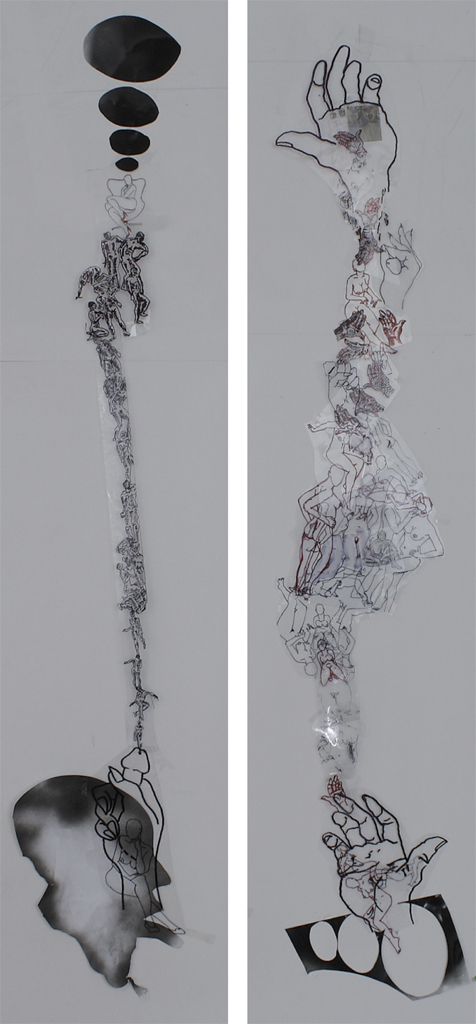
Patricio Moreno Toro   He Ate All Their Screams lowres 334x720 Patricio Moreno Toro

He Ate All Their Screams I & II, Sharpie & Spray Paint on Plastic, 2008

Terranostra, oil on canvas, 10' x 20', c. 1986

Terranostra, oil on canvas, 10' x 20', c. 1986


Mary Lovelace O’Neal

Born in Jackson, Mississippi in 1942, Mary Lovelace O’Neal, a painter who also prints, is Professor Emerita from the University of California at Berkeley and former Chair of the Department of Art Practice. She retired from the University in 2006. She has taught at the University of Texas at Austin, The San Francisco Art Institute, California College of Arts and Crafts, Oakland, CA, Humboldt State University, Arcata, Ca, and Jorge Tadeo Lozano, Bogota, Columbia, SA. She exhibits and lectures widely – both nationally and internationally.

She is a graduate of Columbia, MFA (1969), and Howard Universities, BFA (1964). Among the people at Columbia with whom she studied are Aja Junger, Stephen Greene, Leon Golden and Andra Ratz. At Howard University David Driskell, Lois Malou Jones, James Porter and James Wells are among the people who provided her basic introduction to art practice. She credits Professor Ronald Schnell and her Father Professor Ariel M. Lovelace of Tougaloo College, for her love of the arts. In 1993 she was a student at Skowhegan School of Painting & Sculpture where she started to understand the fundamental function of paint.

As a printmaker she has worked with Robert Blackburn, The Printmaking Workshop of New York City, Nemesio Antunez, Director of Museo Nacional de Bellas Artes and Founder of Taller 99 in Santiago, Chile, Tom Vanderlinden-UT at Austin and Professor Karl Kasten, founder of the Department of Printmaking at the University of California.

In 1991 she curated an exhibition for the Museo Nacional de Bellas Artes in Santiago, Chile, “17 Artistas Latino y Afro Americanos en USA.” 150,000 people visited the exhibition. In 1993 she received the Artist En France Award sponsored by the French Government and Moet & Chandon. She has represented the United States at a number of Biennales & International Art Festivals including Biennale Internazionale dell’Arte Contemporanea, Florence, Italy, Amadora 2000 VII Biennale 1st International de Gravura, Amadora, Portugal, Biennale International Du Dakar, Dakar, Senegal, Africa, Mondiale d’Estampes, Musee d’Art Contemporaine de Chemalieres, France. She led tours of Robert Coelscott exhibition I nthe USA pavilion at the Venice Biennale in 1997. In 1983 she was invited as resident artists to print and participate in the international arts festival in Azilah, Morocco. In 2005 she was chosen by the State Committee to represent Mississippi at the Committees Exhibition at the National Museum of Women in the Arts in Washington, D.C. Her work is represented in a great number of international collections private and public in such places as Chile, France, Egypt, Morocco, Costa Rica, Brazil, Colombia, Senegal, Nigeria, Gabon, and Gambia, to name a few.

Two hardback monographs/catalogues have been published on the occasion of recent solo exhibitions-The Mississippi Museum of Art, Jackson Mississippi (2002) and Togonon Gallery, San Francisco, California (2007). She co-authored with Lee Hildebrand Colors & Cords, a book on the painting and sculpture of musician Johnny Otis published by Pomegranate Art Books in 1997. Mary Lovelace O’Neal lives and works in Oakland, California, she also maintains studios in Concon and Santiago, Chile, SA.

Please visit:

www.marylovelaceoneal.com

www.patriciomorenotoro.cl

Mary Lovelace ONeal Last Lay Up 520x329 Mary Lovelace ONeal

Last Lay up, Unfixed Powdered Pigment, 6'9"x 11'6", 1979

Mary Lovelace ONeal She Thinks Shes a Zebra 470x720 Mary Lovelace ONeal

She Thinks She's a Zebra, Actually She's a Painted Pony, mixed media, 7" x 5", 2007


José Ramón Lerma

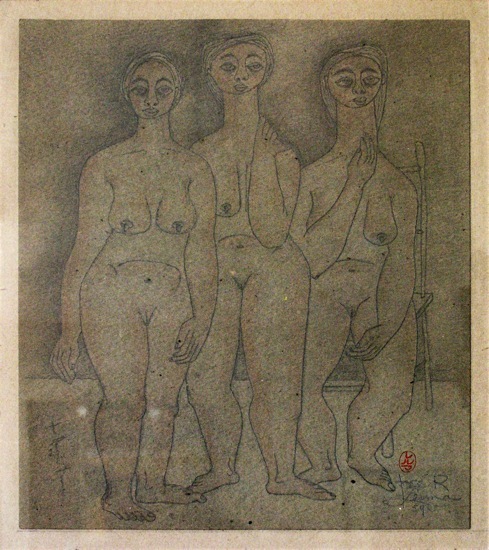
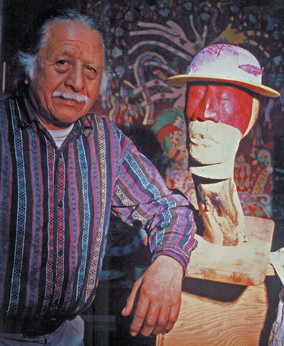
José Ramón Lerma was born in 1930 in the Salinas Valley. Lerma came to San Francisco in 1950 and was one of the first Latino students to study at the California School of Fine Arts, now SFAI. Lerma was soon drafted into the Intelligence Division of the U.S. Army at the start of the Korean War. He was stationed close to the front and his experiences there transformed him as a person and as an artist. He returned to San Francisco and the San Francisco Art Institute to resume his studies in the mid 50’s studying under Jean Varda, Nathan Oliviera and Edward Corbett. Lerma immersed himself in the San Francisco that was the home of Beat Culture and an important center for Abstract Expressionism. Lerma’s peers include Wallace Berman, George Herms, Roy De Forest, Bruce Conner, Manuel Neri, William T. Wiley, Luis Cervantes and Jay DeFeo. He was integral to the burgeoning gallery scene in San Francisco in the early 60’s having solo exhibitions at seminal gallery spaces the East-West Gallery, The Cellar, Spatsa Gallery, Russian Hill Gallery and most recently a major retrospective of his paintings, collages and constructions from 1954-2000 was held at Intersection for the Arts. 

Lerma has also participated in numerous group exhibitions including the Oakland Museum, The San Francisco Museum of Art, The Sonoma County Museum, Galeria de la Raza, Gallery Sanchez, Somar Gallery, Mission Cultural Center, Richmond Art Center, La Raza Graphics Center, and the Walter and McBean Galleries at SFAI. His work has also been exhibited nationally including the Chicago Museum of Contemporary Art, Museum of Albuquerque, Los Angeles Municipal Art Gallery, Evergreen State College, and Tuscon Museum of the Arts. Lerma lives and works in Oakland, CA. ArtZone 461 GalleProxy-Connection: keep-alive
Cache-Control: max-age=0

(www.artzone461.com) is proud to present a survey of works (1947 to date) by Jose Ramon Lerma to celebrate his accomplishments during National Hispanic Heritage Month and announce a more complete retrospective in February of 2010.

Source: San Francisco Art Institute website, notable alumni biographies.

 José Ramón LermaNude 3 (1954)

 José Ramón LermaAbstract (1959)

 José Ramón Lerma
Mother Earth (1988)

 José Ramón LermaChrist of Polish (1976)

 José Ramón LermaJosé Ramón Lerma, 2007


JoseRLerma RayAnderson20161 520x414 José Ramón Lerma

Jose Ramon Lerma, by Ray Anderson, 1960

JoseRLerma RayAnder1960011 520x414 José Ramón Lerma

Jose Ramon Lerma, by Ray Anderson, 1960

Download CV [pdf]


Win Ng

dhd9nvg9 14d87trbhr b 520x261 Win Ng
Wave (1959)

Born in San Francisco’s Chinatown, Win Ng established his reputation as a master ceramist, with an initial focus on abstract, non-utilitarian works in the tradition of Peter Voulkos. Raised in Chinatown, he attended Saint Mary’s Academy for six years where he studied Chinese language. Later, he attended City College of San Francisco, and San Francisco State. After discharge from the army, he resumed his studies in ceramics at the California School of Fine Arts (later known as the San Francisco Art Institute), and received his BFA in 1959. In1960, he attended Mills College, but never completed his MFA.

In 1958 he had his first one man show at the Michow Gallery in New York, then, in 1961, was represented by Braunstein Gallery in San Francisco (now the Braunstein/Quay Gallery) who continues to represent his work posthumously. Many traditional critics feel that Ng’s important work dates from 1958 to 1965, the years before he shifted his creative output from gallery art to more functional work.

This “functional” work was a collaborative entrepreneurial endeavor with artist Spaulding Taylor. As co-founder of Environmental Ceramics (later to be named Taylor & Ng), Win Ng established himself as a consummate decorative designer and innovative entrepreneur. Taylor & Ng shifted the paradigm in retail merchandising by raising the awareness and perception of the mass market toward finely wrought hand-crafted artware, and in the process became the model for many culinary and speciality stores to follow. The Chinese Wok was just one of many objects Taylor & Ng help to popularize.

Following a twenty-year journey (from 1965 to 1985) Taylor & Ng grew from a small ceramics shop on Howard Street, to a mega, multi-level emporium at Embarcadero Center. There were also stores at the Stanford Shopping Center and other Bay Area locations as well a Taylor & Ng shop inside Macy’s in New York.

But Ng continued with his fine art even during this two-decade decorative period. He produced a veritable torrent of work—thrown ceramic bowls, pots, bottles, vases, dishes, slab constructions, sculptures in earthenware and metal, paintings, drawings, book illustrations, as well as hundreds of decorative designs for Taylor & Ng—in scales ranging from minute to monumental. And while this public departure from the purely fine art realm may have cost him an ongoing reputation in the gallery/museum world, it was his renewed focus on fine art in the final years of his life, as well as his innovations in decorative and ceramic arts that underscore his important contribution as a post-modern artist. In the last decade of his life (1981-1991) Win Ng would leave the retail world and re-visit in earnest his deep passion, “bringing together in one integrated work” his artful life.

- Allen R. Hicks

untitledearthware sculpture.1983Ng 520x510 Win Ng
Untitled
Earthware sculpture, 1983


Susan Kelk Cervantes

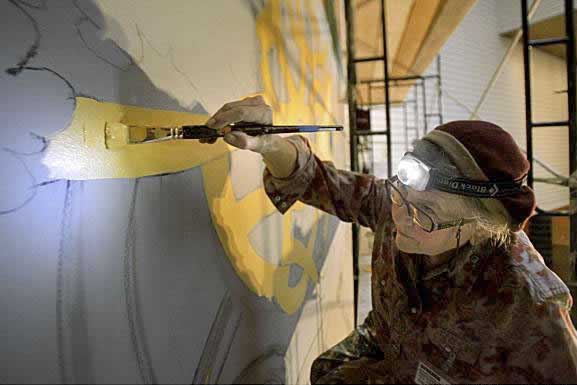
Susan Kelk Cervantes, muralist and dedicated artist for 47 years, a pioneer of the SF community mural art movement, and the founder and director of the Precita Eyes Muralists in the Mission District of San Francisco. Established in 1977, Precita Eyes is one of only a handful of community mural arts centers in the United States.

Influenced by the Mujeres Muralistas, the first collaborative group of women muralists, Cervantes has applied the same process of accessible, community art to any size mural or age group through community mural workshops.

Cervantes is responsible for more than 400 murals (including the murals on the Women’s Building) considered some of the finest in the country. She is dedicated to enhancing the environment through the creation of murals while involving and educating the community about the process and history of public community mural art. Her deep commitment to collaboration guarantees that the creative work produced is accessible, both physically and conceptually, to the people whose lives it impacts.

“The mural movement itself is ethnically based. When you get ready to create a mural somewhere you’re sensitive to that place and its history. We’re constantly finding new ways to express the history that we all share and make it more visible. Murals beautify and enhance a drab environment, just the colors alone. They are uplifting, life affirming.”

“Murals are a real peoples art. People feel it is for them and about them. It concerns their hopes and dreams for a better future for everyone.”

“Balmy Alley is a mural destination for visitors. As the coordinator of the mural restoration project, I feel that it is most important to start there, and then work outward.”

“A mural is a bridge to the community. The artists communicate with the people; meetings are held to discuss the issues. The result is a reflection, a mirror of that community.”

“I don’t think of any one culture while I am painting. I try to bring out what’s common in people. Hopefully they’ll see themselves in my work.”

“I don’t think that there should be any restrictions or censorship placed by governments on artists. I certainly feel visual information has a lot of power, but people should not fear it.”

“My social responsibility as a public artist is to reflect the diversity of a community.”

“People in the community have concerns, and it is important that they have a voice. Public art gives people that voice. It gives them the visibility of the hopes and dreams of their community.”

“We believe hat through the various processes of creating public art, youth develop as artists and gain confidence in their ability to have a voice in the cultural life and the positive transformation of their city.”

“Their vision is ours. This is our home, where we live and raise our families. We are proud of it.”

“Every single kid has a design in this mural. No one was excluded from that opportunity, so they all feel that they’re a part of it, and not separate from it… so it’s really truly their mural.”

“It is great being outside and painting really large, but more important was I saw how muralists worked with each other in a collaborative way, and respected each other’s efforts, and trying to paint what was important. And then the passersby would offer comments and I realized how important it was for artists to be visible to the community, and how good it was to have art become part of everyday life.”

“Everyday you should be able to walk outside and see something being created. ”

“Art is not part of what we see, and not part of what our children see. It’s so sad. I see cultural genocide occurring. There’s a whole generation of kids without exposure to art. They haven’t learned about what’s inside them.”

“When we express our feelings through art, it’s a release. It makes you begin to care and have compassion for things around you, if you see yourself in something you’ve made.”

“There is an artist within everyone and if everyone were creating something at the same moment there would be peace felt all over the world. ”

-Susan Cervantes

Please visit Susan Cervantes’ website: www.susankcervantes.com

SusanCervantesPortrait 520x346 Susan Kelk Cervantes

Susan Cervantes at work at San Francisco Museum of Modern Art

SusanCervantes SpiralofLife1968 lowres 520x557 Susan Kelk Cervantes

Spiral of Life, 1968

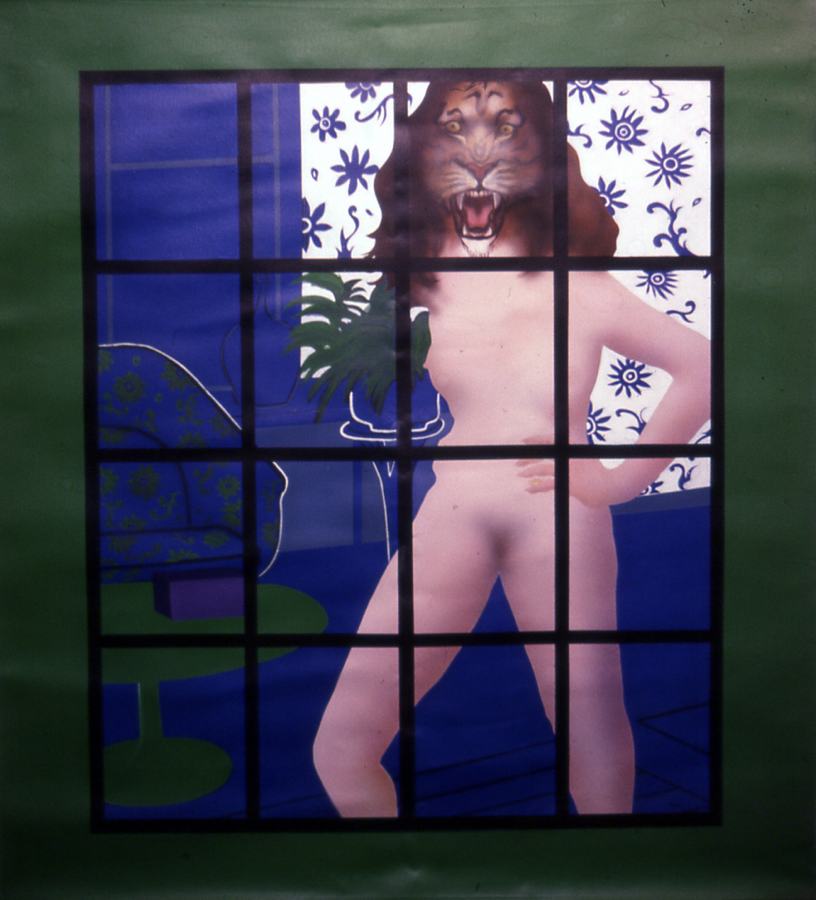
SusanCervantes TransparentEcstacy1969 lowres 484x720 Susan Kelk Cervantes

Transparent Ecstacy, 1969

SusanCervantes FamilyLife77 lowres 819x1024 Susan Kelk Cervantes

Family Life Mural, 1977

SusanCervantes CelestialCycles82 lowres 520x491 Susan Kelk Cervantes

Celestial Cycles, 1982

Our Children Are 82 lowres 520x647 Susan Kelk Cervantes

Our Children Are Our Reincarnation, 1982

Susan Kelk Cervantes_CV


Ruth Asawa

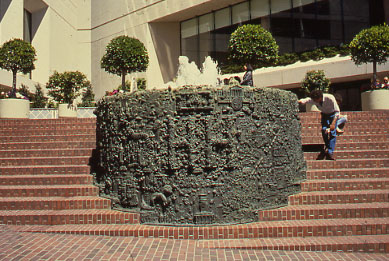
Asawa Hyatt Foundation Ruth Asawa
Hyatt Foundation
Cast Bronze, 1973
Read more »


Robert Colescott

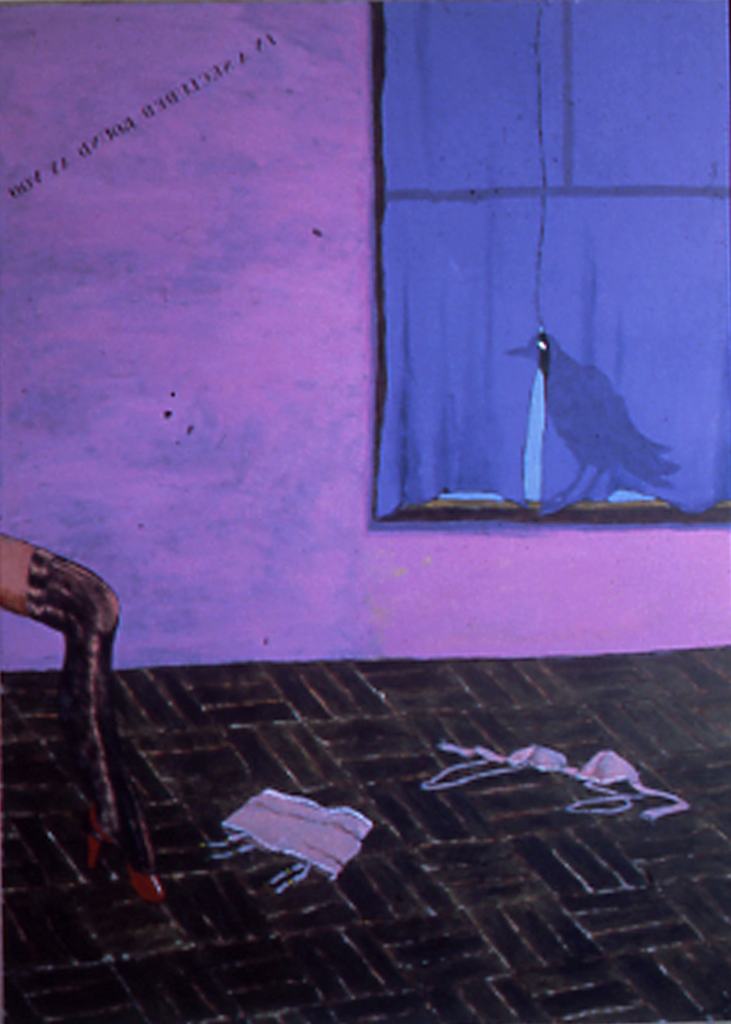
Colescott Crow in Window 513x720 Robert Colescott
Crow In Window
Acrylic on Canvas, 4″ x 5″, 1978
Read more »


Manuel Neri

Neri Standing Plaster Figure Manuel Neri
Standing Plaster Figure
Enamel on plaster, 5 1/2″x6 1/4″, 1959
Read more »


Luis Cervantes

Luis Cervantes 1 Luis Cervantes

Luis Cervantes, 1923-2005 – artist, painter, sculptor, philosopher, and muralist who inspired generations of artists.

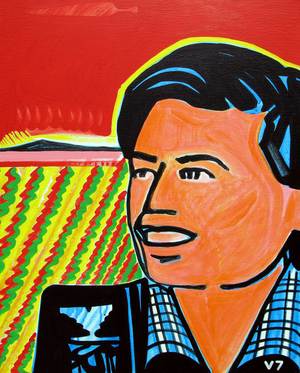
“He was passionate about creating a message about one’s roots. ” Luis Cervantes and his wife, Susan Kelk Cervantes, opened the New Mission Gallery in the 1960s, and in 1977, they started Precita Eyes Muralists, whose mission is to produce urban community art through collaborations. Mr. Cervantes directed many of the nonprofit’s projects, including “The Cross of Quetzalcoatl” at San Francisco State’s student union, “The Precita Valley Vision” at the Precita Valley Community Center and “Si Se Puede” at Cesar Chavez Elementary School in San Francisco.

Mr. Cervantes was born in Santa Barbara. He enlisted in the U.S. Army Corps of Engineers in 1942 and served in England, Belgium and France with the 358th Engineer General Service Regiment. Mr. Cervantes was among the invasion forces at Normandy on D-Day.

After World War II, Mr. Cervantes moved to San Francisco and found work as a custom mattress maker with the McRoskey Airflex Mattress Company, his employer until his retirement in 1992. He served as president of the San Francisco Furniture Workers Union for two years. Mr. Cervantes used his G.I. Bill scholarship to study sketching and sculpture at San Francisco State College and ceramic sculpture at the College of Marin and the San Francisco Art Institute.

His sculptures have been shown at the M.H. de Young Museum and the San Francisco Museum of Modern Art. Mr. Cervantes, who abandoned ceramic sculptures in the 1970s to concentrate on painting with acrylics, taught at the Museum of Modern Art, San Francisco State, the Galeria De La Raza and other venues. His work is in the permanent collection of the Oakland Museum and many private collections.

In 1990, he and his wife participated in the Ecological Arts Collaboration, a cultural exchange between American and Russian artists. The couple visited Russia three times and produced two murals in St. Petersburg and one in Moscow. Mayor Gavin Newsom proclaimed April 6 “Luis and Susan Cervantes Day.”
Luis Cervantes 2 Luis Cervantes


Leo Valledor

dgkkg2j9 39fw2cngf3 b 520x257 Leo Valledor
Four Seasons (1980)
Read more »


Jose Montoya

montoya1 520x513 Jose Montoya
Read more »


George Miyasaki

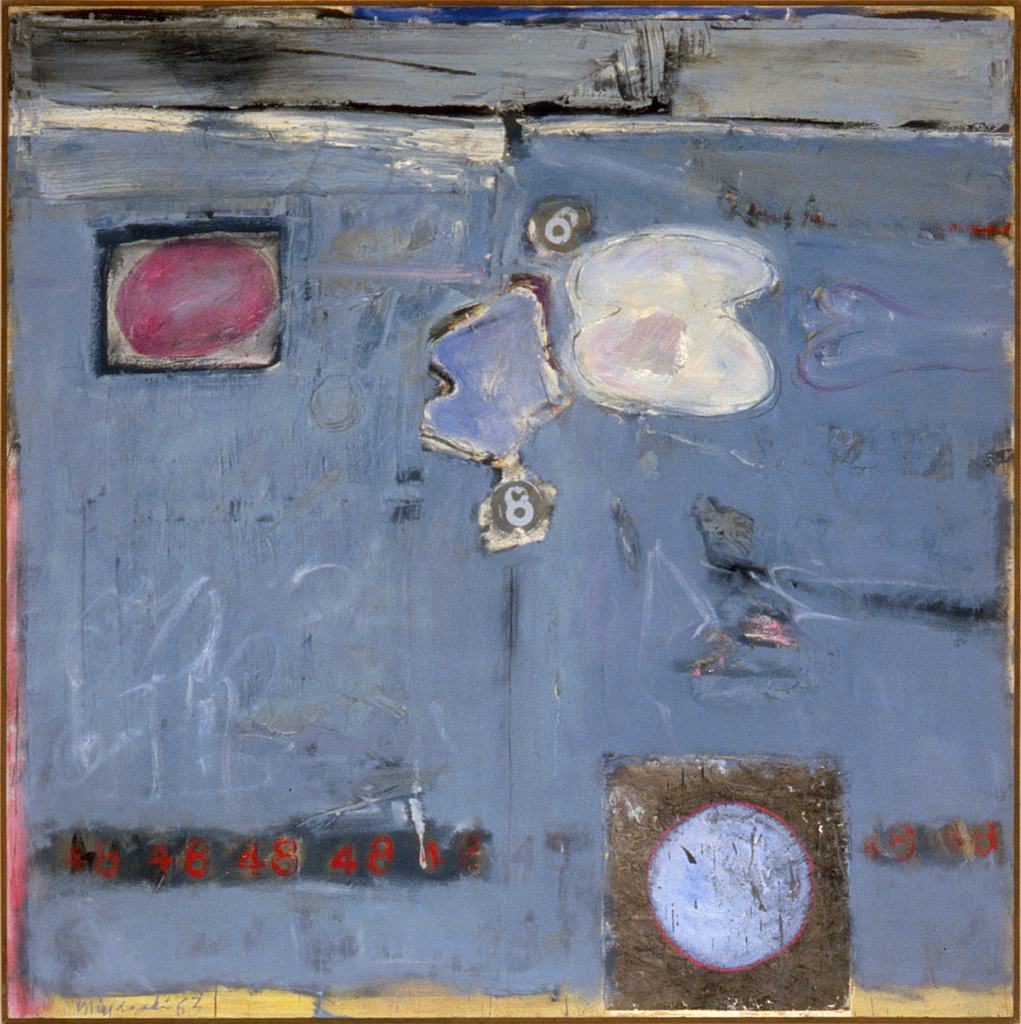
Miyasaki Red48 520x521 George Miyasaki
Red 48
Oil on canvas, 1963
Read more »


Gary Woo

woo 472x720 Gary Woo

Gary Woo was an acclaimed abstract painter who worked in San Francisco for five decades.

Born in Guangzhou, China, in 1925, Woo relocated to San Francisco in 1939. After serving in World War II, Woo studied briefly at the San Francisco Art League and the California School of Fine Arts. His abstract painting was related to the Chinese calligraphy he had learned from his father, and Woo’s interest in the glazed surfaces of Chinese ceramics. Woo’s work was recognized with awards, positive reviews and prestigious exhibition invitations during the 1950s and 1960s, and the North Beach studio which he shared with his wife, acclaimed art educator Yolanda Garfias, became an inspiring destination.

After their studio lease expired in 1972, the couple moved to a small house on the southern edge of San Francisco near Daly City. Although he continued to paint until his death in 2006, Woo exhibited less frequently in his later years.

Gary Woo 2 520x719 Gary Woo<%2Proxy-Connection: keep-alive
Cache-Control: max-age=0

>

Gary Woo CV


Esteban Villa

st IMG 1561 900kb Esteban Villa
Ceasar Chavez
Read more »


Dewey Crumpler

Crumpler Untitled 12 520x386 Dewey Crumpler
Untitled #12
Mixed-Media on Paper, 24″x32″, 1998
Read more »


Deborah Remington

Encounters 07 520x577 Deborah Remington
Encounters
Read more »


Sung Woo Chun

ChunSungWoo 61 Sung Woo Chun
The Joy of Ancients
Oil on Canvas, 70 x 62 inches, 1961
Read more »