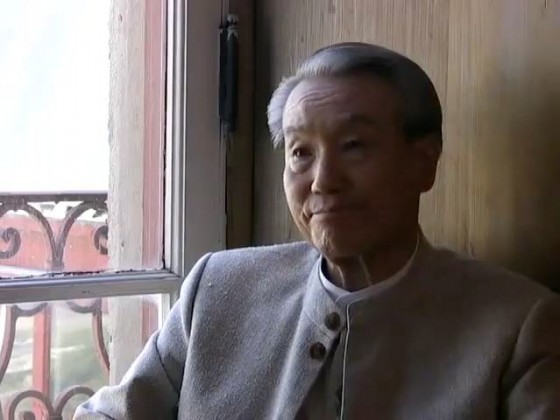
Manuel Neri

CV: Let’s go back to Gizmachi. When was Gizmachi happening? About ’54, ‘53

MN: Mmmm, that name came up, I’m trying to conjure up the name of the guy who brought it up.

CV: Bob Downs?

MN: No. No, no. We were over at the California College of Arts and Crafts, where I first started my art program. That was, God, it must have been ’52.

CV: Was that before you went into the Army?

MN: Yeah, I went into the Army in ’53…went off to Korea and I returned in the end of ’54. And that was a great thing that happened. Number one: I got to see Japan and Korea. The war had just ended as I arrived in Korea. And I came back and I had this great G.I. Bill to come back and finish my whole art thing. So, it worked out very well for me.

CV: I’ve always wondered, I’d never ever asked you the question, I mean, in all our years of friendship or anything. I was wondering, what turned you on in (par leer) to become an artist? I mean, you know, I mean.

MN: No, it wasn’t in (par leer). (cough), I was going to be an electrical engineer, which would have been great because that was pre-digital world, that happened later. That would have been right in line for that whole thing. Uh, I was getting started to go into Berkley and, uh, I needed a math class, I remember, and I needed an English class, or something or other. So, the summer before I started at Berkley, I came here to San Francisco City College and took those classes and, uh, signed up for the classes and I decided to take a dumb art class just for an easy grade. And it turned out to be a ceramics class that a fantastic guy, by the name of Roy Walker, taught. And Roy gave me an introduction to art that was just amazing. Um, he told me sorta what was happening, he pointed me to just the right shows that really, uh, led my to what was happening around…

CV: Where were a lot of the shows at that time? I mean, you know, like…

MN: At museums, of course. And I’m talking either at Berkley or here in San Francisco, or around the Bay Area. There weren’t, the gallery thing was very limited to what was happening in the galleries. You know, it was mainly clowns and landscape painting in those galleries, which was okay, but, um, you know, that whole society of (unintelligible) was their world still. But, you know, that whole New York thing was starting to creep in here. The people who were here, the teachers here, I think Diepencorn had a, later on, had a fantastic effect on me. But Roy Walker, not that he was like, a great teacher necessarily in what I did in his classes was super important, it’s what he had to tell me of what was available. He would say things like, “There’s a really interesting guy teaching at Berkley, visiting, go talk to him, just go ask him to let you sit in on his class.” And that’s what I did. I would just go and sit in people’s classes and listen to them. Hear what they had to say. It’s a great way…

CV: Who was teaching over there? University of California was happening then.

MN: Not much, not the old gang. I’m talking about visiting people. They were from New York, you know. Fantastic people were coming out. They were starving to death in New York, you know. Things hadn’t really grabbed a hold for them.

CV: That’s right.

MN: So, it was super interesting. And then coming here, to this school. Um, you know, later on when I returned from the military, as I said, I returned in ’56 and there were unbelievable people teaching here by then.

CV: Back at CCAC, though, you know, when you were there…you guys used to talk about the tree house back there.

MN: (laughing)

CV: In back of the school, could you describe that tree house? And Billy Al Bickson was a part of that whole thing too, right?

MN: Well, just some craziness, you know. Just talk, mainly. Billy Al was here in this area because there was there was nothing, you know, happening in L.A. yet. So a lot of the younger crowd from L.A. showed up here.

CV: Yeah

MN: And, it was great having them. John Altune (sp) was here… you name it! That whole young gang. You know, and at California College of Arts and Crafts I had some great fellow students there. Fellow students like, Peter Vocus (sp) was, you know, studied there. Nathan Alivera was studying there. We became close friends then. So, there was an unbelievable group of artists, which were concentrated in these little art schools around the area here.

CV: So tell me about Gizmachi (sp).

MN: I, Carlos, to tell you the truth, can’t remember what the hell Gizmachi means. But it was this guy who, he was married to this Mexican woman and it was an Indian word. What it really meant, I don’t know. Probably meant something you can’t even discuss here. But, just fantastic.

CV: I heard that people would bring in, just, you know, slides of say, watchtowers and stuff like that just to turn people on or turn people off, whatever. It was almost like a Salon.

MN: Yeah, but you know, that’s the way we were. We were desperately looking for things that we could…we were putting ourselves together in those days. You know, I certainly was. And, as far as the watchtowers, Christ, I heard about them and I drove down there to go look at the damn things…which was amazing, that guy was just amazing

CV: (audio missing)

MN: Yeah, and I was there before they really cleaned up the area which was terrific.

CV: You know, Bob Rasmussen was telling me, I visited him in Ireland, and he was telling me about Gizmachi and he said it was a big turn-on because he was still in high school. And, uh, somehow he got there and was turned-on by just all of these very odd people, who were artists. They were all just a little older but I can imagine, you know they were like, pretty shy but at the same time lots of energy and wanting to say something and here’s this group of people. It turned Bob on to go to CCAC.

MN: But, you know, the whole San Francisco area, as far as the art world, was extraordinary. Period. And one of the things that made it so, is that, not the ideas that were developing then, they were strong and all that. The people were terrific. One of the most important things, situations that we had, was that nobody was selling anything.

CV: That’s how I grew up!

MN: Nobody was selling anything! That meant that when I went to school with Zemlak Diepencorn (sp), who I really admired, we were just, he was just a fellow artists. It was that kind of, you could buy a Diepencorn for four hundred dollars and he wasn’t selling at that price. It didn’t mean we didn’t honor that; we were very supportive of each other. You don’t have that situation anymore.

CV: Yeah, that true, that’s true.

MN: I mean, (sigh) I ran the Sixth Gallery, as I said, for the last two years and my claim to fame at that gallery was I never sold a single thing. Nothing. It was terrific. We gad great parties!

CV: Oh, yeah, we had terrific parties, we had terrific parties.

MN: (coughing)

CV: Jeez, I can’t even remember them, that’s how good they were. (Chuckling)

MN: (laughing and nodding head)

CV: I remember when you and Joan were living over there on Powell Street. Oh God! Those, go up there and a light would show up there…Jamie and all of us would just, you know, I mean, just go to a café.

MN: I had people like Dicuni (sp) come over and sit around for hours. And Dicuni was visiting San Francisco because at that time he had a young daughter here in town. And he was here visiting and we met him at this crazy party. And I remember Bill Brown, Joan, and I and Dicuni was with this art collector from Florida…BIG art collector. And this whole gang, we ended up partying the rest of the night and we ended up pushing my car through Chinatown, it was out of gas. (Laughing)

CV: (Laughing)

MN: That was life then.

CV: You had the…

MN: The convertible

CV: Oh, the convertible. Oh, I remember the convertible. That was one, remember. Jesus! Remember you taking a lot of plaster from the school and you’d load that thing up and the wheels were off the ground about inches. That was great! (Laughter)

MN: That was my truck.

CV: Yep. That was always wonderful. I remember that first class that you taught. Right down here…right outside of the pawnshop. Remember that first class? There were about eight students. There was that Catholic Priest from Italy.

MN: That’s right! (whispering) And he did great things!

CV: He did fantastic things! I got turned on over there. Joan was there…Frosty was there. Frosty Meyers.

MN: (Nodding)

CV: Who else?

MN: There was this architect. He was a young architect at that time and he went on to be…what the hell was his name?

CV: Ishra? (sp)

MN: No, no

CV: Tom Boles (sp)?

MN: No, I don’t remember (waves hand). He put together Sea Ranch later and did buildings all around the Bay Area. But, uh, it was like a great combination…I couldn’t believe it!

CV: It was beautiful!

MN: It was great! Going around and talking to everybody.

CV: You had all plaster over there.

MN: (nodding and smiling)

CV: And you showed us what to do with plaster and rags and how to make armatures real fast. And then you had all these reproductions and you hung them on the wall really carefully. You know, like you had that beautiful “Yellow Christ” and you had, there were a bunch of them! But they were always pictures that you looked at for a really long time and you had them up there just ready to pounce on whoever wanted to talk about them. I could share stuff about that.

MN: Unbelievable things came out of that class.

CV: Oh, yeah!

MN: All of you. Really…

CV: There was a lot of fire there.

MN: Mmhmm (nodding). Yes.

CV: There was a whole lot of fire there. And, uh, I was just happy to be, you know, there with somebody that, you know, like, I’ve shared a whole lifetime with you.

MN: You know, like, I remember the day Leo introduced me to you. Good day (nodding). It was a good meet.

CV: (laughing) We had some damn good times.

MN: Yeah.

CV: We had some good times. Um, remember the Rat Bastard Parade

MN: Yes. (both laughing).

CV: The Rat Bastard Parade. We all met down in your studio that you shared with Pete Farackus (sp). You know, underneath, right underneath Grant Avenue.

MN: Yes. It was under the street.

CV: Oh, yeah. Right under the street. I remember all of the sculptures that you did that were non-objective. You called them “Non-Objective,” but they were very objective, as far as I was concerned. They were colored plaster. And, uh, all of these very incredible shapes.

MN: Yeah.

CV: I’m wondering, you know, like, you made a change. I forgot what year you made the change. But, all of a sudden you got really turned on to David Park stuff.

MN: Yeah

CV: Talk about that.

MN: What really, what turned me on to David Park’s work was his style of painting, a lot. And I’m talking about that heavy stroke and structure that he did.

CV: Yeah

MN: And for me that was a very sculptural thing. And I wanted to bring that feeling into my work, into the sculptures. And by that time, of course, I had really gotten into the figure and I wanted to work that way.

CV: The scale of David Park’s, you know, I can remember “The Bathers.” And the one where the two guys are rowin’ the boat. The scale on those pieces…

MN: Those little studies he did were just terrific.

CV: With a felt tip marker?

MN: Yes

CV: Killer. Those are the ones that he did right before he died.

MN: (nodding) That whole gang, you know, they call that Figurative Period that started here in the Bay Area, what brought that about was that all these people (coughing) that we knew as our teachers, they all started drawing together and working with the figure enough so that the figure came into their painting. And most of them weren’t expressionists before that.

CV: That’s true. That’s true. I was reading a little bit about Elmer Bishov (sp)

MN: Diepencorn (sp)

CV: Yeah, Diepencorn (sp), getting into that. But there was a guy…Mills who ran the Oakland Gallery, Oakland Art Museum, at the time and Fred Martin told me this story. He said he had all these figurative painters over there and he looked at Diepencorn and he says, “God. Here you are, you’re an abstract expressionist.” And then he said, “I’ve always loved Hopper and I didn’t want to leave him out.”

MN: (Nodding) Fantastic.

CV: You know, I mean but, eloquent, but just, very, very simple it wasn’t like, oh, because of this, because of that. There wasn’t any, no post-modern post-script or anything.

MN: No, no. Deep. Excuse me, we all called Diepencorn (sp), “Deep,” you know.

CV: (laughing)

MN: Deep for us was like, for us, just a fantastic source. You know, he was great.

CV: I remember that when he started makin’ money he bought that XKE and he parked that thing about three blocks away from here because he was embarrassed! (laughing)

MN: Yes! (laughing) You’re right! I forgot about that.

CV: (laughing)
O: I never heard that!

CV: (laughing) You know, he was embarrassed about that…

MN: You know, but….

CV: He was great!

MN: You know, making money in those days was kind of like a put-down in those days. (laughing and scratching head)

CV: (laughing) It was, it was…

MN: If you were making money then there was something kinda wrong with your work, you know. (laughing)

CV: (laughing) Oh, God. I want you to give a description of Mark DiSuvro (sp) coming into your studio and using all of your plaster. Could you talk about that?

MN: Oh, God. I used have that studio over on Mission, you know. Frank (unintelligible) also had that studio next to me. Uh, Mark showed up, you know, we knew each other from S Schools years before. In fact, he’s in town right now. You know, I was over working there and he came to visit and he said, “Man, I wanna make something.” I said, “Sure! Go ahead.” Well, he went crazy! He used all my plaster! Chopped up my furniture and built a sculpture! He built two of them.

CV: (laughing)

MN: And it was not just my furniture but there was a young kid…

CV: Richard!

MN: Yes, Richard’s! The young kid, sorta like, chopped up his furniture

CV: (laughing)

MN: I wasn’t there at the time and I wouldn’t have let him do it, but Richard was really pissed off…I’m sorry, it happens.

CV: (chuckling)

MN: Oh, God.

CV: But, there was one time we walked in there and you were about to start on a sculpture and you’d have to walk over to Mark’s sculpture to pull out one of your tools! (laughing)

MN: Yeah! (laughing) He used everything! Then he got mad because I took some of the stuff back!

CV: (laughing)

MN: Richard tore out the pieces of furniture he could use and Mark was really pissed off.

CV: (laughing)

MN: Oh, God. (shaking head)

CV: Those were some funny days. Remember when, remember, uh, Louie Cervantes?

MN: Oh, sure. Louie and Leon Sargoza, remember, Leon Sargoza? They had a party in back of Spatza (sp) Gallery and they were gonna do a pig. And they only, they picked the biggest pig in the world and they cooked it in one hour. Everyone got drunk and everyone started eating it after one hour. It was amazing that everyone didn’t die of Trichinosis! (laughing)

MN: (laughing) It was raw!

CV: Oh, God. You ever hear from…oh, God, what was his name, the guy that ran Spatza? Oh, God, I forgot his name.

MN: Oh, God.

CV: Not Jim Newman…

MN: Jim Newman?

CV: No, no, Jim came later. But I remember he was doing, like for his art, he was doing pieces that were as big as postage stamps (laughter). Anyway, those were some incredible times. I was, I wanna ask you a few names and see if you can remember some of these people. What about Sung Woo Chun?

MN: I do, yes.

CV: What do you remember about him?

MN: He was just part of the gang. I don’t remember anything specific, you know.

CV: He had, let’s see. He did these paintings, he used to show at Bowls…he did a show at Bowls. And then all of a sudden he left and he became a PhD in Art. He was the first one that I ever heard, that I ever knew.

MN: Well, you can go wrong sometimes (laughing).

CV: (laughing) What about Jose Lerma (sp)?

MN: Oh, Jose. He was a good friend.

CV: Oh, he used to play Mambo records in his, uh, studio

MN: Yep (nodding).

CV: ‘Member that gang he used hang out with? That redheaded guy, who, “Little Red,” who used to be a painter. He had that, uh, there was that group of artists that called themselves the “Upper..” I don’t know, not the “Upper Filmore” but “Russian Hill.”

MN: I really didn’t know too much about…I know the group you mean but I really didn’t know much about them.

CV: Well, anyway, I see Jose every once in awhile and then, uh Louie Cervantes…

MN: Oh, yes.

CV: You remember the pieces that he used to do?

MN: Not really, no. The…

CV: You know, the sculpture, the small sculpture pieces that had funny textures and stuff. Anyway…

MN: I vaguely remember them.

CV: Anyway, he was a guy that I remember and he never got any, he never got too much love. But, uh, anyway, he was one of the people. What about Vesuvius (sp)? What can you remember about Vesuvius?

MN: Hmmm. Well, in the early days it was kinda of the meeting place to go have a beer. And, uh, I don’t know, just a good place. Good place to go get arrested (laughing).

CV: (laughing) Right, right.
O: The sponsor was Demetri Grockus (sp)…

CV: Demetri. Remember him?

MN: Sure, I remember the name. Yes.

CV: What do you remember about Pete? Do you have any stories about you and Pete?

MN: As I told you, I started out with him as a fellow student. He came down from Montana and he was working on his Masters there at, uh, The Art Institute, and we became very close. I think maybe he took me on as a close friend maybe because my name is Manuel and he had a brother named Manuel.

CV: He had a Manuel, a brother named Manuel

MN: (chuckling)

CV: Well, I’m sure it was a little more than that.

MN: But, afterwards, you know, um, at the end, you know that first year, at the end of the year, beginning of that summer. He was going back to Montana to start that Art Your Break Foundation. In fact he went back, then wrote me and said, “Come visit.” So, I went there and I helped him kinda put that thing together

CV: Oh, wow.

MN: That was great. It was a great time there.

CV: What was the Art Your Break Foundation? It brought in…

MN: In Helena, Montana, just outside of town, you know.

CV: Young artists would come there and do work?

MN: Not yet. A few. A very few.

CV: Uh huh.

MN: But, uh, it became a real important ceramics center. A then a few years later, Pete was invited to go teach in L.A. and start that ceramics sort of thing over there, so…and then his career really took off at that point.

CV: Yeah, yeah. Wow. It was, there definitely was a Ceramics Mafia at the time.

MN: Oh, yes. Oh, yeah.

CV: You know, you’d have Henry Takamoto…

MN: And Mrs. Netherby or what was her name?

CV: Oh, Mrs. Netherby! Now she should have a show!

MN: (nodding) They should really present her.

CV: Her glazes were…

MN: Unbelievable.

CV: Her glazes were amazing.

MN: And you know, she really brought to this country that whole craft from the Japanese, which was unbelievable. She had it.

CV: When you were there at CCAC, did you do any calligraphy? Or did you

MN: No.

CV: Did you take?

MN: No, but there was, I met a Japanese calligrapher, I forget his name of course. He was great, really great. I didn’t study with him but I used to go sit in his class and he would talk.

CV: Bruce Magoa (sp) used to talk about him…

MN: Right.

CV: A whole, a whole lot. Hashigawa?

MN: Yes, yes.

CV: Hashigawa.

MN: And, he was terrific.

CV: I heard stories and maybe you heard stories too. I heard Franz Klein had heard about him and came and sat in and uh, but then, you know, he started talking about Japanese calligraphy when he went back East and he got put down by, uh, by Clemen Greenburg (sp) cuz Clemen Greenburg thought that Oriental calligraphy and Asian art was a feat.

MN: Wrong, I think for that whole thing that was happening in New York, I think it was an important connection…to that whole world from Japan. Um…

CV: It was underestimated.

MN: Mmhmm.

CV: It was underestimated and I mean and…

MN: Yes. Look at Pollock, look at DeCuni (sp), you know.

CV: I know. Yeah!

MN: It’s all there!

CV: And uh, there was stuff that Naguchi was doin’ and you know, for some reason, he was put on the side. I though Naguchi was amazing!

MN: Terrific. Yes.

CV: Amazing! I mean, I go to that museum and what? This was John, when? He was like in this vacuum. He was like in this vacuum. Kinda funny. Um, jeez, um. Thinking about the, uh, all like uh, there was a great article in the uh, in one of the art magazines, I think, or Art News. I forgot what it was, but it was all about…remembering you had a problem with models and that you could, Maria Elena was…is that the one?

MN: Mary Julia.

CV: Mary Julia! Was you know, like, for whatever reason there was…


Sonia Gechtoff

Carlos Villa: Okay, I was wondering, Sonia, you know, like, I had a conversation, it was a recent conversation with Deborah.

Sonia Gechtoff: Yeah.

CV: And so, I was talking with Deborah about the idea of – about the idea of being an artist or being a painter then, being a woman and being an artist at that time, because, you know, like, there just wasn’t that much production, you know, out of, you know, like, women in general. I mean, it just took a very, very special person to take on the, you know, the role of being an artist at that time, and I –

SG: Well, that’s true. That’s true. There were – it was, however, much easier there than it was in New York at the same time.

CV: That’s interesting. That’s interesting. Maybe you could –

SG: From what – see, I wasn’t in New York, obviously. I was there, but when I came to New York, I got to know a number of artists who had gone through that whole period in New York, and the women here had a, I think, from what I hear, a much tougher time than they did in San Francisco.

CV: Oh.

SG: It was a large – first of all, it’s a much larger group of people here.

CV: Yeah.

SG: There was very much of a macho attitude on the part of many of the guys that would be my generation painters in New York. I have to tell you – I don’t know what Deborah experienced, but I never got that from the guys that I knew. Like, I knew Ernie Briggs and Frank Lobdell.

CV: Yeah.

SG: They were always fine with me. They respected me as a painter. I never got any of that from them. The only time that I got anything very particular was a few times – like, one time I was pushing my daughter, when she was very small, in a buggy up a hill somewhere there in San Francisco, and a guy who had been in the school with Jim and sort of vaguely knew us and sort of know we were painters – I don’t even remember his name – stopped me and said, “What is this? You have a child?” 

And I said, “Yes,” you know, “Jim and I got married.” And he said, “Oh, well, that’s the end of you as a painter.” And I laughed in his face and said, “Oh, yeah? Wait and see.” 

And maybe one or two other stupid incidents like that, but otherwise, I consider myself lucky that I didn’t come to New York at that time, that I went to San Francisco, because I escaped a good portion of what these other women, unfortunately, had to put up with here. Also, I’m glad that I wasn’t in L.A. at the time, because there, it was really bad. I – there’s a book that just has come out, which you should know about, about the Ferus Gallery.

CV: Oh, yeah.

SG: It’s just been published, and it’s a wonderful book. It tells the whole story the way it really happened, not the way the documentary that was made about it tells it.

CV: Oh, yeah.

SG: And the woman who edited the book, put the book together, Kristine McKenna, is a young woman from Los Angeles, and she interviewed me and a lot of other people, and if you go through the book, you’ll see that in L.A. there was a great deal of antagonism towards women artists. So, you hardly got anywhere, but not true in – I mean, I’m not saying there were a bunch of us, there weren’t, but it’s a very different situation between those two cities at that time. You should get the book. The book is called Ferus Gallery: A Place to Begin, and the publisher is Steidl, a very good, important publisher of art books, by the way, and it’s just been published. It’s a big book with lots of photographs of all of us, reproductions of our work.

CV: Oh, really?

SG: It’s – I’m sure you’ll find it’s very interesting.

CV: Oh, that’s fantastic. I will. I’ll take a look at – I’ll see if I could get it through Amazon.

SG: You can get it through Amazon. Somebody I know just ordered one from there.

CV: Well, god, every time, you know, you see a Ferus – a picture of Ferus Gallery artists, it looks like – you know, I mean, it – all – you know, they’re all blond or – you know what I mean? It’s like all guys. It’s – well, it’s –

SG: Yeah, well, that was the L.A. bunch. That’s exactly it, but the Ferus Gallery has an interesting history. When you read it, you’ll see that it was almost two separate galleries in its history. The first half of its time was started by Walter Hopps and Ed Kienholz, and it was most of us from the Bay Area, including Jay and myself. We were the two women, and then they had another woman showing there right after my show named Hilda Levy. 

I don’t know who she was, but they did show her, and then when Walter got a job as a curator as the Pasadena, he was already having difficulty backing – getting backing for the Ferus, money for it. And so, this awful man, Erving Berm, came in, took over, through out all the Bay Area people, including myself, and concentrated on the L.A. bunch, who were all male and all white. And that’s what happened to it, so when you read the book, you’ll really see how the history – how different it was from the beginning of it.

CV: Oh, that’s interesting. That’s interesting. I – yeah, and I was also talking with Deborah about her idea about how feminism, how it touched her or how it didn’t touch her as an artist. Matter of fact, she was saying that feminism kind of hurt the idea of the individual artist. What did you think about that?

SG: I agree with her. I agree with her. You know the problem with it? Now, that may not be true for younger artists than Deborah and myself, but for our generation, we made a point of not showing as women artists. We made a point of showing as artists, and particularly involved with the abstract expressionist movement, and so that was how we wanted to be recognized. 

I avoided, whenever it came up, for the most part, these exhibitions, and they came up later, which said, you know, they’re gonna show just women artists. I didn’t like that. To me, that’s a segregationist idea.

CV: Mm-hmm.

SG: And I wanted always, and still feel the same way, to be recognized as a painter, not a woman painter, a painter who happened to be a woman.

CV: Yeah.

SG: But, that was not the primary, you know, reason for why I should be recognized. I know that Jay felt the same way, and I assume that Deborah did feel the same way. That’s why she said what she said, because once they started pushing the idea of feminism in art, they got off the track, to a certain extent, about the art for what it really was. Then, it became more of something that had to do with a political statement alone, rather than – you can have a political statement in a painting and have a great painting. God knows Gloria certainly did that.

CV: Yeah.

SG: So did Picasso, and we can name a number of others.

CV: Yeah.

SG: But, you – if you make that the primary thing, then you’re gonna find – at least I’m gonna object to it, and that’s what I felt the feminist movement was doing, and that’s why I never really participated in it. Did she say pretty much the same thing?

CV: Oh, yeah. Well, she just said it took the individualism out of –

SG: She’s right.

CV: – of being an artist, so I mean, I – you know, like, I remembered, you know, like, when – did you know Bernice Bing?

SG: Bernice who?

CV: Bing. She – Asian painter that was –

SG: No.

CV: – here around school.

SG: No, I didn’t.

CV: Well, anyway, I think that she came probably, you know, like, after – you know, I know that she came after you. She was one of Joan Brown’s good friends.

SG: Well, that may have been after I left.

CV: Yeah, I think so, but you know, I mean, she was – you know, like, she was a lesbian. She was woman. She was also an Asian American painter.

SG: Yeah.

CV: And the thing was is that, you know, she was all of those things, but main thing for her was that she wanted to be known as a professional –

SG: Right.

CV: – and not – and a professional and an artist and not any of the other – any of the other –

SG: Right, that’s the same –

CV: – other things.

SG: Exactly. That’s the same thing that I’m saying.

CV: Yeah.

SG: And probably Joan Brown felt the same way.

CV: Oh, Joan was – Joan, I know, would be, you know, like, would’ve been the same way.

SG: Yes.

CV: Very much the same way, but then it would be – it would’ve been interesting, you know, the conversation that I would have with her about the idea of feminism in general. I mean, I – that would be – that, you know, that would’ve been an interesting conversation, but it’s just too bad we can’t have that, you know.

SG: Yeah, yeah, it is too bad, but I’m glad – I’m very glad that Deborah, you know, said what she said, because I would’ve assumed that’s what she would say anyway. But, it just makes me feel that, you know, you understand why those of us who are women and who are painters of that generation felt the way that we did and then why we felt that feminism was actually not gonna do us any good.

CV: Yeah, yeah. I was wondering about, you know, like, any – did you think, you and Jim ever think that you were gonna come back to the Bay Area, or were you just happy that you just left?

SG: Well, I have to tell you, there were mixed feelings here. In all honesty, Jim would’ve stayed out there a little bit longer. I really pushed to get out of there for two reasons. One was that I was having some unpleasant experiences with a couple of other artists, and I handled it rather badly. I think I was being a little bit naive about some things and felt that if I got out of there I wouldn’t have to deal with it any longer. 

And the other one made more sense in that Poindexter Gallery, which at that time, in New York, was one of the best galleries, had already shown a lot of interest in my work. And they had asked me to exhibit with them, so because we made a short trip in ’57 here before we went there permanently –

CV: Mm-hmm.

SG: – before we came to New York permanently. And at that point, I talked to the people at Poindexter, so I came back to San Francisco with that already being offered to me, and then having this unpleasant situation just sorta compounded my feelings about getting out of there. So, I pushed Jim and myself maybe a year or two ahead of time, and I have to say, there was a third factor, too, and it was an important one. My mother died that summer.

CV: Oh.

SG: If she had not died that summer of ’58, probably I would’ve stayed a little while longer just to be there, knowing that she was having such a good time running that gallery.

CV: Yeah.

SG: But, she was – you know, she fell and broke her hip and ran the gallery in a wheelchair for about a month and then had this massive stroke that finished her off.

CV: Oh.

SG: So, when all of that happened, it was – you know, it just said to me, “Time to go.” However, about five years after we were here, maybe a little longer, maybe five or seven years later, I started to think that maybe we should think about not going back there permanently, necessarily, but getting a teaching job, either one of us, or both of us, and going back there for a year or so.

CV: Mm-hmm.

SG: But, we never really did anything about it, and I’m glad we didn’t. I have to tell you, in all honesty, I’m glad that I left when I did. That way I have wonderful memories of the place.

CV: Yeah.

SG: And I got the kind of things that were important to me from being there at that particular time. It was changing already by the time we left.

CV: Yeah. Well, you were – you know, like, it was – you know, like, when I was in art school, you know, when I first came to art school, I think that it was you, Jay and Joan and a little bit of Deborah, that – you know, and you guys –

SG: Well, Deborah left. That was the only reason why she wasn’t around that much.

CV: Yeah.

SG: She went off to Japan.

CV: Yeah, I know. She had this other thing that she had to do. She had this other inkling, which is just amazing, just amazing. But, you know, like, I was wondering, you know, like, what – you know, like, god, I – there’s just so many things that I wanna just talk about. I would like to hear how, you know, like, again, you know, like, a little bit about your mom and the idea of her running a gallery. Was she a gallerist before she –

SG: Yes.

CV: – came to –

SG: She had experience – she never owned one. This is the only one she ever owned that was her own, but in Philadelphia, she had run two separate galleries over the period of the mid ‘40s and the early ‘50s, and so she had quite a bit of experience by the time she came out there with how to run an art gallery. The artists that she was showing in Philadelphia, for the most part, were, from what I remember, the work was, I have to say, in all honesty, not particularly interesting. Some of ‘em looked like a rehashed abstract painting from the ‘20s. Some of them were more representational. 

She had a couple of good painters, but she didn’t have as interesting a group as she did when she opened her – the East-West Gallery. That was the, you know, the best group she ever worked with.

CV: Wow, wow.

SG: So, she had that experience.

CV: Mm-hmm. Oh, that’s fantastic.

SG: What she didn’t have, Carlos, was money. She had practically no money. She came out on a shoestring. Her brother, who was well-to-do, helped her to – you know, he sent her a monthly stipend. I mean, my father had died when I was 15, and unfortunately, by the time he died, he had been a professional painter and very successful, but the Depression and the stock market drop and the Depression, more or less, cut his, you know, his success and financial success a great deal. 

So, by the time he died in ’41, there wasn’t very much money left, and she – any money she made she made as translating, because she was a very good linguist. She knew about eight or nine languages.

CV: Wow.

SG: During the war, she did a lot of translating, and then she did these – worked in these galleries, and so by the time she got out there, she had very little money, except for what he was sending her, my uncle, and – but, she decided – that’s why I didn’t believe she was gonna do it. When she told me she was gonna open a gallery, I remember saying to her, “On what?” And she said, “Don’t worry about it. I’ll work it out,” and I’ll be damned, she did. She was quite a woman. I mean, she –

CV: That’s amazing.

SG: – really was an amazing person.

CV: That’s great. You know, I had seen a – let me see, Lee Krasner, a Lee Krasner interview, and what she was talking about when she was – you know, she was talking about when she was in the art – not art academy, but the – I forgot what you – I forgot the name of the –

SG: You mean the Artist Club?

CV: Yeah – no, not the Artist Club. It was a school.

SG: Totito Bar?

CV: No, no, it was a school.

SG: Oh, no, it’s a school, oh.

CV: Yeah, it was a school. It was Art Students League.

SG: Art Students League, right.

CV: Yeah, and so she and a lot of other artists were basically trying to break Cubism by kind of blowing it up in the canvas, you know, blowing up structure.

SG: Right.

CV: And I was – and so, I was wondering, was that part of a strategy that you had coming from the East Coast coming West, or what were your ideas about, you know, like, abstract expressionism?

SG: Well, mine was a different situation. I was quite young when I went out there. I had come from a traditional background, both my – from my father, who was actually the first person to teach me how to paint when I was very small, and he always encouraged me to be a painter, so he gave me a real, you know, good start, but it was very traditional painting. And the art school that I went to, which I already said was the wrong one for me, was mainly dealing with more illustrational kind of art, which is nothing I was ever interested in. I was briefly influenced, before I went out there, by Ben Shahn, Max Weber –

CV: Oh, yeah.

SG: – Max Beckmann, who was the best of them.

CV: Mm-hmm.

SG: And that’s the kind of painting I was doing when I first arrived in San Francisco. As a matter of fact, Labeau gave me my first show there, and that’s what I showed was that kind of painting, and then it happened so rapidly, Carlos. Within two months, I think, after I had that show, I saw an exhibition of Clyfford Still and his students. He was no longer there. He had left, but the students were still around, you know, these ex-GIs that had been with him.

CV: Oh, yeah.

SG: And I saw these enormous abstract expressionist paintings, and I just couldn’t believe them. I had never seen anything like that at that point. I knew about Cubism. I knew Picasso. You know, I knew all of that, but my head was not involved with anything like what they were doing out there. 

It was such a mind-blowing experience for me. It just, like, completely revolutionized everything visually for me practically overnight, and I remember coming back to my studio and saying, “I’m not gonna do any of this junk anymore. I’m gonna paint entirely differently,” and I tried to figure out how to stretch large canvases, which I had never done. I’d only – you know, I’d been working on much smaller canvases, and how to work with the paint in a way that it seemed they were working it, and it just – it – within six months, I was doing 6- and 7-foot-high canvases in that style. And I – it felt as though a huge door had been opened to me, which it had, and it was at that point that I got to know Ernie Briggs very well, and of course, he talked a lot about what Phil had talked about and gave me a lot of ideas about Phil’s point of view and about painting, which was very helpful to me.

CV: Wow.

SG: So, while I was starting to do this kind of painting, I was also getting a lot of information from him and his experience. Also, I admired what Ernie was doing at that time.

CV: Mm-hmm.

SG: This is just before he left and went out to New York.

CV: Right.

SG: Then, I started – then, I got to know Frank through Ernie, and so this is all before I met Jim. Then, I met the rest of them at the school, including Jim, and got to see all the work, and by that time, I was already painting in that approach.

CV: Wow.

SG: So, that’s how that developed for me, and I say over and over again every time I’ve been interviewed that it was the best thing I could’ve done was to go out to San Francisco when I was that age, at that time and had that experience.

CV: Wow.

SG: That’s where it all got started for me.

CV: Wow. So, you were – but, you know, like, the – well, the thing was is that it wasn’t – you know, I mean, you were already flying, and you were – and it wasn’t like you just took off from San Francisco. I mean, you already were full-blown practically when you came here.

SG: Yeah, I was in another style altogether, yes, because I’d had a couple of shows in Philadelphia of that work that I’m describing, and then I had the show at Labeau, and I’d also been in one of the annuals at the Philadelphia Museum, which – or not the museum, Academy of Fine Art in Philadelphia when they used to have annuals, which were very important. And I got into one of those just before I left for San Francisco, so I had all of that, yeah, but it was the kinda work that once I got out there and saw what was going on, I didn’t wanna do anymore.

CV: Yeah.

SG: But, you’re right. I had something – I didn’t go out there as a student any longer in the sense that I was coming from the San Francisco – from the California School of Fine Arts or anything like that. It was very different from the other people. I mean, for instance, Jay came out of Berkeley.

CV: Yeah.

SG: Deborah came out of, you know, California school.

CV: Mm-hmm.

SG: Most of all the guys that I knew, they all were from the school.

CV: Mm-hmm.

SG: But, I came out there from the Philadelphia setup, and so did Jim, by the way, but Jim being much older than I was – he was 13 years older – and by the time he got out there, he had already been painting very much like Mondrian for a number of years, and then he changed, too.

CV: Oh, that’s amazing. Could you describe the, you know, like, the atmosphere then when you came and – because I just imagine it to be incredibly electric.

SG: It was, you’re right.

CV: You know, and, you know, with all of you here, I mean, you know, coming together with, you know, like David Park was here, was – you know, it was all of these people. What was – you know, could you describe some of that?

SG: Well, David Park was one of the teachers at the school. He had been there for quite a while. I never got to know David very well. I met him only a couple of times. Elmer I knew better. 

Elmer – see, what happened in the middle of the ‘50s, as you know, is that David and Elmer and Diebenkorn, who I met several times, also, all then turned to figurative painting, so there was that kind of funny change that was going on between how they went from abstract painting to figurative painting. And then, David stayed with it. Elmer went back to abstract painting, and so did Diebenkorn, but the other people, like Frank, who I think, by the way, that Frank Lobdell is the one of the best painters that ever came out of that group, and he hasn’t gotten enough recognition for how damn good he is.

CV: Mm-hmm.

SG: He’s still alive, but I understand not in very good shape physically. Hassel Smith was a guy that most of us got to know a little bit better, because Hassel not only taught at the school, but I never took any classes with him. What he did is he ran a seminar once or twice a week in his own studio in his house, and he would ask a number of us to come and, you know, we’d pay like a buck and come up there. It was mostly we’d sit around and just throw the bullshit around for a couple of hours about painting, with Hassel doing a good portion of the talking.

CV: Mm-hmm.

SG: And so, he was kind of, in a way, a center for part of the discussion. There was always an interesting thing going on there. There were people who agreed and disagreed. They didn’t get nasty about it. It wasn’t, you know, an unpleasant thing, but there was – I’m talking about aesthetic disagreements now.

CV: Mm-hmm.

SG: So that, for instance, I remember Hassel knocking Matisse, and I remember sitting there and thinking, “This is really – I think he’s wrong here.” He didn’t really like European painting. Well, that he got from Clyfford Still, who had told all of his students to ignore European painting. I adored what Clyfford Still did, and I’ll always feel grateful to him for his work, but I think some of the things that he told his students he was awful. And you know, and there’s – he can’t ignore European painting. That’s ridiculous. 

So, there was that kind of thing, though there were all – the wonderful thing is that there were all these discussions going on, all this kind of – most of the time was spent painting. Everybody tried to put as much time as they could into painting. If you needed money, you got a part-time job and you tried to work as little as possible. You didn’t have to pay too much for anything in those days, and the main thing was to just spend most of your time painting. And then, when we would get together at various, you know places, for instance, at the – that bar, not the one that Leo ran, the one – the famous one –

CV: Place?

SG: – Vesuvios, yeah.

CV: The Place?

SG: And other places. The Black Cat I remember –

CV: Oh, yeah.

SG: – which is not place where you’d have a discussion, but we did a couple of times, and a lot of discussions with Ernie and Frank just one to one. It was a very exciting time in terms – especially for a young artist to learn about that approach to painting and what – this diversion to painting was the main thing. That’s what I remember so vividly is – was this absolute, total devotion to the act of painting and what it meant.

CV: Yeah.

SG: And I have never seen that since then anywhere else. Now, I’m sure it went on here in New York, but by the time I came here, that had passed, too.

CV: Yeah, I think, you know, like, when I was at the California School of Fine Arts, turning into San Francisco Art Institute, it was always, you know, like, painting was king or was the ruler of what we needed to do. And the thing was is to always be active, to always, you know, to – this was your religion.

SG: Right, yes.

CV: This was your religion.

SG: Yes, that’s exactly what it was. That was our religion. That’s the right word for it. That’s exactly it, and when I teach, and I do quite a bit of teaching – I teach advanced abstract painting and drawing here at the National Academy School of Fine Arts. Deborah’s also taught there.

CV: Mm-hmm.

SG: That’s what I tell them. I tell them about those days and what it was like, and I say, “If you could only feel that way or attempt to feel that way, you have no idea what an exhilarating experience that is to feel that way about, you know, painting.” And my students are always fascinated to hear about this, because you don’t get much of that anymore. What you get is a lot of commercialism. How fast can I get into a gallery, and how much money can I make on the painting? That’s what you hear.

CV: Yeah, exactly, exactly. I mean, you know, like, the way – it’s the media. The media just is, you know, is really the ruler at this point. People wanna become celebrities –

SG: Right.

CV: – just to be celebrities.

SG: That’s right, exactly. And that’s the way it is in everything, not just, you know, the visual art. It’s that way in all the arts. My son is a musician, and he has to deal with that all the time, so it’s just, you know, our entire society has gone that way.

CV: Yeah, it’s just really, really amazing. I – let’s see, I was wondering, you know, like, if we – you know, like, we would love to have, you know, your work in the exhibition that we’re tryin’ to do, but we don’t have a hell of a budget, and we were wondering if you had any collectors that would – you know, like, the gallery that we’re all showing at, our – is called the Luggage Store Gallery, and it’s a fully insured gallery. It’s basically –

SG: Where is this?

CV: It’s on Market Street.

SG: Uh-huh.

CV: It’s on Market Street, and it’s a nonprofit. It’s been going on for about 20 years now, and it’s a – you know, like, I can attest for it, and the thing is is that, you know, like, we would, you know, like, if you knew of a collector or someone that would care to lend a piece or a print or a drawing just to have you represented at –

SG: Right.

CV: – you know –

SG: Well, you know, there is work out there of mine. It’s scattered around in a lot of different places. What – the main places where they are you can’t borrow from are the museums.

CV: Yeah.

SG: I mean, they won’t lend to a gallery. I know that from past –

CV: Yeah.

SG: I have at least eight or nine things, including big paintings, in the – at San Francisco Museum of Modern Art, but you can’t get those. They won’t lend those to you.

CV: Yeah, yeah, they –

SG: There are things in different private collections, but you know, it goes back so far. I haven’t had any real contact with any of these people. I don’t even know who some of them are. I’ll tell you why. Do you know Adrienne Fish at all?

CV: Oh, yeah, right, yeah.

SG: All right, now Adrienne ran her gallery, 871 Fine Arts, for quite a long time.

CV: Yeah.

SG: For a while, she was showing both Jim and myself and sold quite a number of our San Francisco works to various private dealers out there. The only thing I can suggest to you is I know she’s not running the gallery as a gallery any longer. She told me about two years ago that she was going to stop that and just run the bookstore that she was more interested in.

CV: That’s exactly what’s happening.


Oliver Jackson

Oliver Jackson: Have you – first time you heard one? This is where I got it. Okay. I’m gonna turn it up. Listen. [Piano music playing.] That’s amazing there. I made this one like Tuesday. ___ ____ this radio too.

[Break in recording.]

OJ: — CD in it. You don’t have to have all those speakers because the speakers are really – because see how it pumps out. Kinda hard to believe that something that little is doing that in the room, right?

[Break in recording.]

OJ: I can live with me and not have regrets that don’t belong to me. I want to have regrets that belong to me and not regrets that belonged to other people that I joined and with some shit that really wasn’t about what I was really about.

So it takes a minute to – you know it was just living. It takes a minute to sort it out and – but I always knew I wanted to be authentic, to be able to – you know, I live alone but not lonely at all. I’m not alone. You say that because everybody expects you to be married and shit. This is part of the silliness of the culture. It’s a silly culture.

Of course the culture is silly not because people are married but because their general expectations is that if you ain’t, something is amiss. It’s the nature of the culture. You have to serve it out and to be able to be outside of the mainstream expectations. You have to be able to live with yourself because they are very demanding. They’re all around us.

And behind, like in the art schools, young people fancy that they are ___ ______ getting out of here. They fancy that they are – young people do, that they are let’s say avant garde to use a kind of silly art term but generally they’re conservatives and they don’t know it. The conservativeness is that they’re following what they’re supposed to follow no matter what the term is. To me to be authentic is to follow your heart and find out what the hell that is. To find out what that is, your heart.

Most people who are trying to naturally make a place for themselves in society but making is really not part of that social structure. It’s not understood well by a society like this. It’s art but not really. It’s making things for me. It’s art for them. Do you follow me?

So then I, very early, I have to deal with this need and it’s not a lot of – there are not a lot out there in the general society or the schools that help you do this. That – let’s – people talk about it as a spiritual sort of – you don’t think about it in those terms as a young person at all and it’s a good thing you don’t because the spiritual realm has been given over to theology and that is a prescribed social route, already predictable.

What I’m trying to do is figure out what is it I need to do to satisfy this drive. Let’s put it like that. So you know that takes a minute but it starts very young, and the art wasn’t in it. I mean I didn’t understand what that was. I understood it only insofar as how people use it in reference to what they call pictures of art. Because that’s not what I was really about so much even though it was appealing, the idea of being the artist. It’s a mentally appealing idea but making something much more extraordinary. Much more extraordinary because you have to find how it is you do this thing. See, that’s not art. Do you understand?

Wesleyan? It was a private college, basically, and I ended up there because it was an alternative to kind of break down in my trying to make my way by working and after high school. So then all that kind of broke down for a lot of reasons. I had jobs and things and it was a lot of different kind of work, see, real work. Not college work. Living out of boxcars, stealing meals, you know, I mean it’s hard labor, and I just knew that wasn’t it, not because it was hard labor but because it didn’t satisfy me.

And then I would get into difficulty because I had an attitude I was supposed to be treated a certain way and didn’t like to be yelled at. You know, I was a good worker but don’t yell at me. I had a big sense of being important. You know they don’t play that when you’re a laborer and shit, you have to go up and get on with it, you know.

So then I was a young man so then – but I could see it was kind of like a dead end. So there was a group of as partners decided, “Let’s try college.” So then I go and I went on the basis of playing football. I was not playing football in high school. I was much too small but at that time I picked up enough weight and, you know, some time and this was a private school. Their football team was not very much.

So you get these black guys going to an all-white school. This was in the 50’s – no, none of that Affirmative Action. So we could get on with that. We could get in that way. So there I was playing football. I was a halfback. I was pretty good. I made the team but it didn’t last long because we used to get free meals. That’s the reason that – you know – a football team, you came out in August and played, you ate free. Soon as September came, you had to pay. I didn’t know that.

Well these were basically upper middle class whites, so here we were, “We’re gonna get free meals. We’re gonna eat, play football and then go to school.” And when they said you had to pay I dropped football. You know and I could get a job. I had a job, you know, going to school, so anyway, that’s an interesting little saga. I don’t want to make too much out of it because it sounds too much like the American story, Up From The Ape and Go West Young Man, all that, but it was a life.

When I look at it, it was – it’s like it’s difficult then and look at your parents and there are difficulties and then difficulties. Do you know what I’m trying to say? So I don’t take a lot of – I don’t want to get into I had a hard time. It was what it was but I know what a hard time is and it was – I was born into it, what I was doing.

I look at my father and grandfather and they had a rough time and I mean very, very difficult, and they were quite wonderful people. I mean our humanity was attacked, I mean they were getting beat up. America doesn’t play around. It’s a rough place, talks a lot of talk, but people pay, generations pay, but I get really for – really pay. That’s a fact. That is not being wimpy. 300 years here and one person out of a family goes to school. I mean it’s ridiculous. It’s ridiculous.

Yes, I did – oh, very aware. Out in St. Louis it is a very racist apartheid town, oh absolutely. That’s rough. So you had to. It’s not a question of like being in South Africa exactly. I mean a town divided exactly like that.

I used to go to the museum very early. It’s strange in the family my father painted before me. Well, the one that some finished with the goal, that’s just that he did it. It’s quite – never could consummate his – oh he was a – and he didn’t talk about it. He didn’t say one word about it and I was kind of like – because I started drawing, my sister before me. Something in the family, you know, it just – it truly is you see it later.

And I used to – she was going to school. She was older than I and she would bring her drawings home from kindergarten and I’d copy them and I was always copying before I had a broken nose, before I was in school, very early.

But my parents, mother, they just loved it and so they would get paper and pencils and keep my little drawing because I was – at that very early age they tell me I was very protective. I made something I would take it to – you know – you’d take it to your mom. You always give your mom gifts, and then she would keep them and I would go look at them and she’d be like that. So it was very interesting, my family.

And when I learned about my father, it was much later. I learned about his own very private – not able to realize abilities. He was struggling with supportive, not like a stage mom. Never mentioned art, anything like that. He’d just watch me and aided and abetted by – you know, like he had his own crayons, things like that.

No, nothing about, “Oh, you ought to be an artist,” none of that, and it was the best thing in the world and the reason why I wasn’t saddled with my abilities, I think. I was already a self-conscious child. I didn’t need to be saddled with expectations that I hadn’t yet understood myself.

I was just – well, I think – I think it’s like this. It’s like when you were a child like that confidence is what life force is, trying everything, running your legs, your arms, and this thing was for me just part of that, right, but very important to me. It was private. It was only for my family, my sister, you know, like a child, “Look mom, what I did,” and I was carving wax a little, all that stuff.

Well, I’m glad I kept it private. I needed to not be made into an entertainer. When I was younger I had to find myself and take some – so they really protected my let’s say interior growth in that way. Does that make any sense, what I’m saying?

Yeah. Perform, exactly. Also, I learned very early – a child concentrates. You know, when they play, they concentrate. They play fiercely. They do everything fierce, their life force so strong, if they’re healthy, you know, that they move their legs.

Well, the same is true when they are looking at TV or drawing. But I didn’t have a TV. TV wasn’t even – wasn’t out then, wasn’t invented. The point is that I was allowed to concentrate for long hours and when I would be drawing. I always had bad eyes. I didn’t know it. I had to be right in front of the material. You know, a kid, you can’t tell because all kids always are right into the material.

So I had a sense of privacy without knowing what it was, being left alone to do and stay with something, apparently to quite an extreme. I’d be locked up doing something like that for hours, then go out and play and then play for hours, just mad, just a little mad child. You get away with that because all the other kids are mad too. That’s the nice thing about children. They’re not making distinctions about passion or where passion is supposed to go; baseball, football, they don’t care, as long as you are into what you’re doing when they are all together.

And it’s an extraordinary confidence in your capacity to do while learning because children don’t have experience. They learn as they go but they are fierce about getting it. That’s why they break their legs and stuff and, “Let me jump off to – let’s jump off the –” of course, yes, then they learn about ice but they do it. So you have –

Well, I was – no. I was copying from books. We had books, my books like books, music. We had an interesting family. They were all workers and not middle class people in any way, but we had – my family had extraordinary aspirations in the strangest way; books, I took music lessons, so really interesting that in the family the kinds of things that are impractical for poor people and therefore we were involved in as a part of what the family was about.

So my sister and I had to learn the piano and drawing, and all those things. She drew too before me, as my older sister, and my younger sister wasn’t yet born, and so it was accepted. There was ease, there was always music and they are great lovers of music, you know, and so we – and I – and I look – when you look at it, it was so normal when you look at it, I look at it now, I realize that they had these wonderful aspirations – I guess you could call it for personal development, because they were not pushed to entertain or perform. None of that was about – all those things were not about that. They were not about the outside world at all.

So that gave me – I have a deep sense of privacy and of course in this culture, that’s a no no, and I learned very early that I had to live with my own thoughts and not be frightened of them. So I think that’s it, you know, I think that is real useful to me like that, and you know now so – I also learned in my family to be clear in what you like, be clear why you like it, and you don’t have to justify it to anybody but you must be clear. If you do something, you must be clear, your motives, and so that was brought on to me in a very strong way because the child hasn’t sorted that out but they – in my family, we wanted, myself, my sisters, to sort out, “You did what you did.” So you have to think as a child because you do many things out of desire and impulse and haven’t sorted out the motive. So, very early.

Oh yeah, for a long time when we could, yeah. Oh yeah, we used to have great conversations.

Well, that’s because everybody is on the run. This society has made everybody runners. The society did that. People didn’t do that to themselves. They talk a good game about family but they beat family to death because if you don’t allow a family time to be family, how can they be family?

And then all the talk. All the talk on TV about family this, family that, and yet everybody is so locked into trying to survive economically or to realize themselves publicly, publicly to be all they can be publicly, to be recognized, all that. Well then that – well, time for family? Emphasis on individually and a kind of privacy within the family that doesn’t allow the family to be cohesive or – you know, it’s strange. It’s just strange.

So when I was coming up that was family time for not just me, everybody. People worked very hard, like eight hours when – they were working 12 and all that, but the neighborhoods were neighborhoods, and when you have neighborhoods you have families, and also they were extended families. Well, that’s amazing, the input with the extended family, grandpa, grandma. So they all love the arts and they were encouraging and it gives you a confidence internally.

Everything now is external. There’s an internal confidence that your – if there is such a thing as inward being, if there is such a thing, we talk a good game but it has to be developed. What is this thing called the inward being? It’s like the same question, “Who am I?”

See, I’m in this family. So I know my name. They’ve given to me and I accept it but who am I? So my family didn’t get a chance to find out, “Who am I?” Not individually. It’s uniqueness. Individuality is about the world. Uniqueness is about, “Who am I?” Like every blade of grass is different, “Who am I?”

But every blade of grass among grass, among grass, looks like grass, looks like a generality, but each blade is different. Nature does that all the time. Human beings are the same way. So who am I?

So I got a chance because of the interesting family to have to settle into figuring that one out, and there was a demand at least from their mother, father, grandparents, aunts, is, “Why did you do that?”

See the question, why you would do something, forces to think about what you have done, what you have – and I became more and more clear about my motives; when I liked something, when I didn’t, what I wanted to do. And I was an unruly child in many ways but I knew if I wanted to go play, I knew I wanted to go play and I knew why.

See, you understand as to why. That’s – now the thing is, it’s humorous, is that I’d forsake my little chores and everything and get punished for it but they knew and I knew that my priority was playing. I was clear on it, so I learned that I couldn’t lie about it because it was very clear. See, that’s how they got me about lying.

“Why do you want to go play?” “I don’t know, go, go, go.” And he can’t make it like what did he have to do, see it was always – we’re not talking about who came for you. We want to know what it is you wanted to do. That really – boy, it helped. That make sense to you?

Well, I came a lot later. I came a lot later. I had all the rights. I had it all.

Well, it’s really in some ways that answer is simple but you come by it through the complexity of society, but the right, you’ve got it – well, you take it, you pay for it. Payment is the real point. It doesn’t matter what social so-called strata you come from. You choose something, you pay. It doesn’t matter what it is. It could be prostitution. You pay. It doesn’t mean it’s bad or good. It means that the whole thing requires something of you. That’s payment, energy. Will you bring your force to bear and back what you chose? That’s paying.

“Oh, that’s – we know that.” So the answer is really simple, “Will you get behind your passion?” Will you? “Well, I did when I was – when we were making skate trucks. I’ll be – I’m behind it.” You know, so if I crashed, that was part of it.

Get right back. See, that’s getting behind it. I could fall off the bike when I was learning to ride and get right back on it even if I cried or whatever because I wanted to ride the bike. So I brought my body to bear. I paid. The scrapes and nicks, that’s paying. You sacrifice some meat. Meat is energy.

You sacrifice something all the time; the scrapes and bruises, that’s it. Is it worth it? The answer is “absolutely” for bike riding, not will it be worth it for those more things that are not group things or they’re not social things. Will you pay the price? You have to come to it.

The price is not what people think it is. It’s, “Is it worth your time? Is it worth your energy and do you have the heart?” And the heart is really simple. I’m working on a – among other things, I’m working with a piece of wood that’s so hard and I chose it. Now do I have the heart to see it through, win, lose or draw?

The heart is will I bring just the energy? It don’t matter what the energy is, tap, tap, tap or fast or slow. Will I stay? And the answer is, “Yeah.” That’s no problem. I wanted that years ago. I got the heart for it. People think that that’s public. It’s private. It’s like every athlete knows that the game must be made every time it’s played. You make it with your body and then you make it with your heart and you give everything because that’s where you want to be. So you say, “Well, you could break your neck.” They go, “Like a boxer you could become addled in the brain.” They go, “That’s what I want to do and that’s the risk. I accept it.”

And that’s the warrior in everybody, male or female. It takes heart. It doesn’t take – it takes just heart. You get behind what it is, you give and use yourself up. I say to use yourself up. You’re in here to use this body, this mind. It’s a total thing. So what will you use it on? Well, I’m using a lot of things but you know, but I mean that’s what it’s for.

But the point is that this particular making thing is demanding of me. Right? Requires a private act, that is I’ve got to do it. Right? Nobody asked me in the street. They’ve got this strange thing in the society, what does this work mean to – they’ll ask this question always about your work. Well, what’s in it for me? What – what are you – who will you do it for? Like that. It’s a presumptuous question on their part.

They’re really curious about the making process but they want to obligate you with their needs. My point is really simple but one thing I’m doing that’s available to anybody that got eyes. So don’t ask me who it’s for. Eyes. It’s for eyes. And it ain’t racist. Any eyes will do. The painting doesn’t care, this culture doesn’t care. All the other forms, it’s, “They don’t care.”

So to ask me that question is to ask me if I’m obligated to them and the answer is, “Absolutely not.” You’re not obligated to me. You go and buy materials, I’m here working, you’re gonna come over and give me a commission. So, why now? They’re arrogant. The public has been trained to be arrogant. They have eyes.

Now let me say this. If they’ll let you in a museum or look at work your eyes, if you’ll let them be fair, they know how to see. Do you know how to receive what has been seen? Most people let perception step in between them and what they see. See, then they want to talk to me. I already made the work. Don’t talk to me. Let’s talk about something else because they don’t really want to talk about making. They want to talk about art.

Art is, “What does it mean culturally, this and that.” Hey, I’m not really into that. I’m associated with it. I’m not in that. I don’t determine any of that. I do determine the marks I make. They determine that they in the art field determine whether it is art, or whether it is good, or whether it is bad. They make judgments. Okay. That’s their job but they want to believe that their judgments are intimate. They’re not.

The intimacy is me and that hard piece of wood that I’m dealing with, you see. Once I understood that then I am very clear in the stance and I will not have it interfered with by critics and curators and all. They don’t make anything and they don’t really want to know about making. They could talk if they did. They would be connoisseurs. Very few are. They would honor making because it brings them the things that they so enjoy. That’s on them. I’m making things. They don’t have to like them. Do you understand what I’m saying? I’m giving that position because you’re constantly put in that.

I like – you know. Now don’t be giving my house up. There’d be crooks in there coming in. Don’t be giving up my house. They want much. This is not – this is not a – what do you call it – Better House and Gardens. I ain’t living to be published.

You’re being nice. You’re being nice. When I came out in the 70’s it was still a little bit. California style is different from that and it’s good. I don’t think it’s – I don’t think it’s – I’m interjecting. I don’t think it’s bad. I think that even in its racism, the United States was born inside racism and finds it very difficult to give it up. We know that but there are different places. As this country moves West, it’s not as tight with blacks and the others. Right.

And we are the measure, blacks. We’re the measure, that is, for the others. So what’s interesting to me is because many of the East Coast restrictions and traditional conformities lessen as people move west. The society is more open economically. It’s more open in terms of engagement economically, and that opens up a kind of integration. I’m not talking about that so-called civil rights integration. A kind of knowing that happens on the West Coast.

For instance in St. Louis, apartheid is so strict, black and white will stay in this neighborhood. I mean it still suffers greatly from that. Well, when I came to California what was always interesting to me is that when we hit Chinatown, we were with the Chinese. It was exciting. I knew Chinese, a few Chinese people in St. Louis. It was very few, very few. They lived among black people because there was no place for them. They were considered the others, so they lived with blacks at the low end of things. Right.

We got along well but it was only – what, I knew of three people, four, five, ten at best, and they could not express their fullness because they didn’t have enough of a community to express their fullness so that we got a real flavor of who they were. We got a flavor. We used to play with friends. You know when you’re a child you don’t care about any of that. I just liked the guy, you know, he liked me, but I had no idea of his traditions in any real sense because there wasn’t enough of them to assert themselves, and they weren’t allowed to assert themselves as a people with a viewpoint. So they were stereotyped.

Children don’t do it very much because they don’t care when they’re playing together. They do it as they get older because it’s beneficial. So when I got out here it was a relief. But I had traveled before. I had traveled long before I got here, so I was not tight-butt in that way but I just was not surrounded by Asians and then the feeling was, “Is it okay with me?” It really was, and many of my friends, well they just – the people that can’t cut it, they go back.

And what it is, it’s very simple. It’s that the fullness of a group of people is it just gets around stereotypes immediately and you have to deal in a larger way. I like that. And then there is they have a chance to see all the beautiful things that they’ve made. I’m not talking about just museums. I’m thinking of the trinkets. The reason people love to go into Chinatown and Japan Town — I used to hang in Japan Town. Just, I loved all the things that they made; the bowls, the paper works, ramen, the knives, the tools. It was really serious, so it was very exciting.

Then, of course, for years I used to go down and play pool. You remember the pool hall that was on – Kerdy? Kady? Kearny Street, and right across from the hotel but I used to – I used to go down there regularly and shoot pool, and they hung out, like blacks, Filipinos – this is my opinion — a lot of the stylish characteristics that are very familiar for African people, right, and we used to go down and shoot pool with them, and I mean it was interesting about how exciting it was. It was very exciting to come here; the Samoans. I mean it was – Zeke and them, it was just — it was just – well it was nice to just meet them.

And my friend, Miyamoto, we used to go to check out – we used to go to the movies all the time. My first time introduced to Chinese and Japanese, I went nuts and then I – I would eat the food and talk, and at that time the Japanese community was very, very open to blacks. There was – the relationship between Filmore and the Japanese were very quite close at the time. We changed, a yuppie period, but we had a thing. I used to buy things, wonderful man.

Back – well back – to his – our guys.

Okay. Well, because the community was so separate, when the strife came that was a result of the 50’s and 40’s – the 60’s was a result of that. So harsh were the 40’s and 50’s. They were harsh. Just when they were making some money during the war years because they were hired in factories because they needed them, then the laying off that came in the 50’s and the harshness.

It was a depression for them. Everybody else called it a recession. We were – and the job thing shut down, the plants closed. Well, that’s where it works. It’s like Hunter’s Point, the way it folded and then that community becomes a crime-laden community; no work, no nothing, everybody accuses them of their own malaise where they’ll say there’s no way to make a living and they expect those young people to be content with nothing and the world is wealthy.

Well, in St. Louis it’s very similar and then like anyplace else people get filled up, and it happens in the strangest ways. So there was this thing that was happening in the 50’s, Charlie Parker and it was – and it awakened the spirit. It was an extraordinary thing; Coltrane and all these people and their refusal – this was the music – refusal to entertain but to play the music from your heart, that which you wanted or were hearing in your ears.

It was very, very important and their attitudes, Miles and those guys, and that was a simple attitude that, “I choose this and I’ll pay for it,” and they paid drastically. It is a kind of resistance to the demands on you. Well now, the non-working and new working people, the adjustment is really harsh; the fighting, the unions, I mean the whole nine yards.

So as a young person when the 60’s hit it just started to grow and then I was involved politically then it – with no other way to put it but I think it was politics. I was involved in the struggle that had to do with whites oppressing and messing with your livelihood in a way for you that was absolutely personal and impersonal for them, and it was just war. It wasn’t quiet war. It was a stand-up war. War.

So the police and their stop-gap measures and we’re in confrontation at that point. The – all the makers come together because all the black people would come together, and as makers and the musicians and the different people who were painting in different places, they’d come together because this thrust – everybody needs all the help they can get, right.

They were strategizing and so the artists come out of the woodworks. We see each other. We see each other, and when we see each other, we have so much in common and we’re working together and we start to understand each other, and the thrust of this so-called movement makes us understand each other artistically too.

So you don’t – what this person is trying to do, what that person is trying to do, and then the collaborations. We were doing a lot of things in the community, putting theater together, so they would need somebody like myself to make the sets and I understood the piece, you know, and we’d just relax.

And so I understood the piece and you’re working with musicians and that’s how it began. So then there was a period working with organizers, so all the black arts got together to make a place for themselves in the community to share the products that we were making, and also to inform, poetry, music, painting, dance, et cetera, those forms.

So then the whites responded to all the upheaval, the bodies started to flow a bit, and they could hire artists. So they brought in about three or four people from New York; Cruz, great painter – he’s dead now – you know Emilio from New York — and you’re a New York guy yourself, you and your brother — and he was quite an extraordinary guy and a hell of a painter. He had been recognized. You know, he used to be with Martha Jackson’s gallery, quite young.

He had associated, of course, with all the New York dudes. It was the first day and I was introduced to so-called abstract expression. Notice I put that word in, “so-called.” It was painting and it was not well-understood, not by the professors, and still I don’t know. I don’t think they understand it well but it was a – it was a development of visual vocabulary, and there were things that were part of what it was.

It was a style but there were construction things. You didn’t do it this way, it’s like Impressionism as opposed to a Romantic plotting out a painting, there are just two different ways of going about making a thing. So this new way looked slap-dash. That was how it was talked about. It wasn’t. These artists were extremely thorough, and they needed to be studied, and we were studying very hard because it was part of our time.

It’s not like with DeCooney. He was older than I but we were in the same era. We overlap by 30 years. See, I’m right there and I rejected it because I didn’t understand it but I was interested. So in my rejection of the look of it my eyes didn’t. It kept bringing me back. My head – see it’s only a perception, “Well you can’t paint it like that,” but that was stupid because there it was. You could because there was the painting. You see the eyes.

I know that the eyes were really interested. See the head was arguing but the eyes were interested. When I finally acquiesced it was like, “I’d better try not to stare because I can’t stay away from this.” Now simultaneously the music for this, since I was much more open – well, one of the reasons is it is not a language that has to explain itself in terms of what does it mean?

The ears have not been saddled with a dictionary meaning, and so the ears bring it on the inside and the spirit sorts it out. Well, my eyes do the same thing but the interruption culturally is what does it mean? Now when these painters, basically sculptors and makers, I know their names, I know their work.

The eyes didn’t ask what it meant. The eyes drew me back because the work was above all significant to me and that’s what you know about music. You don’t ask what it means. You listen for the significance to you, hence, music is generally free from the cultural clap-trap of does it serve the society.

So Charlie Parker and Coltrane, and Julius Hemphill and Oliver Blake, and Andrew Hill and Thelonius Monk, they were all contemporaries, and I mean really contemporaries. It’s not linear. It’s literally horizontal. They’re overlapping horizontality.

And so there I was, very available. I’m listening to Ayler. I’m open to the Ayler Brothers and – see, simultaneous, Charlie Parker, and all that’s to me making very good musical sense and here I am arguing with the development of a vocabulary in my field because I’m saddled with a perceptual viewpoint that was given in the universities.

Always in school. You’re always trying to sum things up. This is what it is. It’s why I made that pun about – or the statement about young people think they’re avant garde. If it’s in the school, you can bet it ain’t. They know nothing cutting edge, you know, that the magazines, they’ll write that, you know, all of that is for them. It is. There’s a whole marketplace now.

All right. We were not involved in that. That wasn’t happening at that time. It gave us a real chance to sort it out from a personal standpoint of whether or not it really got to you, and it got to me, and my development was really racing and then we were talking. The question you asked me, blacks, we were talking. Talking about it and discussing it the way makers do from a musical standpoint, a dance standpoint.

You see, so it was extremely exciting because you began to take apart a particular vocabulary that spreads itself off on attitude and ambience, and spreads itself across all the making processes, dance, et cetera, poetry, and you began to understand the real building blocks, you know, what it is that has been pushed aside because we don’t want to build it that way. It’s not that what’s been pushed aside is bad. It’s not bad at all.

Sometimes later in life you’ll come right back and use the very same thing that you were not using then. So it’s not a throwing away really. It’s a pushing aside because you want to build like this in this new way because it permits. It permits some possibilities that have been haunting you.

And you step into the vocabulary and try to learn it, and that’s why I’m hard on teachers. They talk, maybe too soon, before they themselves understood it but all the working teachers that were hired, who themselves were professional and who learned it that way, they understood. You see?

See, and all the clap trap about spontaneity and da, da, da, da and personal, you had to learn this thing. It was just like musicians have to learn this Coleman, this Hemphill, this way of playing where you’re going to use this set of relationships, not that set. Now that took you someplace else and you had to accommodate that. So that’s where that – and that’s what we got together and so we were making a lot of things; a lot of theater because it incorporated all of us.

Cruz is making sets, I’m making sets. Now I was like more of a consultant in a bag. In St. Louis they didn’t hire me and there was some political flack about, after the continuum was the understanding that it has not been broken, that this thing called slavery was simply a condition but not a defining thing, and therefore the making process that we saw in Charlie Parker and the Monks had bypassed this rather narrow venue that whites had laid on us, “This is what you’re supposed to be doing. You should be expressing yourself like this, speaking to this in this way.”

Well, Bird and these guys, they just – they didn’t argue with that. They just didn’t do it, and so you speak of things that may be foreign to other peoples, like me going to Chinatown. It may be foreign but it ain’t unreal and there’s tons of it. The foreignness is my problem. That simply means I’m far away from it.

All I had to do was step up to it and it became clear to me; Mahjong, what a game! What a game that deals with the idea of change and dynamism, a game that is not locked in like chess, a game that really includes possibilities and probabilities in a way that makes the player always on edge, that is not simply a game of opponent but the cosmic forces at play.

Where chess is basically your opponent and you strategizing to win territory, Mahjong goes way past that. You are in the universe and all the modalities of change are taking place and you have opponents too, so what a game! And it requires an openness to possibilities.

Now I learned all that by being exposed. I’m no longer a foreigner in the sense that this is not foreign to me, the sensibility; Chinese sensibility, now that African sensibility is quite foreign to many people even — the United States, even though they have participated in all the forums that African people have created here, that they take it to heart, but the sensibility they find difficult. It doesn’t have a European base.

We’re in it but as to the Chinese, I’m using them as an example here, they’re still Chinese. It’s not denied and you bring a hit to it. Well, culturally that one is laughed at but the cultural product is used by everybody. So that’s a contradiction. So you have to over it.

No – you don’t want to start arguing with it because it becomes sociological, you try to – you waste time. You won’t get anything made because you’re still in tow. It’s still going on. You wouldn’t make anything arguing with them trying to justify your existence.

So, St. Louis was like that and we were about our business, and we were fierce about it because it was a struggle that was really correct. To win your rights to eat and have a job is to win your rights to make also. Also, they run hand in hand.

Yeah, but you know why. Well, with all this migration of people from plantations going to Northern plantations and being in the South you simply have a medieval plantation system still in Mississippi and those places, agrarian places in which people are held like in Guatemala to a place, and the lettuce pickers, without the unions that held in place, well their labor is not worth anything and therefore they can’t raise themselves up as human beings through their own labor.

So the Mississippi Delta is full of that, and then as you move into the great cities in Detroit and Chicago and these manufacturing their, their modus operandi is the same way; is it the cheapest labor we can get? Well see, that make sense to you? And so that same process, these are just technological plantations. Unless broken by coming together called unions, and there’s always a war against poor people coming together to get better wages to live, then that – and then the apartheid on top of it because basically your workforce is black. Right?

Now that doesn’t include poor whites but they don’t side with us. Their poverty they see is Americana. They don’t see themselves as being against it, so they’re angry with us because we’re a reference of them doing better than us and there ain’t nobody doing good. It’s stupidity, but that’s stupidity you have to fight with. You have to – I said, “Fine.” I don’t need – I mean that’s the problem. It comes to violence. The people get stuck in roles and that work against them. They get stuck.

You get poor whites angry with them as though you’re infringing on their right to live and your ass is hanging out. Theirs is too. The people on the hill, their’s ain’t. In a country, and I mean this, that is so wealthy it’s off the Richter scale. This country is so wealthy. It’s hard to believe. It is difficult.

In the name of patriotism. Of course, in the name of patriotism. Diversity is the same thing. It looks like it ain’t, but it is. You know, everybody admits, “Yes, yes, you’re a Filipino, yes, your culture, yeah, but it has no political effect. There you go, it’s a game. All words, all words, and it deflects people who should think.

All you gotta do is look around you. Just look at it. Let your eyes tell the story and don’t listen to what somebody has poured into your head unless it agrees with what your eyes see. There’s gotta be some agreement. At least scientists do that. They have all kind of theories but they want to check it against the actual world and that’s what makes them pretty good truth tellers. This checks out, it will happen. Blood to – you understand my point.

Anyway, so it was extremely exciting. We did a great deal of theoretical and conceptual talking of really an extraordinary amount, and it was the kind of thing that I realize – and I do mean it like this. It happened in Paris at a given time when ours were able, whatever the conditions, get together and once they get together that way they can talk to each other from just different disciplines.

You learn so much about what it is you’re trying to do and the many directions that it can be approached from, and then you’re being taught in the conversations, even though you don’t understand at first where a person is coming from, but they’re so strong in it that you begin to get it, and it may be available to you much later in life.

But what you do know is that the territory you marked out for yourself is only part of the territory and it’ll get – and so you learn from being with these people how large it is because the validity of their work tells you that, so that later in life you are enriched so that when you are in change you know they’re possibilities. You don’t have to look. You know that they are and you know the ideas behind it.

Of course when we were extremely sincere with each other – when we were drinking and all that and talking, everybody is really sincere in what they’re talking about. You understand?

So in many ways – and this is an irony – there were restrictions that were placed in the apartheid. They allowed a growth that was not so interfered with by whites who interfere all the time casually. Casually, because they can be casual. Now our seriousness, we took seriously. They didn’t take us serious. They took the bombing serious, the burning, the shooting serious. Okay. That’s their business. We were allowed in a strange circumstance, strange – it’s strange in the way that allowed this and I grew so much.

Many of the people who – Julius just had a degree in music, a Master’s degree in music. You could leave behind the cultural thrust of that training but not leave the training behind, and then work on the thrust you were going to make, whether it was cultural or not, your thrust, but you had gained in training. Training is crucial if you want to be a professional. You can have all kind of talent. It’s like athletics. There are tons of people with athletic talent. There are very few professionals because it takes ass to be a professional.

Talent is an understood thing. That’s your inclination towards something and ability to achieve it, but at this level, we’re not talking about talent. One of the things that they ought to talk about in college is people having talent in the arts. They wouldn’t be there. That one’s bull, we don’t care about it. Now we’re talking about training for a level of making where it’s the considerations are extraordinary, and the requirements are extraordinary of you. It ain’t casual any longer.

So for somebody to say in college, “Well these people with talent, they’ll become wrestlers.” So? See, it’s like saying about athletes, they tell you, “No, we’re going to sort this out, they’ve got a team full of people, I want to make this point strong.” They’ve got a team full of people the 49ers put on the field every year and they’re gonna pair it down to 22. They may have 40, 100 out there. They’re all talented. They’ll go to other places to get a job. They’re that good but they’d better be up to professional standards though. Nobody’s questioning it. They’re down there. They wouldn’t be out there. You see what I’m saying?

So you can see we flog a dead horse. The schools always flog a dead horse talking this, instead of getting down to the business or the rigor of making a person who is inclined toward and has the ability too to bring them to a level that they can be brought to by training. I didn’t say nothing about art.

If I’m gonna train you and talk to you about abstract expression, I’m gonna talk about art. I’m gonna tell you what DeCooney is doing and why it is he uses the paint this way. Why he prefers this kind of thing, why the scale of the canvass, the way he sets the space up. It is not casual. He is a super master at it. Right?

How he uses the figure and why he uses it like that. If you’re gonna paint like this you can’t paint in representation, so they rethought it entirely. Then you get a guy – and this is really important – you get a guy like Jackson Pollock and he’s making these discoveries. He’s a figurative artist. That’s what he is.

He doesn’t stop being one because you don’t see recognizable figures. If anybody understands his compositions they are figuratives when he set up; the spatial relationships, the verticalities, the depth of space, and what’s interesting is that the feeling comes across. They’re not landscapers at all. You see my point?

Now what’s interesting about Pollock is that he tosses away the obvious representation – by the way you know later in life he comes back around to it, not around to it because he’s good, because now he’s advancing and he sees the figure in a different way in his later life before he died. The point is this, and he develops his way of painting. He’s an extraordinary _______. Now that’s there but you must study and you can’t simply psychologize him and get to painting. Am I making any sense?

We taught for years and you get people throwing paint around and young people telling you that this is the style it looks like it and then you’re shaking your head, and they don’t understand because they don’t think you got it. And you say this is not a good painting, this is not composed well, the colors are terrible, but he’s a hell of a colorist. He chooses quite sharply. Not about money. He chooses his colors quite sharply of what relationships while moving the paint like this.

And he confines his color scheme quite tidily. He doesn’t put in the kitchen sink, and if anybody understands why in that method, it’s perfectly obvious you’ll lose control of the effects if the paint is so bright that it’ll effuse in a way and you’ll lose structure. So he confines the range of his colors quite much; tertiaries, all those strong value set of relationships. He’s very, very sharp.

Now DeCooney paints differently and what’s interesting that we learned is that they all – they are not clones. Klein does not structure in the same way that DeCooney – DeCooney doesn’t structure like Guston and Guston doesn’t structure like Pollock. And the woman that I’m leaving out – everybody does and I don’t mean to. She was their peer and more powerful in many ways than them and that’s – what’s her name? Why am I blocking? I really like her work too.

No, no, no, no. She went to France – Mitchell. Oh, what a painter! What a painter! And more powerful. When you put Pollock and she together, in terms of force, it’ll be her. In terms of poetry, it’ll be him. “Oh no, she’s out there.” “But of course they couldn’t use a woman, that’s politics.” That is politics. That’s prejudice against women. They’re not supposed to be that monumental – “Oh, that’s just – it’s painting, it’s painting.” Once you get past it yourself you just see that this is ridiculous but the culture loves ridiculousness.

Well, they do. They want you to paint Filipino. What is that? I mean what is that? What? You put a Filipino thing in there or what? What, what? What is that? So that – what, white people could recognize, “Oh, that’s Filipino.” But, please man, but please, you can see how it gets stupid. See, it’ll get really – how do you say? How do you say? It’ll get infantile almost.

It’s painting, it’s painting, it’s painting. Now it originates in different places and it has an ambience. Don’t try to pin it down. Just let it have the ambience. Just let it have the ambience. Don’t try to make anything out of it. It already did it. It already did it. It doesn’t need a flag. The Italians will know that came from the United States, “I can feel it, I can see the way they approach, ba, ba, ba.”

It’s real obvious. It doesn’t need somebody to wave a flag, and the waving of the flag tries to codify it and that’s the one thing that he was accused of, not painting in the codified manner. See, it’s ironic. Anyway listen, I got drifting. You know, I drift all the time. Don’t drift.

So anyway, in St. Louis it was an extraordinary – it was an extraordinary time and the friendship was really quite deep, and when I say “deep” it was that we were doing a lot of political stuff that was dangerous for us, and but at the same time in those – in that period of time, the fullness of what we were dealing with was really important because you could exploit yourself.

You could exploit yourself with your own intentions, and so what – we were active and not reactive and that was crucial, and St. Louis did that, and the confines made it explosive which made it rich because the very apartheid made one have to really work and get beneath.

Now it wasn’t racism. We had – from the very beginning in that organization we had whites — Whitey Erlich — who were intimate, not peripheral people, and it was a political time when whites were quite separate. There were people backing, so I’m not trying to put this forward like it was some kind of racist thing on our part. What it was is that we meant to run it. It was black run because whites always try to when they take over a black organization make it look like a white organization with black face. That’s what they do. So our sensibility ran it. That’s not racist. That’s the way it’s supposed to be because when they run their operations they have that flavor.

Right. Okay. So it was – but the whites that were involved, there were musicians, poets, filmmakers, and they were bringing to the table expertise and we were just learning – poets — I mean it just was amazing and they were of course those artists themselves who had no barriers because, finally, it’s like musicians all over, once you start playing, all that other stuff is not in it. It’s music.

Well, the same thing is true for the visual arts. When you are serious and you see a great work, it’s just what it is. It’s so you don’t have those kinds of cultural prejudices if you let your eyes. So that’s – that was really wonderful too and in a time when it was hot between blacks and whites. You got it?

So I brought all that to bear down. It was all happening in a very short really space of time, let’s say a good – not more than seven years. Not more, see, but it was so compact you think of it like 20. So much was going on. You know and I want to – talking like this, this is on the record – I would like to try not to miss people and give credit, and not be talking about myself like I was at the center of it. I was not. I was part of the center. It was a bunch of people in the center. It was lucky for me that it was one of the times that I could collaborate and it was honest.

You know, when I say “honest,” it wasn’t made up. I was needed. My craft was needed, Julius’ craft was needed. So normally Julius Hemphill and the musicians, they play together. So they’re used to making music with each other. I was – what I do is private. Unless I get a joint commission which — rare – come on. So it’s just the nature of the visual arts as they are now apart from filmmaking which is a collaborative thing, and they do have a different attitude about presentation. See?

But I simply am here making a one-man factory. Right? And it puts me in a strange place when it comes to collaboration because I’m used to making all the decisions, and so this learning was really wonderful in terms of real collaborations and respecting for clear reasons why I was subordinate of the theater. It was the theater piece, and that everybody was subordinate to that production, theater do that, and that was really wonderful.

Or when we do something that needed any kind of props we would go out and play, and the musicians would go – we would make them, paint them. It was to be used in that way, collaborative, and know that your place was crucial but it wasn’t about you in the role of the chief manufacturer of that happening. Right?

You give your best too. So it was a really good experience and that one, I’ve retained and I think it may – when I met you and we team taught, it was just easy. I was used to working with another artist in the field and I didn’t feel threatened in any way.

We had more than a good time. We had a good, good, good time. That’s more than a good time. Yeah. I did too. And you don’t think so, but I did too. I wanted to give up. One of the things I learned most of all is, coming to the West Coast, is because it was not in the kind of pressure cooker — you had a different kind.

There was an openness and a willingness to entertain visions and viewpoints coming from other sources, and that’s a good term and I just mentioned now this was the Samoans, the Asians, the Chicanos, the Mexicans. I mean we had to admit that was very important. My preparation was the group thing I told you about but this other thing made one see more possibilities, more harmonies, more visual dynamics, more ways of approaching that are useful. I mean really useful.

So I would listen to you when you critiqued, and I’d listen. I always would listen, and the way you would come at it, I wouldn’t have come at it that way, and now I do. You know, so one of the things I incorporate. There’s a way of coming at it that’s different than the way I come at it and it’s loyal and valid because it shows it to me. I see exactly what it is that inspired that approach, and that approach is more appropriate for the critique. It’s more appropriate for the seeing. You understand? I mean that seriously.

And it’s articulated differently too, and that’s important. There’s no one way of articulating this information. We want different people because whatever the visual language is, it’s huge, and it can accommodate all those that take it up and there’s still more than that because there’s more to come. There’s gonna be a lot to come, right?

Now the musicians always knew that. They always knew that. They have not been, like I said, made into a dictionary in the way that the visual arts have. This means that they’re similar things. You understand? So they, they’re much more freed from and it was being with you and being here on the coast, and I’ll tell you honestly somebody asked me the other day, “Would you have rather have been in New York?” I thought I would at one time, but for my kind of personality, much too much energy. I would have been too distracted in New York, wasted time from my standpoint.

And this place called the West Coast, California, basically Northern California afforded me a time to introspect without being hassled with New York arguments about nothing with a lot of brew ha-ha. You know, they can be arguing about nothing, man, and be on the front page of the New York Times when you swear it’s about something, and they just have to have material to deal with, and so you could become very distracted.

And I suggest to you that when makers quote-unquote “make it,” they all move out of New York and try to go someplace where they can concentrate, DeCooney and everybody, but everybody. DeCooney was – listen, listen, New York likes to be a pressure cooker all the time. I mean I don’t still want to be in being in that pressure cooker. I’ve gotta do work. When you’re in a pressure cooker you have to rend it down and get an understanding so you can go and do work.

It’s not to stay in a pressure cooker. That’s for San Francisco style. That’s for – that’s something else entirely. You understand? So, I think I got lucky. I mean I really mean it. Well, I got lucky just the way I happened to get out here. I mean it was just like stumbled, you know, life living me more than I’m directing it. See, listen, do you want to go into the studio? Man, cut that camera off. You camera people never stop rolling.

[Break in recording.]

OJ: That’s right which means it’s just strictly business. I love it.

[Break in recording.]

OJ: We’ll close up and ____ back here.

[Break in recording.]

OJ: If you have, you know, the time that you’re able to use a lot of the stuff that belongs to you, you know someone asked me, I don’t mess with music too much. I’ve got business to do. I’m trying to do work, you know. It kills me how much time just to get this stuff done in the studio.

By the time I get the paintings up ___ ______ and then all this talk about the Japanese gotta sell and he’s – because he’s the bad guy, trying to sound tough or something and then I’m going like this, “You can do what you want to do.”

[Break in recording.]

OJ: And he’s the head of – he’s the head of everything, isn’t he? Nice guy. Isn’t he running something?

Really? ___ _______.

Yeah, but I ____ _____.

[End of audio.]


Deborah Remington

Carlos Villa: Lets talk about the period of time from the cold war, to the civil rights march with Martin Luther King, all the way to the seventies, when women were being accepted and the door was open for them to come in and be actual participants in the art world.

Deborah Remington: When we put together the Six Gallery, I was the only woman involved in that. I mean, I was the only one who was the original six. There were five guys and me. Jay DeFeo showed there as well as Joan Brown, Joanne Lowe, Miriam Hoffman, and Sonia Gechtoff. We had a lot of women showing there. It was a bit of an anomaly. We started that gallery in 1954 and it went until 1957 and during that period women were accepted certainly. I mean, I was winning prizes at the museums and so was Sonia. So, in a limited way women were being accepted.

CV: In terms of being accepted, what do you think the qualifications were? For instance, of the women that I had gone to school with—during my MFA and BFA—few were looking to go into the actual practice of painting or willing to go in as professionals. By professional, I mean to get funky day jobs so they could spend their quality time in their studios. And they did a lot of sacrifice for that. There were not that many women in the school that were willing to make those kinds of sacrifices. What do you think was the exception that you came out and you did what you did? You went against the norm here.

DR: I think it was just a part of the education of the art school at that time, which was a different understanding of what commitment was, and what it meant to be a painter. Women, man, whatever—that really wasn’t dealt with when I was at school. Nobody made distinctions like that because the women’s movement hadn’t come along yet. We weren’t really separated out from the men; you were just painters or sculptures or whatever you were. There wasn’t that gender focus, which I think in many ways, when that came along, was very detrimental because it separated everybody out and it still has. Anyway, I think our understanding of the commitment was just different, historically, then what happened with the women who came along later.

CV: I see.

DR: I think we had a different understanding of it and therefore more willingness to live a kind of fractured life and not really have this idea of “I want it all” because I think we understood that you could not have it all. You either did this or you did that. We either made a commitment to having a life as an artist or having a life as a mother and wife and all that other stuff. Do you see what I am saying?

CV: Yes. I hear you loud and clear. I think that I look to you, to Bernice Bing, and to Jay DeFeo as you all had these funny little jobs that you would do to support yourselves. And especially you, you were the prototype. You were my model of what people should be doing.

DR: For one thing, we didn’t have an idea of having a day job because we wanted to paint all day. So, we mostly had night jobs as waitresses or whatever you could do at night. If you had a day job, it was part time. For instance, I worked part time at a rental agency.

CV: Which rental agency?

DR: Oh, it is long gone. I don’t even remember the name of it. It was downtown and I would answer phones. I think it was three times a week that I would answer phones.

CV: When I say artists have to pay dues, what does that mean to you?

DR: It means setting up our lives in the way we did, taking these funky jobs. Trying to work through those years when you had enough energy to work at those dopey jobs and still work full time in the studio and hope that you came out the other end in better shape than you went in, which didn’t always happen because once you get into that habit like that you still kind of maintain it. Meaning, instead of part time jobs like waitressing or working as a telephone answerer, you have adjunct part time teaching jobs. I think Jay—I know certainly I did—and Sonia and most women continued the part time job concept, but now we were teaching in universities.

CV: What do you remember about the time you were here? For instance, I know that you and the great painter, Hassel Smith, had a great relationship and he was one of your mentors. What was that like? Did he have any expectations of you?

DR: I think that a number of our professors at that time, including David Park, Elmer Bischoff, Hassel Smith, and people like James Bud Dickson. I’m probably leaving out a few that I don’t recall right now. I think that because they were our teachers they were also, in a sense, our guides. They didn’t think of themselves as our teachers, they thought of themselves more as our guides, maybe in the traditional Greek sense of teaching. Do you understand what I mean?

CV: Yes. I was a recipient of that kind of informing and teaching.

DR: In that regard, I think they all had high hopes for those of us they felt were high achievers.

Maria Bonn: Did you have many female influences at that time?

DR: No—unheard of. We had one teacher who was a female, Dorr Bothwell, who taught design. Although she was a painter and a fine artist, she never taught painting. I had no female teachers in painting or in any classes that I took—drawing or anything.

CV: One of the great stories that I have of you is coming out of the California School of Fine Arts (CSFA) and then going out to the Far East and hitchhiking, which to me, to this day, is one of the most incredible things that I could ever imagine. I mean you did it. I thought that was the most amazing thing. Then you go into Tokyo and star in a movie for your tickets back to America. That is one of the greatest survival stories I could ever think of in any conversation. Could you talk about that?

DR: I think that if the need is there and the desire is there you are going to find a way to do it—and that basically is what I did. You kind of got it backwards; I was in Japan first for a few years. I taught a class in American slang to graduate students at Waseda University and I also taught English to a group of actors and actresses. That is how I got into the movies. At the time I was studying, I was living with a Japanese family so I was speaking Japanese. That wasn’t the problem, but it was reading and writing. I was studying reading and writing—the calligraphy writing—so I could read Japanese. Therefore, when parts came up in B-movies that required a foreigner I could get the parts because I could read the scripts. There were a lot of other people, —a lot of white Russians at that point in Tokyo—and they were in movies and they could speak Japanese as well as I could and their accents were very good, but they couldn’t read the script. They would have to be coached, and they would have to know their lines and recite them and then go back and get coached for the next one. But I could read the scripts and memorize the lines.

CV: How long were you there?

DR: Three years, and then I left. I always wanted to go to India. I traveled all through Southeast Asia because I wanted to go to Cambodia to see Onkar Tome and Onkar Wat, and I wanted to go to Thailand and see all that stuff. So, I wandered around all through there and through Burma and finally got to India where a mutual friend had made it possible for me to live with Indian families. So I got passed all over India to these various Indian families. And it was in India that I not only hitchhiked; I hitchhiked all through the south by car, but in the North I did something called, “ticket-less travel.” How can I explain this? When the trains are not coming in the station, or the trains are not in the station, the gates to the station are open because all the shops are inside—the teashops and the little food shops and so forth. So, you can just walk in. So, I would just walk in and sit down and have some tea and wait for the train that I wanted to come in. Then they would close the gates and inspect you for your tickets. But, if you are already inside you would just get on the train and that is what I did. I went all over North India that way. I would just get on the train with no ticket. In the railroad cars, in those days, you couldn’t go from one car to the next while it was moving. In order to get from car A to car B to car C and so forth, you had to wait for the train to stop, get off of car A, and walk down the platform to car B. So when you were on a car, and there was no conductor on that car, you were perfectly safe for hours. They could not get on the car. Do you see what I mean?

CV: Yeah.

DR: So that is how I went all over North India. There were great signs in all those railroad stations that read, “Ticket-less travel is against the law, you will be arrested,” but I would just do it anyway.

CV: Wow.

DR: Well I had no money; I mean what were they going to do with me? So arrest me, what are you going to do with me?

MB: In what way do you feel that all these travels and the experience that provided you influence your artwork?

DR: Well it gave the work, and I think it still does, the depth of experience. That is what goes into the work. When I graduated from art school I thought to myself “Well, I want to be a really important artist,” but you can’t do that if you have no life experience. I knew what I had to do was go out and get life experience. So while all my friends went to Europe and saw the Sistine Chapel and all this stuff you study in art history, I thought that is easy, I can do that at any point in my life, and I did. But I thought, while I am so young and I still have all the spunk that you need to be an adventurer—I really needed adventure. That is why I decided to go to the Far East. I have always had a great love and interest in Far Eastern cultures and Indian cultures and so on and I had read a lot about it and seen a lot of stuff and that is what I wanted to explore. Plus, these were cultures that were non-Western cultures. You know, we are brought up with a big background of European culture—that’s how we grow up. I mean, that is what the American culture is based upon, not all these other cultures. I really wanted to live with families and immerse myself into other ways of thinking, other philosophies, other ways of life, other ways of looking at the world. I realized that would give me dimension that I could use in my work. So to go and accrue life experience and other perspectives on the human condition was all very important to me, to inform my work, to inform my painting. And that’s why I did it.

CV: What do you think is left out of the art histories that we know and that we are familiar with?

DR: Well, there are various eccentric art histories. A lot of it just has to do with people who write art histories often looking at what is popular at the time they are writing it, which has a lot to do with what gallery is promoting what artist. They will also get very involved in schools of art, meaning maybe it is Abstract Expressionism or Minimalism or this “ism” or that “ism,” because it is more or less easy to write about; you can do it in a linear fashion. You can say “Minimalism starts here” and then Robert Ryman and you got this guy and that guy and so on and so on. It seems to me that it is easier than if you try to factor in all of the mavericks who don’t work within the confines or the definition of a school of thought, like pattern and decoration. Well, what happens if someone works outside of that or has his or her own view or vocabulary? Then those people are difficult to deal with and take time and energy. A lot of art historians just don’t want to do that. They don’t want to deal with it. It’s too much trouble, or they have a book deal and they have only so much money to write this book on whatever, and that’s it. So, a lot of stuff is left out.

CV: Your work was always very unique to me, and I am just thinking about your word “maverick.” Do you consider yourself a maverick?

DR: Oh, definitely, because I do not work in any school. I work very much outside of that, and that is part of what my work is based upon. Or, the image evolved because I didn’t want my work to look like anyone else’s or be a part of any school. I wanted to establish a very individual position, which I did.

CV: So a lot of what you do always requires a lot of dredging and there is always a lot of decisions to make as to what to keep and what to throw out—you are constantly doing that. I’m wondering if that is the same process that you are into now?

DR: Yes, definitely, it is constant editing. I work intuitively and then edit what comes out. So that relates to the abstract expressionist roots, how we worked intuitively and then a lot of people never edited it. They would just do these things and there they were, and some are good and some are not very good. For me, I wanted to work differently. I really wanted to work intuitively, but with a structure. Then the structure would be there, imposed, after a lot of the intuitive part was done. Then I would go back, edit it, and structure it. I think that is basically the way a novelist works.

CV: Yeah. So, do you have a studio over there in Pennsylvania?

DR: Yeah.

CV: Are you working on a lot of big things?

DR: Right now I am working on a large graphite drawing that is six feet by forty-two inches. I have done these large drawings ever since I got out of art school, since the late fifties, on and off through the years. I don’t do them consistently. They are very labor intensive. In the late nineties, I started a group called the Beinen Series and it is based on bones. I broke a few bones and it focused me on bones. It’s true. I broke an ankle and a wrist in a fall. And I thought “oh lord, bones, it’s what holds us together, it’s what holds us up.” It’s true; I mean we take them for granted. I started doing these drawings; well I’ve done four major huge drawings about bones. I mean they are literally based on bones. My work is non-representational but you can still get the feelings of bones in this work. And I’m doing another one now.

CV: That’s great. Is there anything else you would like to add? I mean, if you were to talk with an imaginary cousin or niece that wanted to be an artist or that are young artists, what would you say to them?

DR: I think I would talk about conviction and commitment. I think you have to figure out where you stand in relation to that early on, which is difficult for people to do because they are really not developed enough as evolved human beings. I mean, some people are more evolved than others at various points in time in their lives. It is very hard to ask a young person that is twenty-two years old: “What kind of a commitment do you want to make to this? How much does this mean to your life? Is this what you want to do with your whole life? Is it an adjunct part of your life or do you want to focus on something else? Or do you want to focus on this and something else?” I think you have to get those priorities straight, right at the beginning. If you do not do that it becomes very difficult. If you do that and you stick to it you have an easier way, an easier path of getting what you want out of this commitment, whatever it is. But, you have to figure that out first, rather than just blow in the wind. You know, if the wind blows a little bit to the left then you go there and if it blows you back to the right a whole lot then you sort of drift back there. You find that all of a sudden, you wake up and you are thirty and you have drifted.

MB: So, stay on track? Pick a route and just drive full force with it?

DR: Yes, exactly. That is another way to put it. It is the same in any of the arts. Whatever it is, you really have to figure out the role that it plays in your life, or that you want it to play in your life. Whether it is the all-pervasive looming thing that you are after, that you really want to involve yourself in—it has to do with your passion. And then again, it depends on what your passion is. If it is an all-pervasive passion and an overriding passion of everything else then maybe it is a little easier and you can understand where you stand in life a little bit better. But, if it is a kind of lukewarm passion then it is a little more difficult.

CV: Right on. I think we have a really great interview. We have a lot of great information and it is always soulful whenever we have a conversation. I am just glad to have these times with you.


Arthur Monroe

Carlos Villa: How long ago was that? What’s the date? Do you have a –

Arthur Monroe: Yeah, it was around, ‘54, ‘55. And so, I said, “Sure, you know, I’ll go along with you.” So, we went over and enrolled in Brooklyn Museum. It was just like walking in, you know.

CV: Yeah.

AM: I said, “Do you want to get an advisor?” He said, “Sure, sure.” “Cool.” And then, we got a –

CV: Did your parents, excuse me, did your parents really support, you know, your thing for drawing and art and stuff as a young man?

AM: That’s a weird number. My grandmother got me started in art fundamentally.

CV: Oh, really? She gave you –

AM: Yeah.

CV: She gave you materials and stuff. And then, you’d be with grandma and –

AM: Well, the way she did it was I’d ask her a question, like what is this or what is that? And then, she would draw it in her way. And so, that gave me a visual sense.

CV: Wow.

AM: And then, so, she showed me how to do a little landscape, a little this, and a little house. And this is a door. This is a tree. You know, one of those kind of things, which was very enlivening to me, I mean, as a kid, you know. But I took to it like, you know, as early as you can, like, you know –

CV: Sure.

AM: And, actually, I did more drawing and whatnot and coloring and whatnot before I learned to write or read. I mean, that’s how early she was an influence.

CV: Wow.

AM: And so, from then on, everybody knew that whenever there was a Christmas, a holiday, a birthday, here comes a watercolor set for me or a set of crayons or something. You know, they didn’t have to worry too much. Here give him that and he’d go in the corner and I would just takeoff from there, you know.

CV: Ah, that’s great. So, did you grow in New York?

AM: Yeah.

CV: What part? Queens?

AM: Well, I was born in Harlem Hospital.

CV: Okay.

AM: And then, we moved to Brooklyn.

CV: Okay. And so, from Brooklyn, the next thing I know I was in elementary school. And when they found out that I had an interest in drawing, I didn’t have to do any classes. But I would paint these murals, you know, of George Washington crossing the Delaware and Monte Carlo.

CV: Oh, yeah.

AM: Jefferson’s place and –

CV: Oh, yeah.

AM: Mount Vernon, George Washington’s place. So, I would do all of these things in the back of the classroom on the blackboard with colored chalk to enhance the lessons that we were getting in school, so.

CV: That’s the best job.

AM: Yeah. I mean, I had – everybody would – oh, yeah, you don’t want to do those things. Why don’t you do one for my class, you know. So, I’d just go up and down the school. And then, I’d come back exhausted, ’cause then I’d have to really scramble to keep up with what the lesson was, you know.

CV: Wow.

AM: At any rate, next thing I know, they came from Pratt’s Institute. And they said, well, we’re gonna put you in a children’s class, one of the classes on Saturday. And so, I went and I was the only kid in the class. They were all adults. So, it was a bad orientation. I mean, it was nice to have gotten the acknowledgement, but, fundamentally, for me, at that time, it was, you know, they were all way and they didn’t know me and I didn’t know them.

CV: Oh.

AM: And I was in such a strange –

CV: Atmosphere.

AM: Atmosphere, you know, I didn’t really particularly take to it, you know. So, I dropped out. But I continued to work on my own.

CV: What were you interested in drawing at that time and how old were you at that – were you in your teens?

AM: Well, we’re talking about – no, no, no, no, I was still in elementary school. I was –

CV: Oh, wow.

AM: I was under 12. I got that scholarship to Pratt’s when I was 12.

CV: Geez.

AM: And I was doing the classroom work between 9:00 and 12:00, let’s say, you know, in elementary school. I was almost ready to go to junior high school at the tail end of that. ‘Cause we would go to sixth grade in 44 and then from there, from the seventh to the ninth at junior high school and then transfer to high school. And then, from there continue on. So, between the time that I was entered into elementary school and the time that I went to junior high school, it was kind of like a free zone and, I mean, I was just always into it, you know, in every way you could think of.

And then, by the time I got to high school, the first thing they wanted me to do was to take up drafting. So, that they could point me in a direction of, you know, electrical stuff and architecture, which was okay with me. I mean, I didn’t care, you know. I still came home every day and I did my own thing. I mean –

CV: Yeah.

AM: On top of that. And then, I had a girlfriend at the time, Jean, who still calls me today after all these years. And she still has one of my first drawings at that time.

CV: Oh, wow.

AM: That she had framed.

CV: Wow, could you describe it?

AM: It was a little landscape, you know, of some sort.

CV: Yeah.

AM: There’s not too much description. It was an early effort at landscape, you know.

CV: Yeah. So, when you were in high school –

AM: She still has it.

CV: When you were in high school, then you became – you probably went right into art classes from –

AM: Well, they didn’t have art classes in high school. They had drafting.

CV: Oh, wow.

AM: So, I went right into drafting. And I didn’t last there very long either. I mean, they wanted me desperately to pursue that.

CV: Wow.

AM: But it didn’t take with me.

CV: So, what were you drawing? And you were then kind of very independent during high school?

AM: Very independent. I was doin’ all kinds of things, you know. I had huge scrapbooks and whatnot. We lost all of that when we got evicted. And so, I don’t have any of those as reference. I used to have piles of them, you know, things that I had done then, but that was my first encounter with real personal item loss.

CV: Uh-huh.

AM: In any case, I more or less got over it, you know, but. Next thing I know, I was hanging out with a group of painters and one of them was Harvey Cropper.

And I had gone to work for his father, while I was going to City College and worked on Madison Avenue in an advertising agency. And I used to take my personal drawings and stuff to the guy, who was the head of the art department. He didn’t want me to come in the art department. And –

CV: How come?

AM: Well, because he thought that I was trying to be a fine artist. I didn’t know the difference hardly, you know. I mean, I didn’t pay much attention to the difference. And he thought – I’ll tell you a funny little story.

He said, “Well, why don’t you bring me some of your work? Let me see what I think of it.” So, I had this girl come over to my place and I posed her and I did a drawing of her. And then, I took it in. And I said, “Here, Tony.” Tony Palazzo was his name. He’d published a lot of books at that time. They’re still in the Library of Congress.

So, he was the kind of guy that if you had an appointment with him, you had to make it in the morning. If you came after 12 noon, he was drunk and he would stand at like a 45-degree angle. I mean, he would stand like this and he’d bent over like that. He was insufferable after 12 noon, but before that, well, he was as clean and as straight as the president. But by 5:00, you’d have to walk him to a cab, ’cause he couldn’t find his way to a cab.

CV: Oh, wow.

AM: I mean, that’s how bad he was. And he’d take a cab up to Grand Central Station and they’d point him in the direction of the train. And he’s just go – he was barreling down that ramp to get to his train. And he’d go upstate. I mean, you know, up to – I forget where he lived, somewhere.

CV: Mount Vernon.

AM: Mount Vernon. Something like that. He lived up – it was little – no, he lived in the place where they have all the yachts. Oh, I can’t think of it now. But, anyway, that was Tony Palazzo and Tony said to me, “Well, you know, I don’t want you being in this art department.” And I said, “Well, why, Tony?” He said, “Because these guys can’t do this,” pointing to this nude that I had done. And then, he’d step back and look at it, you know. He said, “Come over here. Come here. The next time you do a nude, try to get one that you don’t want to fuck, okay?”

CV: Wow.

AM: I said, “Well, what’d you mean by that?” He said, “Well, you know, I could see from the way you’re drawing, you know, you put all those rings around her titties and all these shapes in her hips, you know. I kinda have an idea of what you have in mind.”

CV: Well, that’s some art criticism for ya?

AM: Yeah. I said, “Oh, shit. Was it that obvious?”

CV: I know. Name of the game. Name of the game.

AM: So, you know, I kind of smarted behind that, but I realized what he meant. You know, I put too much of my own emotions into what I was doing. I said, “Now, I’ll back away from that, man.” So, anyhow, I was in that syndrome and then went to the Brooklyn Museum. That’s when I met all those guys, you know, Graberneck and Max Beckmann came through and Dickenson was there and Reuben Tam from –

CV: Hawaii.

AM: Hawaii. He was there. That was the first class they put me in was Reuben Tam’s class. And I thought, “Oh, man, this is miserable,” because I didn’t know one thing from the other about oil painting.

CV: Yeah.

AM: Mixing oil paint was different than crayons and pencils and, you know, and charcoal and stuff like that. It was a totally different shift in the mindset. It would have been all right with watercolors or something like that. And it was a big, huge mindset that I had to change. And so, I struggled with it. But the next semester, I got more into rhythm and then I went off from there.

CV: This was in high school, during high school?

AM: No, this was after high school.

CV: After high school?

AM: Yeah.

CV: What gave you the inkling of thinking about becoming an artist?

AM: Well, these same guys that had come to my place and said, you know, want you to seriously consider. And it was Harvey’s father, whom I thought was, probably, the smartest man in the universe. He was a guy who had – how can I put this – The New York Times used to send him every medical article that they had received for him to check the medical accuracy of whatever the hypothetical was being made in the letter. And that is, he would correct the papers of the doctors, of the Board of Health –

CV: Wow.

AM: – of every medical issue before they published. Now, he also took a liking to me. And every day after work, we would discuss some literary factor. He knew I was going to City College at the time, which was what we called it, City College. And, now, it’s called, City University.

CV: Yeah.

AM: But we would discuss everything in literature, ’cause he read everything in literature, everything that they taught in college, you know.

CV: Uh-huh.

AM: Didn’t have to worry. So, he insisted that I study painting. I thought it was a big risk. And I want you to meet my son. And his son was Harvey Cropper. And Harvey Cropper was the guy that Charlie Parker thought the sun set and rose on his head.

CV: Wow.

AM: And he used to stay in his studio. So, when I went to visit him, which was right around the corner from where we worked, first person I ran into was Bird.

CV: Wow, were you aware of his music?

AM: Oh, I knew about his music, man, since I was in elementary school.

CV: You were listening to a lot of jazz when you were growing up?

AM: Oh, yeah. You couldn’t help it. See, my grandmother was an incredible singer and my mother sang jazz too.

CV: Wow.

AM: She did this all during the war. And my grandmother, well, she was approaching 80 and she was still second soprano in a 150member gospel choir.

CV: Wow.

AM: The gospel choir was so heavy, that Eleanor Roosevelt used to fly out from Washington on Easter Sunday to hear them sing Handel’s Messiah. It was considered so beautiful, you know. That same church, Max Roach used to teach Sunday school there and played music in the band, the drum and bugle corps. In fact, that’s what I was doing with Max, before he died, was helping him with his biography and helping him to recapture those times when he played in the drum and bugle corps. And he wasn’t the leader the of drum section of the drum and bugle corps.

CV: Wow.

AM: There was a guy named Scobie, who could drum his ass off, man. This cat named Scobie was something else. But Max had the ambition.

CV: Yeah.

AM: And with Max, by the time Max was 18 – mind you, he was just 18 – he had offers from two dudes that wanted him to play music. One was Duke Ellington and the other was Charlie Parker. Both, equally, wanted him and were fighting over him.

CV: Wow.

AM: So, when I was helping him with his biography, it was over those issues that made him great in Brooklyn and by Brooklyn standards. And that’s what we wanted in the biography. And then, he began to see the light. You know, jazz in Brooklyn was altogether different from jazz in Manhattan.

CV: How so?

AM: Well, Brooklyn had more of a fundamental relationship with the community and the musicians. And by that I mean, there were specific clubs in Brooklyn that played jazz and I mean played jazz. And you would go in there and the cats were lined up all around the road with their horns, those axes, waiting to get up on stage in a very small place, in a very small setting.

And the thing that I remember the most is that it was around some very fierce people. And they grabbed a dude by his collar and say, “Hey, man, don’t play none of that shit in here, you know. We want this to be down. Get, I mean, if you get down, then go ahead get up there, you know. But don’t come around her playing none of that little cutesy shit. We don’t want to hear that shit.”

CV: Wow.

AM: “We don’t wanna hear none of that shit.”

CV: Uh-huh.

AM: And so, guys got up on the stage and played their heart out, man. And it always, like at The Club 78, you could go there and dance, but you couldn’t dance at the other places. You could just play your music and what fierce music it was, man.

CV: So, those are some of the first role models that you had with the jazz musicians?

AM: Uh-huh.

CV: You know, and what about people that were fine artists? Were there any in, you know, that were accessible –

AM: Uh-huh.

CV: – to, you know, looking at your stuff and, you know?

AM: Well, you know, Louis Graberneck was a very strong influence on me. And I don’t think he got notoriety in the strict sense of the word. And he was very supportive in that he made me his monitor, which I didn’t think that much of it, but, at the time, you know, other people thought it was a great opportunity for me –

CV: Yeah.

AM: – to be that close that to somebody whom, you know, they had considered was a master.

CV: It was kind of a mentorship that he had with you?

AM: Yeah, in that sense, ’cause I would take care of the classes when he wasn’t there and he only came twice a week. So, the other times, I took care of the class. That is, I would set up the model. Set up the still life. Make sure everybody had all of their things and class ran smoothly. And that it started on time and ended on time. That kind of stuff. And then, when he would come in, he would be critical of everybody and do his critiques. And then, he would, you know, come over to me and give me a little special critique. And that was sort of my compensation for –

CV: Yeah, your reward.

AM: – yeah, for being the monitor. And he was the one who challenged all of the abstract expressionists. And he thought little of them, because they didn’t put the emphasis on drawing that he had, all except de Kooning. de Kooning, he thought, did draw and that maybe that was one of the reasons why it took him so long to develop, because he was such a draftsman –

CV: Uh-huh.

AM: – that he put more emphasis on the drafting, than he did on some of the other things, like, you know, what’s his name, Philip Guston, he was into using all of the range of colors and blah, blah, blah, blah and all of the – he didn’t know what he was doin’ either, you know. Now, Graberneck, used to be very frank with me about, you know, who was doin’ what and who didn’t what they were doin’ and blah, blah, blah. So, I had a kind of jaundiced eye taking into account those opposing personality of somebody that I hardly knew his elbow from his asshole, you know.

CV: Yeah. When did you decide and what made you decide to come to California?

AM: Well, that was circuitous. When I was in art school at the end of the first or second year, we were trying to figure out who I was gonna study with next. And they didn’t have anybody that I could study with next. So, I had to think in terms of going to a different school. So, one of the girls in the class said to me, “Well, you know, have you ever been to Mexico?” And I said, “No.” She said, “Well, do you know anything about it?” I said, “No.” She said, “Well, I was in Mexico and I met this guy, who was very helpful and he’d probably be very helpful to you.” “Oh, really.” “Yeah. He was at the University of Morelia in Michoacan. So, if you ever go to Mexico, here’s his address and here’s how to look him up. And you go to the base out at this art school and that’s the University, enroll in the university and then, he will help you.” I said, “Okay.” And I’ll be damned and that’s exactly what I did.

CV: Wow.

AM: And so, I got in touch with Alfredo Salsi and he said, “Sure, man, come on in.” And I got into their patching and engraving and drawing class and we became very close. And then, he got into trouble and, eventually, later on. That took off into a friendship. And I liked him, because he was the only one that had studied with both Rivera and Orozco.

CV: Oh, wow.

AM: So, he dug on me and said, Mexico City and also in a –

CV: Well, you weren’t doin’ murals at the time were you?

AM: Huh?

CV: You weren’t doing murals at the time were you?

AM: No, but I was helping him.

CV: Oh, I see.

AM: Yeah. He did murals everywhere. They all wanted him to do murals as a matter of fact.

CV: What was your hit on abstract expressionism or abstract art?

AM: Well, considering when I was at the art school that’s when it was very strong and the abstract expressionists. I would double up at the school and go over to Hans Hoffman’s place. He had a studio down the street from me. I mean, right on 9th.

CV: Uh-huh.

AM: And when he’d do in there it was like, damn, people would say, well, you better go into study with Hoffman, anyway, because everybody studies with him and everybody enjoys what they study. But I never really understood him, because he had this heavy, thick, German accent. And I couldn’t decipher all of it, you know, I mean –

CV: Yeah.

AM: He would scratch on your board, you know, trying to make you understand certain things and it wasn’t getting through to me.

CV: Uh-huh.

AM: But there were other people, they were. Like I understand Beckmann a lot better than I understood Hans Hoffman. And I understood Reuben Tam better than I understood any of them. And he was, I thought, the most abstract, actually.

CV: So, what –

AM: He had the most patience with me anyway.

CV: Yeah. So, what happened after all of this inspiration to go to California?

AM: Yeah, I go to California. I mean, I go to California because of another student in my class. And this one was Rosalind. She had written to me. I wrote back to her. She was in New York. But by the time I wrote back to her, she had left and had gone to California. So, her mother forwarded the letter to California. And she wrote me from California, when I was in Mexico, and invited me up to California and then up to Pacific Road and Big Sur.

And so, when I get there, she’s a good friend of Henry Miller and the people down at the pencia and all of that. So, we struck up a good friendship and hung out together.

And the next thing I know, you know, I was hanging out with Henry Miller, who was from Brooklyn, and who couldn’t get over the fact that I was from Brooklyn too. So, we used to hang out and rap about Brooklyn, you know, about the streetcars and about the swimming pools and about all the things that he knew when he was a kid and all the things that he didn’t know as an adult –

CV: Yeah.

AM: – about Brooklyn, ’cause he took off for Paris and did that whole illustrious life there. So, Big Sur became a very big element with all the writers and painters, musicians and poets. And Eric Barker became a good friend of mine and Jeff Yolcutt, a Canadian poet. And the three of us used to hang out frequently all over Big Sur. And then, the people that owned the pencia. And then, ultimately, that led to Heidi and Mikar and all of the –

CV: Up here.

AM: Up here.

CV: So, you said –

AM: Well, actually, it happened down there.

CV: All of the people met down there?

AM: Yeah, mostly, because Big Sur was kind of like –

CV: Oh, yeah, of course.

AM: The center.

CV: Of course, yeah.

AM: There was Efraim Durner and, you know, Warren Leopold and I don’t know, Patrick and – I mean, it was just a bunch of people down there.

CV: So, that was –

AM: Patrick Cassidy and, gee, man, Jerry Kamstra. I met all these people, Bill Fortman, all of them, down in Big Sur. Betty Rivers, she was the wife of Bill Rivers, who was with the people that started the new phase in the Art Institute right here.

CV: Huh.

AM: Bill Rivers was very instrumental in that. Do you have anything of his here?

CV: You know, like probably in the archives, you know, probably, stored upstairs or, probably, in the stacks somewhere. You know, it’s like, you know, when I come to the library, you know, like, I come for a specific reason, you know. I mean, you know, like the kid, whoever I’m teaching needs certain information, I barely even, hardly look at the names. I just kinda know where books are. But –

AM: Everybody uses it in his own way, I’m sure. But I wanted to say that because there’s a very interesting connection. Bill Rivers and Betty Rivers, she was much more learned, ’cause she graduated with a master’s degree from, I think, Columbia. And she fell in love with Bill Rivers. They went to Paris. She was also an activist, a political activist. So, she was in tune with all of the hip things in Paris at the time. He was not. But they lived in a place and shared a place with Sam Francis, when Sam Francis went to Paris. So, the two of them hooked up.

Interestingly enough, Francis ran into – what’s his name, the one who wrote Museum Without Walls?

CV: Ah.

AM: I know you know him and I know him too just like the back of my hand. Malraux.

CV: Malraux, yeah, exactly.

AM: And brought him over to the studio.

CV: Wow.

AM: So, before going into Sam’s place, they had to pass through Bill and Betty’s place.

CV: Yeah.

AM: So, he stopped and saw some of Bill’s landscapes and said, “Oh, my, these are great.” But because Sam didn’t speak French and Betty spoke fluent French, she engaged Malraux, who was happy to have –

CV: Somebody speak.

AM: – somebody speaking French. So, they had this marvelous conversation in French to her delight and much to –

CV: His delight.

AM: Yeah, he was very fascinated. But Sam Francis was very put out –

CV: Oh, of course.

AM: – by the whole deal and the idea was that Malraux was being entertained by Betty’s articulateness and engaged more and more of Bill’s paintings.

CV: Uh-oh.

AM: So, you could see this collision –

CV: Oh, Jesus.

AM: – coming.

CV: Yeah.

AM: And by the time Malraux goes in the back and sees Sam’s work, Sam is furious, but, at the same time, Malraux recognized that he couldn’t spend much time there, because Sam couldn’t speak French.

CV: Yeah.

AM: So, he left. And Sam never forgave Bill for having – and Bill said, “It wasn’t my fault. I didn’t do anything. I mean, Betty knew French.”

CV: So, I –

AM: So, Sam thought that she should have brought him into his place. And Bill was saying, “Yeah, but, you know, she had the baby in one arm and she had Malraux on the other. So what you gonna do about that.”

CV: No, not too much. Not too much.

AM: Anyway, so, that was what was happening there. They were all anarchists in France, in Paris at the time and so –

CV: How many years was that and when did you get up to San Francisco?

AM: Oh, now, let’s see. I got up to San Francisco – well, it must have been right about 1965, I think, ’cause I had already been to Korea and came back. And I came to Big Sur – well, actually, to Pacific Grove. And that’s when I met two or three people, who said, well, why don’t you go down to Big Sur and live in the palazzo house and finish it. And then, you can paint and stay there for free rent.

CV: Geez. That’s quite an offer.

AM: Yeah. I did that. And then, I came up to San Francisco.

CV: What were you looking at then? What kind of work were you looking at and did it have any kind of influence?

AM: Well, I was still operating on what was happening in New York and what I was doing then, principally, with black and white ink, primarily. You know, at the time, we had all kinds of wild ideas. And one of them was, you know, color was the middle class subconscious habit, that was one of the theories. And you had to be very gifted with that capacity. Otherwise, black and white was a major thing in New York. At any rate, so, I continued with those kinds of early black-and-white drawings, extensive.

CV: Who was in the studio with you in San Francisco?

AM: Well, you know, when I came up from Big Sur, it was ’cause I’d gotten into this fight and quarrel with Tony Palazzo, who was insane. And so, I split, came to San Francisco and ran into Bill Fortman, who said, “Hey, man, I can get you a studio.” And he introduced me to Michael McCracken, who said, “Sure, why don’t you come in, share the studio together.” And he said, “Michael Bowen will be coming over.”

So, and the next thing I know, I was in there working and I heard this voice behind me say, you know, “Are you interested in maybe selling some of these things?” And I turned around and there was Dr. Wennesland there. And I said, “Sure.” And that’s how we met. And –

CV: That’s great.

AM: It went from one thing to the next. Mostly, you know, we’d do something and go over the radar and say, “Hey, you wanna buy this?” Or “Can we sell you this?” And, usually, he would, you know. So, he bought tons of things at the time. And that sustained us as much as we – ’cause we didn’t have any money. I mean, we’ve got – the rent was $50.00 a month. And, sometimes, it would take us a long time to make that $50.00.

CV: Who was your landlord, a, Reidar?

AM: No, no, a guy downstairs, who was a carpenter. And, you know, Foster and Kizman?

CV: Yeah.

AM: That billboard. They used to have that studio that I had.

CV: Oh.

AM: And it was up over the carpentry shop.

CV: Uh-huh.

AM: So, accordingly, I mean, he was used to having painters up there and that made it fantastic for us.

CV: Yeah.

AM: $50.00 a month, shit. We didn’t have any heat. We had to make our own heat. We didn’t have a kitchen or anything. So, we had to go find food outside. But it didn’t matter, because as long as we could paint and work in the studio, we were happy.

CV: That’s great. How long did that go on?

AM: Oh, I would say that went on for a couple of years anyway. And I left there, because of Mayor Christopher, who was clearing the house and that’s when the western edition thing started. And that’s when I went back to Mexico and renewed my acquaintance with Alfredo Salsi.

CV: Geez. It’s all so interesting. I mean, it’s like –

AM: It’s amazing. In that period of time –

[Break in the Interview]

CV: That would segue into this, but –

AM: Yeah.

CV: – the role of –

AM: Segue into this essay.

CV: Yeah.

AM: Yeah.

CV: Okay.

AM: I got two of them now.

CV: Okay. You got ‘em focused?

Male: It’s comin’, yeah.

CV: Okay. So, yeah, what was going on in North Beach at the time that you got here? Now, you got here in about the mid-’60s.

AM: No, the beginning.

CV: The beginning of the ’60s.

AM: Right.

CV: But, maybe, what ‘58, ‘59, ‘60?

AM: No, right at 1960.

CV: Right at 1960.

AM: Yeah.

CV: Well, what was going on? In your eyes, what was going on in North Beach? You know, what kind of setting was it? And what kind of setting was it for per se, you know, like an artist of color? What, to your mind, was happening there? And how did you fit in?

AM: It was interesting. It was very much similar to Greenwich Village. That is, North Beach had cafes and it had bars and it had plenty of parties and it had all kinds of wild people, you know, some of them literal characters, like Patty O’Sullivan wearing one of these –

CV: Hats.

AM: – big plumed hats, you know, and drunk out his mind or stoned out of his mind, you know.

CV: Hubert.

AM: And then, Hube the cube.

CV: Hube the cube.

AM: Hube the cube and that –

CV: Linda Lovely.

AM: Oh, God, Linda Lovely was so beautiful.

CV: Oh. Everybody at the – we’re talking about the Bagel Shop.

AM: And all its progeny, because –

CV: Yes.

AM: It was just a ton of people there at all those places, the Coffee Gallery, Trias, Mike’s Pool Hall, Bagel Shop, The Place, all of them. And then, what was that bar up there that the writer used to hang out at. Oh, God, what was his name? The beautiful writer – McKee.

CV: Yeah, Charles McKay.

AM: Charles McKay.

CV: Yeah, he used to hang out at Gino and Carlos.

AM: Dino and Carlos, but it was another one on Grant Avenue.

CV: The Place?

AM: No, no. Across from The Place.

CV: Oh, yeah, that was –

AM: An Irish pub.

CV: Yeah, it was an Irish pub, was an Irish name.

AM: Yeah, it was something like that, Mooney’s?

CV: Mooney’s.

AM: Mooney’s Irish Pub.

CV: Exactly.

AM: Yeah.

CV: Mooney’s, exactly.

AM: Exactly. Okay. There was that place. And then, there was all of those other little dipsy doovy places, you know, that lasted overnight, The Savoy, Tively, being on the outside.

CV: Yeah.

AM: And then, of course, there was Enrico’s place on Broadway.

CV: Yeah.

AM: And further down, there was a place by Kerkorian also, called The Enigma.

CV: Yeah, right, right.

AM: The Enigma was a nice little place and they had jazz in there as well.

CV: Jazz Workshop.

AM: Jazz Workshop was a wonderful place.

CV: It was a great place.

AM: And up over the –

CV: 12 Adler.

AM: And then, you had 12 Adler. And what’s his name has that place now. What’s his name?

CV: Oh, yeah, the guy that ran the Dilexi Gallery later on.

AM: Oh, you mean Jim Newman.

CV: Yeah, Jim Newman. And then, he also had a partner that started running the other gallery down in L.A. I forget the –

AM: Bob Alexander.

CV: Bob Alexander, you’re right.

AM: And Bob ran the Temple of Man.

CV: Yeah.

AM: You know, I –

CV: Well, the thing was is that, you know, like, I remember reading like in James Baldwin’s Another Country –

AM: Yeah.

CV: And the thing is is that, you know, like, in that book, it was just a very beautiful, very, very touching poignant tale of like people trying to find another kind of place.

AM: Uh-huh.

CV: I mean, it wasn’t just they were trying to find another place, they found themselves in another place. It was like –

AM: Uh-huh.

CV: – for me, you know, like transgressive behavior that revolved around art –

AM: Uh-huh.

CV: – pretty much.

AM: Uh-huh, uh-huh.

CV: And, you know, like, okay, then that was Greenwich, that was Greenwich Village. But then, I definitely saw that, like, here we were in Vesuvio’s and we’d all be sitting down and we would all be, you know, just discussing stuff and everything. But, you know, the thing is, you know, it was one – I don’t know if it was happy family, but it was a family. But the thing is, is that you know like, I remember you describing the idea of artists of color, particularly, African-American artists, you know, like not necessarily being completely welcomed into the –

AM: Uh-huh.

CV: – into the bosom of contemporary art. There wasn’t really that much there. But then, you know, at the same time, there was still a little bit of a apartheid separatism, you know.

AM: Uh-huh.

CV: What would you say about that?

AM: Well, I attribute that to two things. One, first of all, we weren’t fully developed. And, secondly, it was their world, so to speak. And I never felt completely immersed in contemporary art scene as much as I felt immersed in the changing world. And to be involved in the changing world was to be anti and against what was happening in Korea, which I considered a larger expression of racism when it happened in the Philippines before –

CV: Yeah.

AM: – the close of World War II and what seemed to happen, ultimately. ‘Cause remember, I also was a part of the NAACP and the push for a righteous place in America as a first-class citizen.

CV: Yeah.

AM: So, I mean, I was always on the alert for those things, because I grew up with them and they were heavy in New York. So, transitioning into the art crowd and milieu was another way of being poor and being amongst the poor and neglected and/or unrecognized, etc., the way artists were. The way people getting out of the joint were. The way farmers are often treated, etc. So, I understood all of those things from maybe a slightly different point of view than a lot of the people around. So, it wasn’t unusual for me to take certain positions. And, a lot of times, those positions were not fully appreciated, I don’t think.

CV: Yeah. Your exwife used to be classmate of mine, Heidi.

AM: Oh, yeah. Yeah.

CV: And so, she was a classmate of mine. And she always use to describe you as being the leader all the time. Now, what did that mean?

AM: I don’t know how she got that, but in any case.

CV: No, that’s a quote.

AM: Really.

CV: That’s a quote. She said, “He was a leader. You know, everywhere he was at, he was always head of the parade.”

AM: Well, I don’t know about that. She never gave me that impression. It was always the other way around.

CV: I could understand that.

AM: In any case, no, I don’t know what she meant by that. I know that –

CV: I think that she meant that you were a spokesman or you were right there with all of your friends, you know. Like you were right there, right in the fray.

AM: Uh-huh, uh-huh.

CV: And I think that that was what she, you know, I mean, it might have sounded like a joke, but I think that she really meant it as just where you were at all the time. You know, you were right in the middle of a lot of stuff.

AM: Huh.

CV: And, you know, whether it was organizing a party or whether it was a serious discussion. I don’t know, you know, like, maybe if we talked about some of those raps that you would get into you with folks. Like what were the concerns?

AM: Well, one of the concerns I had then at the time was that I didn’t understand why we had left out Native Americans in contemporary art movement. I never understood why we never really understood their symbology and their mythology and their connection to the spirituality of form. I was always arguing, maybe, from that point of view. A lot of times, I thought that was the one missing connection that contemporary art had not made fully with commitment. But, instead, we had joined the European mode of operandi as though we were the continuum of that. When I thought we came to America and our purpose coming here was to have been united with what was here. And so, I didn’t see any of those connections.

Later, I learned there were attempts, you know, at making those connections, like, what’s his name, Bernard – the one who married the photographer, Dorothea Lane.

CV: Oh, Dorothea Lane.

AM: Yeah. And who did Earth Nova.

CV: Who did who?

AM: Earth Nova. It’s in our collection in Oakland.

CV: God, I –

AM: Yeah, I know you know him.

CV: The name is escaping me right now.

AM: They’re escaping me, man, and I’m getting older.

CV: Yeah, right, I’m getting senior moments also.

AM: Yeah, but he was out in Utah and painting the Indians in the forest at the time. Yeah, his name was Bernard – oh, man. The one who did the painting of Skoll.

CV: Oh, God, I can’t.

AM: When they had that strike in the unions down on the waterfront here, he was – I know you know him very well. Bernard – well, anyway, it’ll come to me before –

CV: Do you remember Raymond Howell?

AM: Very well.

CV: Okay. You know, we’d like him to be in the exhibition also. But, you know, it was –

AM: He was self-taught.

CV: He was self-taught, but he was one of the incredible professionals that a lot of people looked up to, especially in the Beach, whether you were black or white or anybody. He was a very, very professional artist.

AM: Yeah.

CV: I mean, and I say that in the best sense of the word. And then, there were a couple of artists there that used to hang out down at the Beach –

AM: Pennywell was one. George Pennywell.

CV: Yeah, George Pennywell. Bad Talkin’ Charlie Dawkins.

AM: And Charlie Dawkins. And Sargent Johnson.

CV: And then, Joe Overstreet.

AM: Joe Overstreet, but he wasn’t there that much. By the time I had come to California, Joe had left for New York. By the time I went back to New York from Mexico, four or five years later, Joe was just getting established in New York as a painter. In fact, I helped him. Carried some of his paintings too, uptown to this bar, where he had his first show in the basement. It was a lounge downstairs.

CV: Oh, that’s great.

AM: Right.

CV: That’s great. That’s great.

AM: And he was on the Bowery at the time. And he was hanging out, you know, really hanging out.

CV: Yeah.

AM: And, well, that’s how I got to know Joe.

CV: The art that I saw that I was aware of that you had done, I thought that some of the pieces that I had seen were very really transgressive. I mean, in the sense that you were using African-American or African material in your work. And I thought that, you know, like that was really out to be able to use those kinds of materials with your, you know, like with the ideas that you had about, you know, contemporary art. Could you talk about that a little bit?

AM: Yeah, you know, I never felt satisfied or happy with the way I handled things. And it seemed like –

Male: Do you want to hold that thought for a second. Change a tape?

[Break in the Interview]

CV: So, we were talking about paintings that I was familiar with in which you’re doing transgressive kinds of issues with one another. And I thought that, you know, like, the idea of using African materials along with what you knew of European-American contemporary art, I thought was very, very amazing. Could you talk about that a little bit?

AM: Yeah, as I was saying, you know, I never felt adequate enough. I mean, I never felt that I had the talent enough to go in the direction that I wanted to go in. And I never felt like I had the supported resources that I needed in order to sustain that kind of an interest. And so, there was one time when I really thought that it was just really, you know, a kind of a step in the direction that I really didn’t have all the ingredients to engage.

CV: Uh-huh.

AM: So, I still feel bad about that. And I still am interested in the same thing. You know, I’ve always been looking for the breakthrough to heaven.

CV: Yeah.

AM: You know, I mean, never really gaining that. But I had an interest, particularly – you know, do you remember a period I was doing in all those nails and –

CV: Yeah. Well, that’s exactly what I’m talking about.

AM: Stuff like that and –

CV: That’s exactly what I’m talking about.

AM: Yeah. That’s when I was going through a very troubling period, you know, where I was trying to find something close to Bacoda.

CV: What were the years that you were doing that work?

AM: ‘60, ‘61, ‘62, ‘63. I had Pat Cassidy and all those people, they were bringing me all these nails. And the nail thing, I didn’t want to imitate Africa. I didn’t want somebody to say, oh, that’s Bacoda or that’s Burundi or that’s –

CV: Yeah, right.

AM: I didn’t want that at all. I wanted it to be as incidental as anything that we have a relationship with.

CV: Regularly in America.

AM: In America and in the American context. I know I spoke miles away from being able to achieve that. I think, the closest I came to making that statement was that one piece that I call The Prisoner. I don’t know if you ever saw that piece.

CV: Describe it.

AM: It was a circular shape, like that, with two holes. And it came out of a sailboat that I found up in Muir Woods. It was just this little piece of wood. And then, I found a grate from somebody’s barbecue pit and I put that over that. And then, I hammered these nails into it, into sort of a ground, a negative ground of cement. And that’s when I called it The Prisoner, because I realized that it was two eyes hopelessly looking out from this screen and hammered by all of these external factors.

CV: Yeah.

AM: Which was hand hewn nails. And the reason I used the hand hewn nails was because they were hand made and they came from simply the 19th Century, when there was this mastery of trade –

CV: That was a pretty productive period for you, wasn’t it?

AM: Yeah.

CV: And I was wondering, you know –

AM: But I lost most of those pieces. I don’t know where they are.

CV: That’s being an artist too. You know, I can’t remember where half of the stuff I did either is. But, you know, getting back to your own production, I was wondering about the idea of, you know, gallery situations. Was that part of what you wanted? Or was it work for your friends? Or was it work for just you?

AM: I never had a gallery.

CV: So, really, wasn’t even in the radar?

AM: I never had any gallery and I didn’t know of any gallery around. The only thing that I had that was close to a gallery is at Maxwell Gallery, Maxwell’s, Fred Maxwell, used to come by my studio, periodically, every so often, he was in the neighborhood or something. And he would take a few things and give me a few bucks. So, I asked him, “Well, why are you doing this, ’cause you’re not buying a piece.” You know what I mean?

CV: Yeah, I know. I hear ya. What is it? What is it about?

AM: Yeah, what is this all about, you know? And he said, “Well, because I want you to continue to paint, you know.” That’s what he said. But I didn’t know what he was doing with the things. He would just take them away, you know. He didn’t say, I’m going to consign this to the gallery and here’s a contract or something of that sort. So, it was a kind of a backwoods of way maybe laying some grain on this, because we didn’t have anything, you know, in the –

CV: Yeah, right. What was it? I mean, that’s a –

AM: Was it the Neverlands?

CV: Yeah, right.

AM: Was it generosity?

CV: Yeah, what was it.

AM: Was it – it wasn’t like, Reidar, who would say, “Okay, I’ll take this and, you know, here’s $50.00 or here’s” –

CV: Yeah, well, Wennesland was more authentic.

AM: He was more of a collector, I think.

CV: He was a collector. And he was very authentic.

AM: ‘Cause he got involved with the work.

CV: He got involved, yeah. That’s true. He got involved with the artist.

AM: Yeah, and he got very much involved in the artist.

CV: And it wasn’t just benevolence. It was a brotherhood patronage kind of thing with Wennesland.

AM: Yeah, and, you know, maybe the same thing to some extent was involved with Fred Maxwell, but I couldn’t read it that way.

CV: Yeah.

AM: I mean, if he came back to life and said, “Well, you know, I was trying to do the same thing as Reidar was, only I had different visibility and different means and different kind of mobility.” You know, he might be able to make that argument, I don’t know. I’m just thinking.

CV: Do you think it was a race thing or?

AM: You know, it’s hard to say, because he was Jewish and, obviously.

CV: Yeah, right.

AM: He was into, you know, the survival mode. But he did another thing that I didn’t know about at the time. And I learned much later that almost all these galleries along the coast from L.A. all the way up to Seattle, he would sponsor. That is, they would sell these little boat paintings and little fishing boat paintings, you know –

CV: Oh, yeah, right.

AM: – all these little boardwalk paintings and, you know –

CV: Yeah, right.

AM: The house with the floral –

CV: Yeah, right.

AM: – pot in the window and –

CV: He would support those galleries?

AM: And he was supporting all these little galleries, man, left and right. So, you know, I knew that was a money scheme for him, but I didn’t think he was making that much money, but maybe he was. But I thought that was really pretty amazing.

CV: Yeah.

AM: That he was supporting all of them down the coast. How long he did it, I don’t know. Did it really come to anything significant?

CV: Yeah, I don’t know.

AM: I don’t know that either. They seemed to me be like a splash in the pan.

CV: Yeah.

AM: And away they went.

CV: Yeah.

AM: And nobody knew the better, because they always kept their own autonomy. They didn’t become the Fred Maxwell gallery.

CV: Yeah. Well, you know, I mean in those days too, we’re talking about the ’50s –

AM: Yeah.

CV: And the early ’60s, the art scene was not necessarily an economic thing where everybody could get rich all at the same time. It wasn’t really that, because Diebenkorn’s where going for 200 at about that time also. And so, there was kind of a real brotherhood there of artists and things. And I think, I don’t know, you were probably one of the more, you know, knowledgeable artists on the scene. What did you think of the whole atmosphere?

AM: Well, quite quickly, you know, I identified with anybody who was struggling to make some kind of a breakthrough and that’s what I –

CV: Uh-huh.

AM: – that’s what I first saw here in the city and, you know, with all the people we ran around with. And that would include Artie Richer and Jack Pujaque and Tony, was it Tony Martin and Ted Bielefeld.

CV: A, Ted, good artist.

AM: Yeah. And then, there was, God, there was so many and they’re all in the Wennesland Collection.

CV: Yeah.

AM: And I have pictures of a lot of those things that, actually, I may have in the camera. I could look through some of them.

CV: I was wondering, at the time that the Black Panthers came out, you know, like what did that do for your imagination or your reality?

AM: Well, that’s interesting, because I had always felt the political edge of painting, you know.

CV: Of course.

AM: I looked at people like Max Beckmann and how he was politically run out of Germany, you know, because of his beliefs. And then, Garcia Locker and, you know, I always thought, you know, the piece that everybody was raving about that they say almost drove Pollock crazy was Samuel Beckett’s piece, Waiting for Godot.

CV: Yeah.

AM: Those were big raves in New York.

CV: Yeah.

AM: And that really put you right on the edge of sanity and humanity. And then, I had seen my uncles and whatnot come back from the war broken men, you know, committing suicide, drinking themselves to death. And it was always a very painful thing to stomach, ’cause these were my heroes, you know.

CV: Yeah.

AM: How could we have won the war and they come back broken. Didn’t make sense to me. And they didn’t ask for any help. And they didn’t get any. So, those were big sores, big gaping holes in my soul at the time that I couldn’t get above and beyond. So, they held me, you know. And then, of course, in New York, we were all starving.

CV: Sure.

AM: I mean, you know, and eat on the Bowery and get a meal wherever you could. And I remember once doing The Brooklyn Museum of Art wanting any of the students to do this what they call a copy of great paintings or whatever, ’cause they were having a big bizarre. So, they chose me to do Michelangelo’s David. So, I did this painting of David and thought that was the end of that.

But that weekend, I was so hungry, man, I went out onto the Bowery and they used to have these soup kitchens in the Bowery for guys. So, I go in there and get breakfast. You’d get a cup a coffee and you’d get a sandwich and a piece of fruit and then, a bowl of oatmeal.

So, I was eating this oatmeal. And right across from me, a guy was reading a newspaper, The Daily News, and on the back facing me was the painting that I had just done for the Brooklyn Museum. And I was looking at it, just thinking, this painting was looking at me from the newspaper that this guy held up, who didn’t know me or know anything about me or anything else. And I’m eating this bowl of oatmeal, barely making it. And I thought, what an ironic encounter. And I thought, hmm, this is really strange and I didn’t know how to really react to it. So, I just forgot about it and when on back to the place.

And, of course, it was outside the time that I had met Charlie Parker and all those musicians, whom I dearly loved, you know, and see Bird, you know, in the condition that he was in. It was devastating to me as it was to everybody else, you know, ’cause he was like – I mean, if art was going any place, it was gonna have to follow him. And he showed how hard it was to master something. And once you’ve done that the reward at the other end, you know, in his case, meant that he wasn’t even hardly able to make a living.

CV: When you experience anything like that, does that make, you know, because there’s a dearth of heroes or models or anybody, then you have to look to yourself?

AM: Yeah. And the question is, is that more important than, you know, talking the talk and running the route. I mean, ideally, just to be able to make that statement that you are compelled to get on with to have the strength and the will, the courage and all of those things to do that is the highest award, it seems to me. Whether you gain economically from it or not, it’s more important to have made the statement, than it is not to have done it.

And there was a famous quote about that. I can’t remember it just now, but it was all about, you know, if it’s worthwhile doing, then it’s worthwhile suffering to do it. And I always believed that and I still do.

But at the time, you know, I was thinking, wow, I mean, there’s so many things to get through. How can you possibly get all of those things worked out? I mean, there’s just so much work to do to get it done.

CV: And so little time to do it.

AM: And so little time to do it. And I remember when I was at the Brooklyn Museum, the same guy, Graberneck, one of the reasons why people loved him was because he could come up with these statements that just knocked your head off your shoulder.

And he said, one day in class, he said, “If you look at the whole breadth and depth of Western art, you can’t pick out ten painters who all of whom are masters that were able to do any more than ten paintings that were masterpieces.” What an indictment, I thought.

CV: Oh, wow.

AM: And then, when he went on to say, “Well, why am I saying that? What does it take to be a master in the Western context of this understanding? You know, there’s color. There’s line. There’s drawing. There’s composition. There’s immediacy in terms of what is the political going on. What is the religious going on? What is the interpersonal dialogue going on? How many of these painters have all of these things in one of their works? And then, find ten.”

CV: Wow.

AM: And we were just stunned. Stunned.

CV: Does that kill you for the rest of your career or –

AM: Yeah. It just sort of makes you realize, boy, that’s a big road. This is a long mountain.

CV: It’s a long mountain.

AM: It’s a long mountain up there and how are you gonna just jump outta art school and run cross town and become a master, because you’re able to sell something.

CV: Okay. You know, like you’re showing me, you know, like some of the writing that you’ve done in respect to the Beat Generation.

AM: Yeah.

CV: And you’re also doing –

AM: Could I say one thing that I didn’t say?

CV: Sure. What’s that?

AM: That was the last time I recall hearing and believing that with art, you could change the world. That was almost everybody I knew then was looking at and forward to gaining some kind of grip over something that would change that something in the world that meant everything to you, whatever it was, poverty, you know, beauty, whatever your theme was. I haven’t thought about that for a long time. But it was something that I used to think about then.

CV: Well, I don’t know, you think about it, you know. Like, you’ve been doing it in actions, you know, besides painting. You’ve done it with your own definition of activism, where you’re bringing a lot of the unknown Beat Generation art back to its roots with the lady who was the director of the San Jose Museum.

AM: Uh-huh.

CV: And you’ve been very, you know, you’ve gone back and forth to Norway dealing with your friend, Dr. Wennesland’s collection. And, you know, you’re doing a lot with your writing. And I think that, you know, like you’ve had a very, very ripe career.

AM: Huh. Well, I know I’ve done a lot, but it doesn’t seem like it amounts to a lot. I mean, I’ve done a lot of different things, but you know what I mean, it didn’t seem like it –

CV: It doesn’t seem like it, but then –

AM: – like it hit anything on the head, you know, and knocked it out.

CV: Well, we have a lot to look forward to, you know, like in the reading of your essay.

AM: Did you see the one that’s already on the Internet?

CV: No, no. Well, maybe could say something about that and then we could just close it.

AM: Okay. Okay.

CV: Say something.

AM: Well, you know, with what is it, the one down on Brannan Street.

CV: Oh, yeah, SOMArts.

AM: SOMArts with Jack Davis.

CV: Yeah, right.

AM: Davis.

CV: Yeah, right. I remember you –

AM: You were in that show.

CV: Yeah, I know, you gorilla curated that exhibition.

AM: Right.

CV: You got yourself that truck from the Oakland Museum and you put all that art up and everybody was writing titles down and –

AM: Right.

CV: – everything else like that. And you had a – what was it – one-month exhibition –

AM: Yeah.

CV: – running concurrent with the exhibition that they were running over there at the de Young Museum.

AM: At the de Young Museum.

CV: Bad boy.

AM: Yeah.

CV: Bad boy.

AM: I know. I know.


Allan Gordon

Carlos Villa: Maybe we could talk about the time around Abstract Expressionism—around the late forties, fifties, and seventies. What was the condition like for some of the artists that were involved at that time—maybe not necessarily in Abstract Expressionism—but active at that time?

Allan Gordon: Well, I think the conditions that obtained during this time, for the artist, were not unlike the conditions for those non-artists in this country, in which there was a lot of discrimination, a lot of biases toward people of color—whether you were an artist or not—that it was the lay of the land. Of course, for the artist, with this special category that the artist would place himself or herself in, it did not change. We know that for art, it remained, for a very long time, one of the most closed, segregated, institutions here in our country. You look at the influential moneyed people that control art; it would of course leave people of color on the outside. The board of directors of the powerful museums, the prestigious gallery owners, the magazines and newspapers with influential critics, curators, museum directors—these were all people that were not people of color who control these things. It was about money for the most part. The artist—whether the artist was a black artist, artist of color, or otherwise—would declare himself or herself an artist, would present the work of art, and it had to be validated by outside forces. This is where the moneyed, influential people came in to determine what would be representative of this cultural period and so forth. We can see how that would leave artists of color marginalized. It has changed a bit because now we have The Studio Museum of Harlem. We have had the California Museum of African American Art & Culture in Los Angeles and Lowry Simms was at the Met[ropolitan Museum of Art]. We have had Thelma Golden at the Whitney [Museum of American Art], et cetera, et cetera, and we have had more artists that were shown and things have changed a bit. But, during the time when Abstract Expressionism became the important movement to define American art—to bring it away from the provincialism that had held sway—it was part of the new way American was perceiving itself. During the depression era, Abstract Expression became the kind of art that America thought it deserved—a world-class kind of art that would challenge the European’s hegemony. So, that period was one in which artists of color were marginalized.

CV: Was it just this social phenomenon of prejudice, or was it the esthetic or the kind of subject matter that people were involved in?

AG: I think a little of both because American artists were—before the advent of the war—with many of these immigrants coming over here bringing the European ideas directly to the American shores. America had artists such as Thomas Hart Benton, the regionalists and so-called American Scene Painters—Philip Evergood, people like that, Ben Shahn—doing stuff that was representational, that had a political edge, and had anecdotal kinds of content. But this was different from what [Pablo] Picasso, [Henri] Matisse, and other Europeans were doing. There was of course a very small number of people—say around [Alfred] Stieglitz and people like that—that were doing some stuff that they thought connected them to the avant-garde in Europe. But for most of the American artists, they were doing things that they thought related to being an American. So, when these European artists came over bringing an extension of Surrealism that sort of challenged Cubism, this is when it made a leap away from what most artists were doing. And of course, most of the black artists were doing what the white American artists were doing. They were painting about themselves and trying to create a kind of cultural identity by way of art. So it was a quick leap when Abstract Expressionism came on with this kind of psychic improvisation and so forth. So, it may have caught some of them off guard and so it took them a little while to get into that mode of creating works of art.

CV: Who were the artists of the time that you could say were the speakers of the community? Which artists resonated?

AG: Some of those that had influence were Richard Barthe, a sculptor who had come through that whole Renaissance period; Hale Woodruff, Beauford Delaney—but he had spent so much time in Europe that he had less influence. Henry O. Tanner was a big influence, indirectly, because he had been accepted, marginally, in Europe. Although in France, where he was located, they had gone beyond the kind of salon things that he was getting recognition for. But because he was admitted to the salon there, black Americans found him to be a hero and, of course, he was on the scene and in Europe up until the thirties, when he passed away. He is one of those that one could not ignore. Jacob Lawrence was also one of those. Romare Bearden tried various things. He tried little abstract stuff until he really found his voice with the collages there. So, he went through various changes there. Norman Lewis was one of those too, that I would mention that had, I think, a very solid concept about what they were doing and of technique, but it’s just difficult. Not only was it difficult for artists of color, but for artists period, to become speakers or to be influential or to get on to that fast track that would allow you to make money, to be influential, to get into the important collections, to get into museum collections, and so forth. Being an artist of color just made it a little more difficult for you to become an important artist in this country.

CV: You alluded to the idea that times are getting a little better. I’m wondering about that. I mean, are times getting better?

AG: That is relative because we know what we would like for it to be and we know what it is, but better in terms of more artists. I remember there was a time when artists of color, such as Benny Andrews, picketed the Whitney and some other galleries and museums, trying to get more representation, for artists of color—in terms of exhibits. That is no longer the case because now you find included, in the Whitney and in some of the other biennials and so forth, artists of color. Of course, we know what [Robert] Colescott has done in terms of being represented through representing in a biennial. That is what I mean by some things changing over the years. Not what it should be and not nearly what we would like for it to be, but it is certainly different from what it was in the fifties and during the sixties when Abstract Expressionism hit the scene from the Guggenheim’s people—Peggy Guggenheim and so forth—providing a setting and with the money backing that. That helped to make certain artists that were in that little clique the speakers—as you had said—the influential people that others were looking to for direction. So, it is different, but not what we would want it to be.

CV: What did you think about the debate with Betye Saar and that younger generation and what she felt about protecting what we have and protecting who we are versus the idea of tromping it on the ground and disrespecting it?

AG: I’m not sure I understand what you are saying.

CV: Well, it’s a matter of younger artists taking something that Betye Saar would do, for instance, the Aunt Jemima piece [The Liberation of Aunt Jemima, 1972], and referencing these tropes of racism and holding them up and saying, “Hey, look at this. We want to connect with this so that we possess this.” Meanwhile, you also have the younger generation of African American artists who think, “Well that’s old hat. That’s pretty much in the past.” You know, like, “we have to have more fun with what we’re doing, as opposed to what you were doing, Betye.”

AG: I think that if that is a debate, then I don’t know what it absolutely means. But, what she was doing is the same kind of thing that I think is still going on. Maybe the images might be a bit different but, Kara Walker, who does these cut outs and so forth, is not unlike what Saar was doing back when she was doing her thing. I think that with most black artists there are several things that they tend to do. One is trying to make art that relates, trying to work out a cultural identity that would separate them in some fashion from certain things in America that were objectionable, working on a cultural identity—trying to work out some connection with the concept or idea of Africa. That becomes very complex since Africa is this continent as opposed to a country say, like Italy. It would simplify things for the African American if Africa had been a country rather than this broad, huge continent. So, Africa becomes the kind of idea or an ideal that one strives to connect to, so that those are a couple things that still is found in African American artists trying to work through some cultural things, trying to identify things that would make them unique. Very often, another is trying to protest certain conditions that we find ourselves in, in this country. So, the artist would jump back and forth with those notions as the content or broad theme in their works. Whether it was the Aunt Jemima thing that Betye Saar had done or these cut outs and so forth, you find aspects of that. How much attention is generated, depends on how skilled the artist is technically and conceptually.

CV: In terms of art that inspires, or has inspired you during that time, what can you remember? Are there any pieces in particular that—

AG: I like [Robert] Rauschenberg’s work. That came after Abstract Expressionism, but I always liked the kind of stuff that is closer to-

I always liked [Marcel] Duchamp’s kind of stuff. The notion that-

And that has a kind of African context too in that the African artists or the medicine men and others who were involved with creating things—cultural icons and other things—would determine the value of something and place it in a different context; such as the use of objects from nature. Combining those in a way that Human kind is always the master and Human kind determines how this is to be used and how it can affect you spiritually or otherwise. So, the notion that an object that is inanimate would be moved into a different context and it becomes powerful because you say it is. The artist determines this. Rauschenberg’s use of juxtapositioning various things out of a context, creating a whole new environment and context, always appealed to me more so than making a painting about something; about a landscape, portrait, still life, or historical or classical event and so forth; biblical thing. It was the illusion that a two dimensional thing was never that important to me. I always preferred sculptural things or when one combined that in some way. I responded to the so-called Pop artists—those in between that—more so than abstract expressionists.

CV: Like Sam Gilliam?

AG: I like Gilliam’s stuff, especially those draped things. I like that because that would change each time. No matter what you did it was always going to be different when you moved it from one context to the next because of the nature of draping these painted canvases and so forth. I like Gilliam’s work. Yes.

CV: I remember that Keith Morrison—I don’t have his book with me right now—was referring to Sam Gilliam as having some African aspects of how he dealt with color and things. Do you find any resonance with that?

AG: I haven’t thought about it in that context but we very often want to connect with Africa in some kind of way. So, no matter how tenuous it might be, we will jump on that because Africa is such a broad—Africa is, as I said, this continent. It is so difficult for us to zero in on say Niger or Nigeria or Ghana or any of the other numbers, so we just say “Africa” and we generalize and romanticize much of that and reinvent things for Africa too. I had not thought about Gilliam in connection with something from Africa but that could very well be.

CV: Well, we always talk about the things that we don’t have or that we are in lack of.

AG: Yes. I suppose. Yes.

CV: I think the human mind is very much an amazing thing. What’s left out of the art histories that we know and that we are familiar with?

AG: Well, the people that write the history books follow what someone else has done. For the most part, they try to modify something on that. We are finding more recent art history books including people of color. I don’t see as much from the Latino community or Filipino community as there could be. I hope that is going to change. But, the art history books that came before had nobody but certain white Americans- well not- depends on whether you’re talking about American or what kind of art you’re talking about. It had white men. I would say that. A few white women were included. That is changing. There are more women being included, more African American artists, and there are some Latino but not—there just needs to be different—some more books. I suppose if Latino and African American and others started writing these books we will find that they will address this imbalance, this neglect, of artists. And, you’re not going to be able to include everybody, so you have to select representatives for an era. It depends on the kind of book you’re writing, what you’re trying to disclose or explain, whether you’re going to have someone representing a certain style or a certain era or a certain whatever. You might just mention somebody’s name, won’t be able to go into detail, but even mentioning somebody’s name had not been done, you know?

CV: Yeah.

AG: So those are the things that I think is going to change as we become much more diverse, as we are, and especially in California. Then these books are going to have to reflect that, otherwise they will lose people that they are trying to teach or inform.

CV: Well, this is my personal editorial. I think the books that have to be written have to talk about how to care for what we have as opposed to what to care for, because I think we have to gain new perspectives on what we have, otherwise we will never appreciate all of the things that we do have. I mean, we posses a lot of things. There are a lot of things, for instance, in our garages. There are a lot of things in our attics. There are a lot of things on our bookshelves, but you always need a perspective. What I have not seen is some force that allows us to—maybe not reinvent, but—reassess the things that we have. We have a whole lot and I think that people think that in order to appreciate things you have to just have more of them and I don’t know that that’s the truth.

My own personal experience is that here I am. I’m teaching Filipino American art history at S[an] F[rancisco] S[tate] U[niversity]. It is not a large history, but it is a history that seems to be mushrooming because of all of the pop and stuff that is going along with the practitioners of what we know of as modern art now. There are a lot more younger people that are doing it. But the thing is, there was a period of time between the forties and fifties all the way to the early seventies that doesn’t have a lot of people in it, particularly that are Filipino, who have been making art. What I would like to do is make light of a condition, make light of artists of color and other women who were here in the Bay Area during that time. The people that I am interviewing have forty years experience. I’m not asking young people to talk about what older people have done. I am asking mostly makers and people who are close to makers that aren’t bound necessarily by something theoretical. When you talk to makers, it is just very straight stuff, “This is what was happening. This is what I was interested in and this was going on.” Then you talk to an art historian, as you know, and you are going to get a different picture. Not only a different picture, but you are going to get a different palette of colors, a different connection, and a different composition.

What we are trying to do is create a situation—a window—by which people can take a look and make a linkage or some kind of picture in their minds as to the what and the why of that time. The more information that you can put out and where this documentation is accessible, makes a lot of difference. One of the reasons that I’m doing all of this stuff that I’ve been doing for a thousand years is that somebody told me there was no such thing as Filipino art. So I am trying my damnedest to—if it didn’t exist—at least find a reason why.


Patricio Toro Moreno


Whitney Chadwick


Mary Lovelace O’Neal


Susan Kelk Cervantes


Fred Martin


Partial Transcript

Carlos Villa: Okay, introducing Fred Martin. Fred Martin has been a mentor, a friend and a role model for me since, ever since about 1959, and probably even earlier, because he was, because at that time, he was pretty much a – what can I say? He was legendary. He was legendary because he had shows at the Six Gallery as an artist and their shows, those shows were very, very amazing.

I hadn’t seen the shows, but I’ve seen a lot of the work, because for a while, I was living over at Fred’s house as a caretaker. And so, I saw a lot of that work, but then the opening of that show is legendary, because as I was told, you were feeding grapes to young ladies and Jean was getting very – Jean, your wife was getting very, very livid.

And meanwhile, you were being Bocus at your own feast, and I thought that that was amazing and then the work that you showed which was on brown, beautiful brown paper, those drawings and watercolors. And I remember that you showed those pieces at the foyer of the Jazz Gallery downstairs, and I remember that show because I just, in ‘58 when I first got to the San Francisco Art Institute as a new young student, I remember the show.

And so, you were very, very legendary, but then at the same time, as I was growing like you were, you started doing a lot of incredible kinds of activities as a administrator, as an artist. You were probably one of the first real multitasking artists that contributed on many different levels here in the Bay Area, and you’ve contributed in all these areas as an administrator, as an artist, as a teacher. And as a Dean to this college since, I guess the early ’60’s

Fred Martin: ‘65.

CV: ‘65, but before that you had kept the spirit alive by being an administrator to a situation called the Art Bank and maybe we can talk about that later.

FM: Yes.

CV: But on the second reel, but the first reel, though, it’s really very, very important, because the, because of the importance of this history of women in the San Francisco Bay Area, there aren’t that many people who remember that far back, or who have that memory or who are willing to even have that memory. A lot of the people are gone that would have –

FM: That’s right. Sally’s gone, now.

CV: A real memory. So, well, we’ll just go down, we’ll just go down the road and then we’ll just talk about the history and we’ll talk about, and maybe we can highlight some names and then maybe you can just remember names and make connections and talk about contributions and how they helped certain situations here in the San Francisco Bay Area.

Maybe we should proceed with what was happening before World War II with the artist Ruth Cravath Wakefield. Was – I remember Ruth Cravath as being an artist. Didn’t she do, didn’t she do pieces in granite and marble?

FM: Yeah, sculpture. Blockish sculptures are the things I remember.

CV: And those works, if you can remember, what, how did she title those works? What did, I mean, “Bird in Flight,” and that kind of thing and was she showing, was she showing ________?

FM: See, it – it went – first I have to say that I was inside of a situation, I met people, thought about people a great deal, but what I thought about them is not necessarily what they thought about themselves or what is officially thought about them. So, for instance, I think her art name was Ruth Cravath.

CV: Okay.

FM: A smallish, moderately crabby lady, but with reasons to be crabby, because there was a Ralph Stackpole Stoneyard where everything was wonderful, and then it was all over.

CV: Ralph Stackpole, now, who is he?

FM: Well, he was the sculpturer of the age back in the ’20s and ‘30 –

CV: Okay.

FM: And he did the Pacifica Statue for the World’s Fair. And he did –

CV: ________.

FM: The sculptures in front of the Stock Exchange. All this stuff.

CV: I, exactly, exactly, okay.

FM: And so, then he had the Stoneyard, which is the place where they were over there in what is now the Financial District. And it was, from what I understand the artist hangout. And Ruth was very – to her that was the art world.

CV: Well, that –

FM: Just like wherever the art world is now, then, especially if you were a sculpturer, that’s where it was. So, when it’s all gone, and then when they open up a restaurant in it –

CV: Right.

FM: Well, anyway. [Laughs]

CV: Yeah, that –

FM: And here we have this Art Bank thing, and she had a couple of sculptures that are kind of in the way.

CV: [Laughs] But she was the spirit of the time. She was –

FM: Absolutely.

CV: One of the first spirits at the time, and that time would be around the time everybody was instead of being beat, like –

FM: No, they were –

CV: Bohemians.

FM: They were socially conscious bohemians. They were bohemians.

CV: Yes, they were bohemians.

FM: And Adeline Kent comes out of the same group, except she went surreal. And she had lots and lots of money.

CV: And she backed a lot of artists along with her husband, Bob Howard.

FM: Certainly.

CV: I remember when I, back about a couple weeks ago, now, We had been talking about, we were talking about meeting at this session and I said, “Yes, we’re going to be, our first interview is going to be about the women of the time,” and you said, “Women were the whole thing.”

FM: Mm-hmm.

CV: Maybe you could –

FM: Okay. So, doing away with the ’30s for now. If we come to the ’40s and ’50s, there weren’t any galleries to speak of. Gunks had a gallery, and there was a place that sold prints. Raymond and Raymond was sort of the gallery, and as I understand it, this would have been when I was a student, ‘48, ‘49, that was it.

And the artists, it was the museums where they showed, and they showed at the San Francisco Museum, now SF BOMA. Grace Morley was the director, and she showed local artists. John Humphrey was the curator. He went to studios. Curators don’t do that anymore for Heaven’s sake.

CV: No, they don’t.

FM: And Nimpha Valvo was the curator at the Dian.

CV: She’s legendary.

FM: And she supported local artists by showing stuff. She put on shows, and at the Legion – I think his name was White.

CV: Oh, yeah, Charles white?

FM: I can’t remember his first name.

CV: Either Gene or Charles White.

FM: I don’t, I’m not sure. But anyway, he did it, and so, but the women, Grace Morley and Nimpha, they basically made the artwork, the institutional artwork. And there wasn’t any other. So, then that leads to the Art Association. The Art Association was an organization that had artist members and they were called general members.

The general members have the money. The artist members are the artists. The function of the Art Association was to maintain the school; that is, raise money for the school. And the function of the artists, essentially, was to do, it came down to the jurying for the annual exhibitions, of what they are now no more annual exhibitions either, worth a damn.

CV: That was a real big –

FM: That was the thing.

CV: That was the thing.

FM: That was the ________.

CV: Now, when did they start? Did they start a little after World War II?

FM: The started in 1872.

CV: Oh, God, that was [Laughs] –

FM: Or shortly thereafter. [Laughs]

CV: Okay, and so, that was like the ________ –

FM: That was the purpose of the Art Association.

CV: That, okay.

FM: Was to exhibit the members’ work.

CV: And it was an indoor show. It wasn’t an outdoor show.

FM: Oh, it was at the museum.

CV: Oh, well, now, that’s a big deal.

FM: Sure.

CV: That’s a big deal and I remember even being a student at that time, and I would see people around the block over there and on McAllister Street –

FM: Yeah, sure.

CV: Around, what was it, was it Franklin Street and everybody holding onto paintings that were still wet.

FM: Sure.

CV: And –

FM: And the ________, God, I don’t remember his name at the moment, either. God damn it ________ their fingernails. [Laughter] Just – well, so, it was a problem. It went like this. So, anyway, the role of the Art Association was to maintain the school and then the annual. Okay, and there was the paint and sculpture annual and I think there was a watercolor annual or it may have been fused with drawing and prints; I don’t remember anymore.

And her juries were essentially local artists who were – the Art Association had an Artists Council, which were elected to sort of manage its affairs. The Artists Council would select the jurors and I don’t remember how anymore. But, so, if you go back to Paris in 1870’s we had the same thing here. And it was started in the 1870’s, because –

CV: ________.

FM: That was the model by which artists reached an audience.

CV: Yeah, yeah.

FM: The collectors would go there, see the stuff and then contact the artists. Well, that isn’t that way anymore, and even then, that was fading, but it was the only place you can get a show. So, that went on, and then and that’s in those notes I gave you.

CV: Okay.

FM: The issue came to be there in the mid-50s, that museum people would come or critics from the east to see work, because we were – this was the hotbed of the revolution, left over from Douglas McCabe in the ’40s.

CV: Yeah.

FM: And well, who do you go see? Nobody knew. So, this Art Bank thing was started so that the artist members would have – there would be a collection of their work, a catalog of them and touring shows of them. And so, that’s when the exhibition program, which now has a ________ running it –

CV: ________.

FM: [Laughs] I started it.

CV: I know you did; I know you started that.

FM: And it was specifically as a presentation of the artist members of the Art Association.

CV: Yeah.

FM: You even created some stuff once, and you got in the creating some ________, but –

CV: Yeah, right. We don’t talk about that. [Laughs]

FM: Never mind that one, too.

CV: Well, those, and that whole thing of – well, maybe we can go a little before the Art Bank, and maybe we can talk about Grace McCann Morley. What’s – how many years was she there at the San Francisco Museum of Art?

FM: I think she was the founding – see, it was the Art Association, which then – and there were always tensions, I’ve noticed, if you have a school and museum hooked onto each other. Like Chicago had a terrible blow up, finally.

CV: Yeah.

FM: And when they separated, the museum found out that most of the endowment belonged to the school. Well, shit. [Laughs]

CV: [Laughs] Yeah.

FM: Wait a minute. This is not supposed to turn out that way. [Laughter] Well, with us, it, the split took place. I think she was the founding director, and she was there until George Culler came. And that would have been probably ‘59, ‘60, ‘61, some place right –

CV: ________.

FM: Around in there.

CV: Right, right, right. I remember his name. I remember his name then, but Grace McCann Morley, I do remember, I do remember her name as proceeding. And –

FM: And she also pushed South American Art. That’s why they have Ani. That’s why anybody has Ani, is because she kept pushing that whole thing.

CV: Art of the Americas?

FM: Yeah. And because nobody had any money, including the museum, the whole exhibition schedule as they exist today, you had to show local artists, it was all you could afford.

CV: Right.

FM: It was either the ________ collection or temporary shows essentially had to be local artists. And so, Nimpha would put together shows through the Dian, and basically, Humphrey would point them together for the San Francisco Museum.

CV: Right.

FM: With Grace as kind of the overarching for the Museum. Florins San Francis, when we had that show in I guess it was ‘59, he went to see her, saying that he wanted to have a show. She said, “Well, we’re only showing groups.” Because they had a show that I remember that Hasselsmith and David Park and Helmut Bishop. They were doing shows like that. So, Sam, asking who to show. So, I said, “Well, Wally and Banoneri.”

CV: I see.

FM: So, we had a San Francisco ________, Wally, ________, [Laughs] Fred Martin show.

CV: That was an amazing show. That was right around 1959.

FM: Yeah.

CV: That was, yeah, that was 1959. During that – now, there were things happening at, during that time. Now, Sonia Geckoff’s mother, I forgot her first name, Madam. She was Madam Geckoff, of the East West Gallery.

FM: Yeah.

CV: Now, that was located over on Fillmore Street, between Green and I forgot –

FM: I don’t know.

CV: Fillmore?

FM: It was on Fillmore, yeah.

CV: Yeah, it was on Fillmore, but Union, and –

FM: It was across the street from the Six Gallery.

CV: It was across the street from the Six Gallery, and it was more or less a – well, to me it was like a real modern Shishi gallery.

FM: I was never in it.

CV: Who did they show?

FM: I don’t know.

CV: Did they show expatriate –

FM: I have no idea.

CV: You have no idea, but she was, you know, I mean, you know, she as listed as something. What about Sonia Geckoff? What, did you have any dealings with her at all?

FM: Just very remotely. I knew people who did, like Jay and Wally –

CV: Right.

FM: But as far as really knowing, no. The thing I ________, it’s, so, Sonia’s gonna be in the Whitney Annual. So, the decisions float around as to whether or not to go. Well, of course Sonia’s going and basically never came back.

CV: Right.

FM: When Jay and Wally ended up in that show that Dorothy Miller put together, they didn’t go. And Wally’s career never took off.

CV: Yeah.

FM: So, you always wonder about things like that.

CV: Well, and that was about the time that Jay DeFeo split from him.

FM: That’s true.

CV: And that was – I remember that. I remember those beach parties and all of these things. And I had remembered she had started on Death Rows, and she never really left the studio. I mean, as Death Rows was being constructed and painted, she stayed in her studio for long periods of time.

You know, 12, 13, hours at a time. All of her money went into, all of her money went into the making of that painting, and, of course, that’s its own legend. And she did that for seven years. But at that time, Wally broke up. But then, you know, going, kind of going back a little bit like Deborah Remington.

FM: Did you interview Deborah?

CV: Yes, we did.

FM: Okay.

CV: We interviewed –

FM: She was involved.

CV: She was involved ________.

FM: I was always on the other side of the Bay.

CV: Yeah, well, she was very, very involved.

FM: Sure.

CV: She was amazing. I thought that she as amazing because as I started school year, here was this story about this woman painter, Deborah Remington, who hitchhikes her way all across Asia, and –

FM: I’ve got to say that David Simpson told me, “She did it all on her back.”

CV: Well, David Simpson is another –

FM: [Laughs] Is another case.

CV: That’s another, that’s another story. But the thing was though, that one of the last things that she did was that she was in a Japanese movie.

FM: Oh, yeah?

CV: She was in a Japanese movie where she was this dancer, and she was tap dancing Morse Code messages to a detective or – I mean, it was one of those Japanese movies, and that gave her the money to come back to San Francisco.

FM: Oh, really? Okay.

CV: That’s the story from Deborah Remington. But Deborah started – helped start the Six Gallery.

FM: Sure. Certainly.

CV: And she started that Gallery with Hayward King, Wally Hedrick, of course, Deborah, John, who was her friend? John –

FM: The ________ guy.

CV: Huh? I forgot.

FM: It will come up in a minute.

CV: Yeah, it will probably come up in a minute, but at any rate –

FM: And David, yeah.

CV: Yeah, pardon?

FM: And David Simpson.

CV: And David Simpson.

FM: Anyway, do you – you do remember Hayward’s memorial?

CV: I do.

FM: The guy that put that together was – what was his name this poet guy?

CV: Yeah, I forgot his name. His name was John something.

FM: Yeah. I’ll remember it in a few minutes at the wrong time.

CV: Yes, absolutely. But that was a very, very amazing time. Besides Adeline Kent being the grand person that she was, and we’ll probably get back to her, their – the woman that showed at the Six Gallery – now, there was Deborah, of course.

FM: It may have. See, I never kept up with the shows, one right after another; so, I’m not sure. I expect that Sonia showed, but I don’t know for sure.

CV: Okay. But was, it was basically, it, like, it was basically a – Six Gallery is basically a gallery that was, in these days, it would have been a nonprofit gallery, a “nonprofit gallery.”

FM: Well, it was then, too. [Laughs]

CV: It was then, too. I mean, like, there were –

FM: Wasn’t there a membership that, except I never paid any membership dues either?

CV: Leo –

FM: How did they get the money together, do you know?

CV: I think that there were dues. There were supposed, there were supposedly dues. I remember it was a big deal with my cousin Leo, because he never had any money anyway. And so, to come up with $5.00 or $6.00 a month, or something for the, to pay the rent of that place was really a very, very big deal. But I was just wondering if you would remember any of the women that actually showed –

FM: Actually, no.

CV: That showed there?

FM: You know, the only person might be Deborah, and she might not ________ now.

CV: Okay.

FM: But she’s the only – well, David, I think is still alive.

CV: Right.

FM: But Deborah’s the only –

CV: And, of course, Joan Brown showed there.

FM: Yeah.

CV: And Joan Brown showed there, and then on the other, on the other side of the, not map, but on the other side of the situation of Bay Area artists that were showing in the ’50s, or late ’50s, going into the early, early ’60s, there were people like, for instance, Ruth Armer, Nell Sinton, and Adeline Kent.

FM: Yeah, let’s talk about those. Ruth and Nell. Looking at it now, Ruth had started off as an artist. She had studied in New York, I understand, knew George Bellows. She used to have a portrait of herself that George Bellows painted.

CV: Wow.

FM: And then the way I got it accidentally listening to her and piecing things together, her family, one side of it owned the Libest Department Store, which, in those days was really an important department store then.

CV: That was very big, along with I. Magnate, and –

FM: Yeah, right.

CV: And Joseph Magnate.

FM: And, but Ruth’s side of the family wasn’t that side. She then, in the ’20s, worked for a newspaper – perhaps the Chronicle. I’m not sure which one. She did quick sketches of important people, and she ________ Mark-, you know, going down Market Street in a convertible to try and get sketches of the mayor in a parade.

CV: Great.

FM: Then next, she knew all of the wealthy women in San Francisco in their underwear, because she worked in the underwear department at Magnate or some place. [Laughs]

CV: Oh, that’s great. Oh, that’s funny.

FM: And then she married this attorney guy. I think his name was O’Connor, and when I knew her – this is in the, from the mid-50s, he was always invisible. He has some kind of illness. Maybe it was Parkinson’s – I don’t know what it was, but you never saw him.

You’d go to her place, he’s in the back somewhere being taken care of. Anyhow, so, she had all these family connections, and those connections, and then there was the Sinton’s.

CV: Yeah.

FM: Which is the Edgar Walter connection.

CV: Right.

FM: Walter was, Nell was one of the Walters.

CV: Well, the Walters family had a large department store also.

FM: And they – yeah.

CV: IM Walter? IM Walter? I don’t know. It was a large department store that after a while kind of dissolved, I think, because I remember the matriarch, who they called, “Gaggy” – grandmother.

FM: Oh, yeah?

CV: Because I worked for them.

FM: Okay.

CV: I worked for them, and there was Nell, there’s Nell’s daughter, and Nell’s son, John. And I remember that, I remember that connection. But the thing was is that Nell, herself, was very, was really quite independently minded.

FM: Very.

CV: And she was very, very strong. She had, she was an artist. She had very, very strong convictions about stuff, and she really was fiercely passionate about the Art Association and the Art Bank, and all of these things.

FM: Well, it came about because of Nell. She knew some – back when this issue ________ critics ________ had come to San Francisco and there was no place to go –

CV: ________.

FM: So, Gordon and Nell invented the Art Bank. Nell knew somebody at the Rockefeller Foundation to put up the money and that’s how it got started.

CV: Wow. So, Ruth and, basically, then Ruth and her were really very, very good friends.

FM: Very.

CV: And Nell was an artist who – I remember she showed quite frequently.

FM: So, did Ruth.

CV: And Ruth. And the work was always like it had a point of view. The work had a point of view. I remember Nell’s always did. I mean, there was always something there. How did, let me see. How did, oh, God, I can’t – oh, how did Adeline Kent fit in? I remember Adeline, now, Adeline Kent was an amazing, was an amazing spirit of that time, and she was, and of course she was a contemporary of ________, and this is ________ –

FM: Yeah, they –

CV: No?

FM: We can wander into the unmentionable areas, I think.

CV: Sure. Absolutely.

FM: And that unmentionable area comes up this way. There were, that I, I had never thought about it at all during these times. There was the Otis Oaffield. O was an artist from the ’20s and the ’30s.

CV: He was a –

FM: It was, you know.

CV: He was an amazing, wasn’t he a founder of – not a founder of this school, but he was –

FM: He’d been involved forever.

CV: Yes.

FM: So, and he was on the Artist Council, and I was sitting next to him, and I don’t remember what was happening at that moment, but he said, referring to San Francisco, that the art world is the great Jew dynasty that supported it, that made it happen. In other words, the Jews, in other words the Sinton’s, the Armer’s. What’s this library we’re sitting in right now?

CV: Yeah.

FM: Those people, the Braunstein’s, those people were what made it happen. There was a woman named Albert who was the one that was making the symphony happen. These were the people who were supporting culture in San Francisco.

CV: Now, Adeline Kent comes from the, the Anglo crowd over in Morin.

FM: Right.

CV: Kentfield.

FM: Exactly.

CV: Right, right. There was a whole, now, that was a whole family of artists –

FM: ________ and Bob comes from John Galen Howard that built the University.

CV: Of California.

FM: Yeah. So, they all knew each other, but to my knowledge, I never saw them mingle in any way. And –

CV: Oh, really? Oh, yeah, well, of course.

FM: It was Ruth and Nell and then a little bit later, Sally at that time.

CV: Sally Lilienthal.

FM: Before that, what was her name?

CV: Sally Hellier Lilienthal.

FM: Yeah, Sally Hellier. They were the ones who were holding this place together, those three, there in the ’60s.

CV: Well, Sally, okay, that was Sally Hellier Lilienthal, that was Adeline Kent –

FM: Well, see, but Adeline, she wasn’t on the board or any of that stuff. They were.

CV: I see.

FM: And one great moment at the San Francisco Museum when it was in the Veterans Building up there in that top – see, that’s another side of it. Here, we are at the Art Association. So, it breaks in two, and uses the money to build that museum on top of the – because otherwise, it was supposed to be down here.

CV: Right, right. So, they chose the downtown site –

FM: So, anyway, so, there’s the elevator, and there was this old guy, old veteran guy who’s always running the elevator.

CV: Love that guy.

FM: So, Nell is telling me one day, “Well, I got on the elevator and I finally told I’m, do you know who I am?” [Laughs]

CV: Oh, my God, oh, my God.

FM: Yeah. She – other great moments. So, Ruth and Nell are on Gurn Wood’s back about the faculty here.

CV: Okay, and ________ –

FM: This is when I’m doing the Art Bank.

CV: Oh, boy and ________ –

FM: And I’m sitting there in the meeting.

CV: Right.

FM: And –

CV: And Gurdon at the time was a director of the –

FM: Yeah, of everything –

CV: San Francisco Art Institute.

FM: In fact, yeah.

CV: Right, right.

FM: So, they’re on his back about the faculty, that you’ve got to enlarge the faculty. You’ve got to have more variety in the faculty and Gurdon had Elmer and Dick and Frank and that was it, and they’re friends, period.

CV: Yeah.

FM: So, they’re on his back about you’ve got to add more people. And finally he says, “Who?” And I don’t know if it was Ruth or Nell who said, “Well, what about Roy Deforest?” And Gurn said, “That would be like putting a dog in with lions.” [Laughs]

CV: Whoa. That’s pretty ________. That’s pretty far out there.

FM: Anyway, those were they days.

CV: Those were really the days, but those were the days also when artists, teachers, were paid $20.00 per session for –

FM: Yeah, I know.

CV: And when they taught, and they didn’t get – there was no such thing as tenure. There was no such thing as limited appointments or anything like that. It was just like –

FM: It was by the year.

CV: Yeah, it was by the year. Goes by the session, actually.

FM: Well, it could be, yeah.

CV: You know, but anyway, in your files, I’m sure that you’re gonna talk about the change from –

FM: But anyway, as far as Adeline Kent is concerned, because I knew Nell and Ruth and that circle –

CV: Yeah.

FM: I knew Adeline, but she was, to me, she was a semi-surrealist sculpturer, who came from over there and who incidentally also the family in some way or other Steve Previne? Do you know who Steve Previne is? You go down highway 1, wandering and wandering and wandering –

CV: Oh, yeah.

FM: And trying to get to? Well at the foot of that had been some kind of an Army base, and the Kent’s had control of that somehow, and if you were a nice person, you got to ________ this [Laughs] little house.

CV: Yeah.

FM: That’s now all gone, too. But so, then there was the studio. You know about the studio?

CV: Oh, yeah, the studio down on Francisco?

FM: Right.

CV: The his and her studio. Bob Howard had one half and the other part was, and then the other half was Adeline Kent’s.

FM: Yeah. And we were supposed to get that.

CV: I remember that –

FM: Heard that story.

CV: In the ’60s. Well, that’s really another story. Talk about Ellen Braunstein.

FM: So, when we started the Art Bank, again, whatever I say is what I saw, is what – and whatever I saw was conditioned by my own –

CV: Sure.

FM: Everything. Ellen, I’m sure had a different idea. Anyway, so, it was said to me, I think by Nell that I would need a volunteer assistant. So, here’s Ellen. Ellen was an art world person who maybe had painted a little bit once or photographed a little bit once, and was extremely nervous.

Anyway, we worked together on various stuff, and then she said we should have events, because I was supposed to be the executive secretary of the Art Association, which meant that I had to keep track of the members and make events with them and all that kind of thing, as well as doing the Art Bank. And so, we do events.

I think we actually only did one, which was to be a symposium ________, a panel discussion. I don’t remember who the discussants were, except for one, which was Bruce Connor, and Bruce had written a speech, which was totally full of the most obscene words you can think of. [Laughter] Ellen was scandalized and ________________. [Laughs] So, this went on along, I guess about a year.

CV: What year was that?

FM: That would have been probably in ‘59. We, the Art Bank started in, I was hired in September of ‘58, and we had that thing pretty well together and in operation by ‘59. Anyway, one day – and she only came in a couple days a week, and it was getting more random, but anyhow, I get a call that she is dead.

You’ve heard this one? Well, it turned out she was on, I guess it was Valiums in those days, but she also drank a lot.

CV: Oh, God, that’s –

FM: And Joe came home and he had talked to her an hour before. So, that made things start to go like this a bit.

CV: Yeah.

FM: Then, some years passed. We would get up – this, I mean, this had been – I’m not sure; the late ’60s. And we were having a board meeting of some kind, but it’s very casual. And Byron Meyer is a member of the board and Ruth Armer is a member of the board. And Byron and Ruth are talking and, “What have you been doing?”

Ruth, “Well, I was in Paris just last week,” or something like that. “I was in Paris with Joe Braunstein.” And she had this elaborate turquoise bracelet on. And Byron says – either he says, “Did Joe give you the bracelet,” or Ruth says, “And Joe gave me this bracelet.” And Byron said, “Were you a good girl?” And Ruth says, “Good girls don’t get bracelets.” Shortly thereafter –

CV: Oh, boy.

FM: They’re married. Then Ruth made – by that time, Ruth’s husband had been long dead. So, then, the Braunstein’s had a house on a sea cliff with this beautiful view out over the Golden Gate Bridge, always foggy, but anyway. [Laughs]

CV: Yeah.

FM: So, they moved to Russian Hill, and Ruth makes Joe get rid of every single trace of Ellen.

CV: Oh, wow.

FM: As far as I could tell, because she had been over there for lunch a couple times. Anyhow, then, how did this one go? I guess Ruth died first of emphysema, because she smoked, and I don’t remember when Joe died, but by that time, then there’s Rena.

CV: Yeah.

FM: Who was married to John. John was – have you ever met him?

CV: Yes, I did. He was a very, very funny, very, very funny guy. I mean, it was like they were – I remember them as a couple, okay, we’re talking about, we’re talking about what Braunstein now?

FM: John.

CV: Yeah, John Braunstein and Rena Braunstein. I remember them as a couple.

FM: Right.

CV: And then about the early ’70s, I think they split.

FM: Yeah.

CV: I think they split and it was like, maybe night and day where I saw him become this kind of bachelor kind of guy.

FM: [Laughs]

CV: Hip bachelor, and Rena was, and Rena had the gallery and the thing was is that she was showing some pretty interesting work in that gallery.

FM: Sure.

CV: I mean, she was very, very serious minded and she was very, and she, you know, she contributed a lot to the community, I thought.

FM: She does, did, does.

CV: And she still does, and her daughter’s, I guess –

FM: I think she ________ now?

CV: ________ tradition.

FM: Yeah.

CV: Follows in the tradition. I don’t know where John went, but he kind of left town, I guess.

FM: I don’t know, I – I haven’t seen him in a couple years. I have no idea.

CV: Yeah, well.

FM: Anyway, the issue came down, Ruth had left – they way I understand it, Ruth had left money to the Art Institute and so had Ellen. And Rena thought – this was in the Steven days, now, that it was being badly mismanaged and should have – and, yes, Joe was still alive that you’re just not, this endowment isn’t growing; you’re not investing it properly, and all that.

There was a lot of bad feeling, which I just felt like it’s over there, and Rena wouldn’t have anything more to do with the Art Institute from then on. But we’re not discussing most of the women on your list.

CV: No, we’re not –

FM: Why don’t we whiz they’re there and I’ll give you dirty anecdotes about each one?

CV: We want – Sally Lilienthal. Sally Lilienthal was a very, very amazing person. And you were saying earlier that she had held the San Francisco Art – she was one of the three people who helped keep San Francisco Art Institute going all the way through the ’60s.

FM: Sally is directly responsible, first of all, for the tuition waiver program. That was her money.

CV: That was my job.

FM: Yeah.

CV: And also not only the tuition waiver program, but the money for the telegraph ________.

FM: The whole thing. The whole package.

CV: The whole thing, that was the whole package.

FM: That was her money. Then she was responsible for putting faculty on the board, faculty and students on the board. She forced that one.

CV: She also –

FM: She, the, you know, in a way, everything comes to a bad end. This one came out like – do you know how this one came out in the end? So, it came out like this. And this, in a sense goes back to the great Jew Dynasty. So, we have Ted Elliott is the executive director. Ted’s family goes back to Boston.

Ted’s great grandfather was the Elliott that ran Harvard forever. Ted’s father was the head of the Unitarian Church of America. Ted played with the Rockefeller kids when he was a child.

CV: Wow.

FM: Ted’s roommate at wherever it was, Yale, was Paul Melon.

CV: Wow.

FM: [Laughs] So –

CV: Yeah.

FM: This is Ted’s background. So, then after World War II, Ted, somehow or other ends up in this steamship business, and is in charge of passengers for Madsen and passengers was Madsen’s big thing. Ships to Hawaii, cruise ships to Hawaii.

CV: Right.

FM: So, Ted is doing the passengers, the whole thing of that. For one reason or another, Ted leaves Madsen, and I don’t know why, and at the same time, Gurdon doesn’t want to be executive director of the Art Institute any, any more. He wants to be the college and not the Art Institute. So, he has announced that he’s not gonna do it.

John sees McKiever walking down the street, Ted’s a big wheel at the University Club, Chauncey a wheel at the University Club. Chauncey asked Ted, “You know, what are you doing walking” – So, all right, Ted becomes executive director of the Art Institute. Fine. Gurdon discovers right away that he doesn’t like being told by Ted what to do. [Laughs] Not that Ted would, but anyway.

CV: Yeah.

FM: It was funny watching the weekly staff meeting. The – who’s gonna sit in which chair all was, Gurdon’s not in the central chair anymore. He’s over on the couch with me.

CV: Oh, wow.

FM: Anyway, so, Gurdon is gonna leave. So, Gurdon is gonna go to Santa Cruz –

CV: University.

FM: Well, Gurdon can’t get a job, because he doesn’t have a college degree.

CV: Oh, wow, and that was the time that they instituted MFA’s and here he was, he was a director of California School of Fine Arts but was he –

FM: ________, but anyway, we invented a degree for Gurdon, a special degree. [Laughs]

CV: Oh, wow.

FM: Gave him his degree and off you go.

CV: ________, oh, God.

FM: So, anyway, then life moves along, and the time comes that the Federal Education Act, which was providing money for science all the university were saying, “Now, wait a minute; there are the humanities.” So, they’re forced to provide money for the humanities. It was designed to build science buildings, but all right.

So, if you could raise a third, borrow a third, the government would give you the ________ third. So, I went home that night, I said to Jane, you know, this ________. “Well, why don’t you do it?” So, okay, come back, and working with Ted, we proceed to raise the third and borrow the third and get the third. Good. So, we built that. However, naturally, there are the cost overruns, like –

CV: Yeah.

FM: And then we had John Yates as the financial manager, vice president for finance. We got the building up, and there’s all sorts of things you hadn’t thought of that you had to spend money on after it’s up. And John could not control the budget at all.

CV: Well, he looked good doing, I mean, trying to do it. I mean, you know, like, I remember when I first got back in 1969, he was the new building here at San Francisco Art Institute is by then up. And in the early ’70s, he kind of was enticed by these hippy girls.

FM: Oh, is that what ________ [Laughs] –

CV: Yeah, hippy girls and I don’t know if he took acid or not, but the thing was is that he had these white flowing shirts and he announces his resignation, and –

FM: You were at that meeting?

CV: Yes, and he had flowers and –

FM: ________ nuts.

CV: And it was just very, very amazing, because when I first met him, he was like always in blazers with gold buttons, and he always looked like a member of the University Club, and he always had stripped ties and button down shirts and he had his hair combed in the right way. And he, you know, he looked like he had a tight reign on the finances. Took acid.

FM: Well, so, back to the University Club. So, we are losing all this money, we manage to ________ and Max Lindsey comes and we get the budget back under control. And we’re getting the budget back together fine, but we do need to raise more money. Well, we had the problem of Ted and his circle.

And his circle was the University Club. Now, that did include Peter Fulter, and it turned out that this property had been Peter Fulter’s mother’s way back in 1920. [Laughs]

CV: Wow.

FM: Which was just purely accidental connection. But anyhow, so, Ted, they were Ted’s source. The WASP old money of San Francisco. Well, in the meantime, we hit, with the John Yates adventure, we finally can’t pay the salaries one day. John was – was in July – John ________ called me up, and I was on vacation to say, “Listen, Fred, I just had a call from the IRS. We haven’t paid the IRS for I guess it was six months, and they want their money.”

There wasn’t any money I the bank. Yates had been, and he had gone away to the mountains. John Yates had. Had been having all the checks written and in those days, either Ted could sign a check or I could sign a check. I always just signed them. Then Jay, John never sent them, because there was no money to cover them. [Laughs]

CV: Oh, wow. God.

FM: So, there was a hysterical board of trustees meeting while everybody lent the money to get us through the goddamn summer.

CV: Wow. So ________ –

FM: Then this moves on a little bit further, and Sissy, becomes –

CV: Sissy Swig.

FM: Sissy Swig becomes chair of the board and they set out to get rid of Ted, as Sally, by then Lilienthal put it to me, “We need a good, tough Jew lawyer in there.”

CV: Okay.

FM: They got Arnold. [Laughs]

CV: Oh, that was, that was a ________ –

FM: That was the start of the downhill trail.

CV: That was another, that was another thing. I mean, you say downhill, downhill trend. I mean, that was amazing. He was ________ –

FM: So, then we were going to go back to Sally again. I said, things come to a bad end. Now, we’re at the bad end. So, we get on. And to my amazgement, Ruth Armer was on the search committee, and so was John Merrill. But nonetheless, they come up with Arnold. We had, in those days, the tuition waiver program. That whole program is sitting there. Sally’s putting up the money. Arnold cancelled the program.

CV: I remember that.

FM: Then he went to Sally for more money. When she found out, I, she may have given him money; I don’t know. But when she found out, she never spoke to us again.


Jose Montoya Esteban


Mark Johnson


Frank La Pena


Charlie Marks


Cornelia Schulz


George Miyasaki


Dewey Crumpler


Gustavo Ramos Rivera


Carlos Loarca


Bill Berkson


Arthur Okamura


Lenore Chinn on Bernice Bing


Mark Johnson on Ruth Asawa


Peter Selz on Rehistoricizing

Interview with Peter Selz by Professor Carlos Villa Via Phone, San Francisco, Ca July 2005
People present in interview: PS: Peter Selz CV: Carlos Villa CM: Charlie Marks

CV: Peter, your influence as a world class, world renowned art historian, art critic as art writer spans over sixty years and so in terms of re-historicizing abstract expressionism I know that you have been around when it was right at it’s infancy. Maybe I should just ask you, how long have you been working?

PS: I’ve been working since the late 1940’s, about 1950.

CV: Where you in New York?

PS: At that time I was in Chicago. I got my doctorate at the University of Chicago. And my first teaching job in Chicago was at a place called the Institute of Design, which was the new Bauhaus in Chicago. This art school is where I taught for six years, ’49 to ’55. That’s where I started out and, let me say this, at that particular point we looked at New York and we looked at abstract expressionism in New York and I was involved with artists, there were two groups of artists in Chicago and neither of them are interested in abstract expressionism. One of them were the Institute of Design, the new Bauhaus people, whose work was primarily concentrated on relating art to everyday life and to design, product design, visual design, photography and architecture. And on the other hand, the Chicago painters, whom SOMONE was the one who really stood out, who interested the post-abstract expressionists new kind of imagery. It was only after that, I went to California first, and got to New York in 1955. In 1958, by that time I knew I was interested in abstract expressionism. But then I was in the very center of what was going on.

CV: When and where did you see your first abstract expressionist work?

PS: I don’t know exactly when and where but I do know it was in the late 1940’s. I saw abstract expressionist paintings. There was a Mark Rothko show at the Art Institute of Chicago. We also saw works by Pollack and DeKooning. We saw them all the time in reproductions in the art magazines. I would go to New York regularly anyway, but by this time the work was already widely seen.

CV: How did you respond to the work? In an emotional way or in a way that was a little distanced?

PS: It was emotion and distance. I had written a dissertation on German Expressionism. And the book came out a little later. I was involved very much with it anyhow. I saw this work and I was very impressed. I remember in a private collection in Chicago where I saw the first paintings by, one painting, by mark Rothko. That impressed me obviously. Then I began to see DeKooning, Pollack’s and the rest. I think it was poetry. I saw these as very important.

CV: I noticed you have a Sam Francis right here. Does it still inform you?

PS: This painting, I’ve had it for thirty years and it informs me all the time. This is the marvelous thing about a good abstract painting, a good abstract painting. It looks different all the time. I think the really exciting thing about abstract paintings, those that are really good, is they vary in what they tell you and how you respond to them. I respond to this differently over the years and everybody who comes in here sees something different. I think this is the strength of it.

CV: That was your experience with abstract expressionism and certainly all of your other experiences have informed your work. What lessons, theories of abstract expressionism, I mean the theories of what you see, and your practice for instance, and your writing, what can all of this have for currently practicing artists for this generation and for succeeding generations?

PS: Well, in your statement here you said that American abstract expressionism became a dominant model for modernist art, making art international for more than a decade. That isn’t quite true. Because it is looking at it from an American point of view. The first show I did when I got into the Museum of Modern Art was the “New Images of Man” and I would say that the people that showed there not only had WORD coming from Chicago but European showed there, SOMONE, SOMEONE, Francis Bacon and many others were every bit as important as the abstract expressionists both in America and Europe. We’ve been trying to overshadow all this and hardly show it, and putting the Europeans down. Saying that abstract expressionists is Americas free expression and free personal expression, it’s individualism, with is a companion with capitalism as we explored it. There are different trends all the time. If you asked me what to say to young artists, what they can learn from abstract expressionism, I think what they can learn from both abstract expressionism and Europe, painters like Bacon, is a sense of integrity of artists who felt they did what they felt personally they wanted to do. Now, abstract expressionism were used by the powers that be to show for Americanism but this is not what the artists felt. DeKooning never saw his work used in that fashion and he was appalled when it happened. I know Rothko was. I think that kind of integrity. What I see now, I look at the work that is being showed now, the MFA shows all over the place and what you see in the galleries, the personal commitment you saw in abstract expressionism is lacking, it’s a joke. I see young artists making things, making gimmicks, using technology to show what technology can do. And that’s not very interesting as an experience. We know what technology can do, we ultimately know what it can do. Well, I can make a parallel to this. The political situation right now, here, this country has the weapons of the highest technology that anyone could ever dream of. Yet we are bogged down in Iraq because human influence is there, it shouldn’t be there because it’s based in lies, but that’s besides the point. The point I want to make is that the human hand, whether it’s shooting people or painting pictures, remains essential.

CV: The heart?

PS: Yes, the heart. The hand and the heart, the hand and the heart. The hand and the hear isn’t there in most of the work I see produced at this point. I see very little heart, very little emotion, emotion is put down, everything is cynical, everything is a joke, everything is a gimmick. DeKooning is not of great importance to artists now, either is Picasso, but Duchamp, it’s when Duchamp was doing his thing, he was brilliant, his mind working brilliantly. But now in the fifth generation it’s boring.

CV: I’m wondering, you were talking about the new figuration and you were talking about abstract expressionism. Now, what in the art history vernacular that just around, what bridges can you make with those two schools, what’s been left out?

PS: I don’t understand.

CV: We tend to factionalize all of these different schools. The part that you really respond to is the commitment and the heart and the integrity. Maybe you could talk about that a little bit more. Maybe you could give us a ‘for instance’.

PS: For instance, when Rothko, abstract expressionism is a big misnomer because Rothko was abstract expressionist and DeKooning was RARELY? abstract, so we have a bad WORD there. And these people, amazing, Rothko would work for years to get the kind of image he wanted to achieve. When he would paint his pictures his soul, his whole being went into his pictures. When he found out that he did this big street of murals to go on the SOMETHING building in New York. They commissioned a serious of painting from here, which they told him were going to be in a quiet room where people could, more or less like the chapel is now, they told him people could go away from the heavy burden of New York. When they found out that they lied and that they were going to be put as decoration in the Four Seasons restaurant he gave them their money back and later on donated the set to the Tate Gallery in London. This is an example of commitment, he was committed to making his painting, which were committed to him under false premises, and gave his life to making these paintings.

PS: Another example, during the Spanish Civil War Robert Motherwell was so moved by what was going on there and what the Fascists were doing to the Spanish Republic that he made the Elegy to the Spanish Republic and he made it again and again and again and poured his heart into his theme. All these people, they were crazy, they took risks. I think that’s why many of them, Pollack and Rothko and David Smith came to an early bad ending. Rothko killed himself. Of course Pollack and David Smith were getting killed in car accidents that could have been avoided. These people were taking risks and going through unexplored territory. And when you really look at this work, at the best work, that this is what they were doing. What can young artists learn from that? The idea that if you don’t take the kind of risks, the kind of commitment that it takes to be an artist, then there are so many other things that you can do with your life. Maybe this isn’t necessary and you could make a much better living. Now you read about the stars and how an artist can make a killing very, very quickly. Well, that’s only very few and mostly because they are pushed into things by dealers.

CV: Your activity of late, I would say in the late seven to eight years, I’m just being very general, you’ve pretty much picked a path in which you started looking at the work of artists of color and I know that in your travels you started seeing work by women and I’m wondering what they’ve been saying about the cannon. Which is that kind of un-written laws that exclude, that has excluded artists of color and also women. I was just wondering what you’ve been thinking about that in the past 7 or 8 years.

PS: Well I must say that, it’s time for me to answer that. I don’t believe that, maybe I should, I’ve been looking for work because it was done by artists of color or women. I’ll give you one example; the phone call right now is because they are having a celebration for the re-install, the Romare Bearden mural has come back to Berkeley City Hall. And they are celebrating after it has toured Washington, and the Whitney in New York and everything else, and the big retrospective, the great work. I was responsible for having this mural painted by Romare Bearden at Berkeley City Hall. My main motive for having this done was because he was a very, very good artist. He was a wonderful artist. The fact that he was a black artist, he didn’t look very black, but the fact that he was a black artist was an additional motive. But the main motive why I suggested it was, here is an artist that I admired enormously and I thought it would be wonderful to give him the chance to paint a mural. Now the word quality has become a bad word in its current usage. But for me that was always the main word. Now I just finished, working on it for the last three years, doing a large book on political art focusing in California. There is a big section of artists of color, of all color, there’s a Native American section, an Asian section, an African American section, et cetera. Then there is a big section on gender section, on feminist art, gay art and even lesbian art but in all these cases I try to select things that I thought had quality. Whether it is performances or a photograph or painting.

CV: So your actions speak louder than words.

PS: Alright. I look for good things. I’ve always, a book of mine was published by Cambridge University Press and they’re called “Beyond the Mainstream”. I was always interested, in most of my work, in finding artists who were not a part of the mainstream. Years ago in the1960’s when nobody looked at art from Eastern Europe, I did a SOMETHING Polish paintings at the Museum of Modern Art in New York of all places. Because nobody in America had looked at the art of Eastern Europe, they all thought it was just bad art but damn good art was being done there. All along, I did a Mark Rothko show, I did a Sam Francis book, but most of what I’ve paid attention to has been out of the mainstream. And now frequently there are women and artists of color included.

CV: What can I say or what can I ask you that you haven’t hit on? Peter, what work are you doing now?

PS: I finished this book, this book will be out in the fall, I just mentioned that. The main thing I’m doing done, it’s done before, but I’m writing an essay on Terence Gross for a show that’s going on in New York. As I mentioned I’m always interested in political work but the bit about this show is that the American people have not seen the work that Terence Gross did with people like Brice in stage design. I’m writing about that. And I’m curating a big show of the art of early SOMEONE, who’s been overlooked in America. He’s famous in New York. Beautiful, it’s probably going to be a big show opening, depends on when it leaves the Academy in a few years. Of course SOMEONE has been living in Paris since the Vietnam War really, more or less. He was SOMETHING, but I’ve been working back and forth with him on that show. There are a few other things.

CV: Great.

PS: Anything for you, Carlos Villa.