
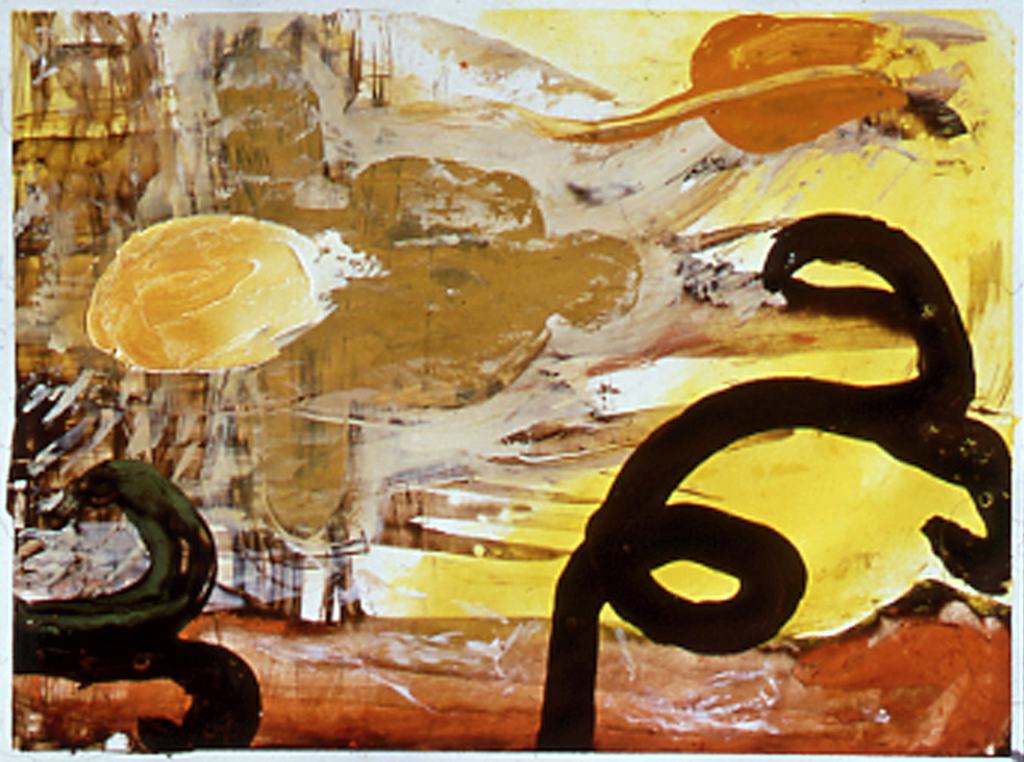
Untitled #12
Mixed-Media on Paper, 24″x32″, 1998
Early in his career, Dewey Crumpler painted murals focusing on African American social and political issues. His skill at structuring dynamic wall-sized compositions was honed from studies with Pablo O’Higgins and David Alfaro Siqueiros in Mexico City. But Crumpler was increasingly drawn to the expressive possibilities—visual and emotional—of abstract images, which he has pursued in paint, prints and sculpture for nearly 30 years. He will investigate an image relentlessly—such as the bulbous shape of a tulip or Monet’s lily pond at Giverny, France—and extend the form into myriad directions and mediums. Thematically, Crumpler has sought to address the history of slavery in America and explore how Africans “transformed their experience of subjugation into … cultural self-fulfillment and spiritual development.” The concept of metamorphosis becomes actual practice through his artmaking. Crumpler takes shapes derived from instruments of torture—leg irons, neck collars, and chains—and employs them “as abstracted vehicles that become transmuted into organic materials like tulip flowers and other malleable substances.” This symbolic conversion is most apparent in the decorative wood sculptures he calls Meta Objects. These are life-sized transfigurations of slave collars. Echoes of this form appear in Crumpler’s latest paintings and drawings. Born in 1949, Crumpler is a Professor of Art and Art History at San Francisco Art Institute, where he has taught since 1990
-Flintridge Foundation
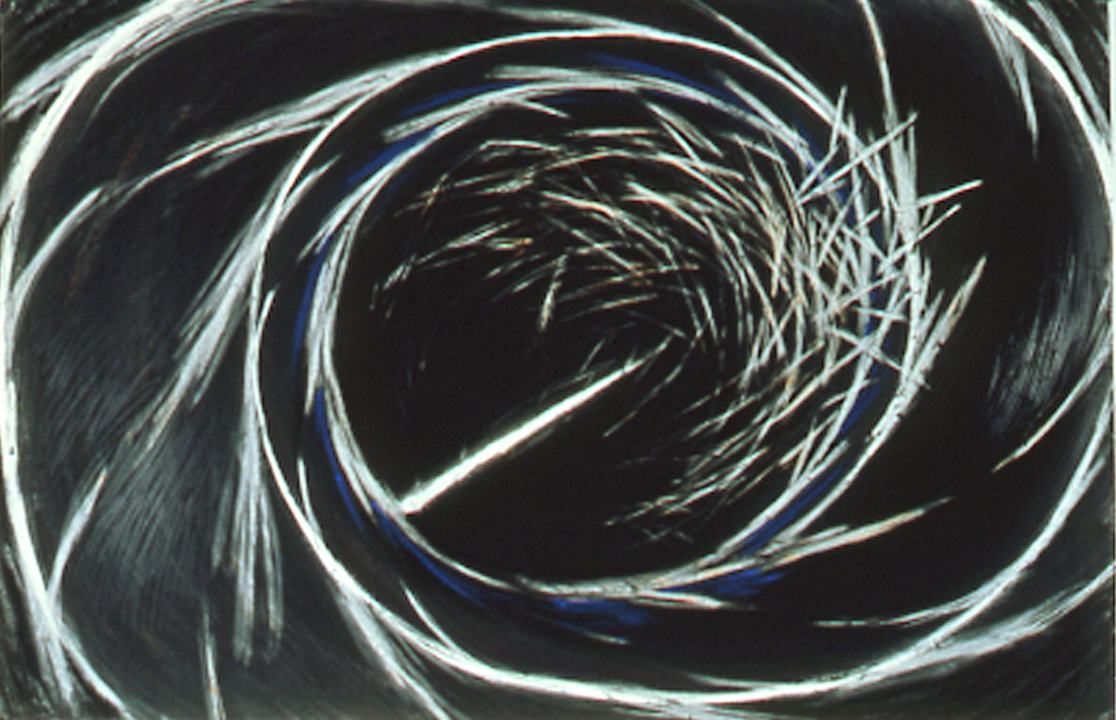
Giverny #46
Charcoal, pencil and pastel on paper, 40″x68 1/2″, 1988
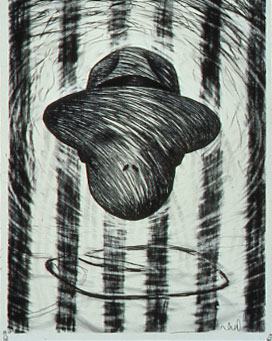
J.B. at Giverny
Pencil on Paper, 22″x30″, 1988
Dewey Crumpler Interview with Professor Carlos Villa of San Francisco Art Institute
Keywords: African-American, men, painting

[…] late 1980s and 1990s. Here is a link to an interview of Dewey by Carlos Villa for Villa’s Rehistoricizing the Time of Abstract Expressionism project. You might want to click on these links to learn more about Dewey’s work before he […]